

Competition Pro joystick makes comeback

The best joystick ever (at least if you're a slightly ageing member of the TechRadar team) is making a comeback – with the Competition Pro that won the hearts of a million gamers for being virtually indestructible in those all night Kick Off 2 bouts shipping for the PC with a collection of C64 classics.
Although we are slightly disgusted by the choice of games package (Amiga FTW!), this Speedlink version of the joystick is the transparent plastic version rather than the more common black version and the games include classics like Paperboy, Defender of the Crown and Turrican.
"Already famous for its black-red design, this year SPEEDLINK is presenting the legendary stick in this great colour-combo: a transparent casing with red controls," says Speedlink's release.
Durability
"At the time of the C64 and Amiga a rarity this version was special already in those days [sic]. Its extreme durability and the characteristic clicks of the micro switches were its trademarks back in the day," it goes on, slightly confusingly.
"The current version comes with an extremely robust, sprung metal stick as well as micro switches. Just like its predecessor, the Competition Pro USB only offers eight directions, and a fire button as an input command.
"Despite that, it comes with two large buttons and two additional smaller switches making it suitable for left and right handers. Autofire can be activated by the press of a button – a must for many Amiga games. What's more, you don't need to install a driver."
The joystick is priced at €17.99 (cآ£15.99) and is available now. The only bad news is that it won't work with your Xbox Live Arcade version of Sensible World of Soccer.

 |  |
Read More ...
Philips packs top-end tech into 9000 Series TVs

Philips has taken all the best bits of TV tech and packed it into a new range of TVs - the 9000 series.
This range of TVs is 'engineered from the highest-quality materials and a unique design'.
But beyond the visuals, it's offering pretty much all the high end technology Philips research labs could come up with.
We're talking a 400Hz LCD with 0.5ms response time for blur-free images, Net TV with inbuilt Wi-Fi for online services via the TV and DLNA to connect to your PC.
Light up the dark
In addition, the 9000 series also packs full LED backlighting, with thousands of lights arranged behind the screen for deeper contrast of up to 10,000,000:1.
It's also one of the first TVs to add 3D-ready capabilities, with Active 3D glasses meaning each eye gets the full 1080p experience.
And to round it off - there's Ambilight technology on three sides of the display, which can even work out the colour of your walls behind the TV and match the colour accordingly.
You'll be surprised to note that this TV does not have a UK release date or price - but we'd bet a pretty penny that this isn't going the be the cheapest range of TVs you've ever seen in your life.

| |
Read More ...
In Depth: Religion via the App Store

It's another Sunday morning at Central Presbyterian Church in San Francisco where Pastor Wang is about to start leading his weekly sermon.
Nothing too out of the ordinary until you notice some of his congregation whipping out their iPhones rather than a bible to follow the reading.
With the notion that there's an app for nearly everything these days, it should come as no surprise that an increasing number of people are opting for a 'smartphone connection' to God.
After initial confusion as to whether his congregation were texting instead of praying, Pastor Wang is now more than used to the sight of iPhones during worship.
Typing 'Bible' into the iTunes store brings up over a hundred apps ranging in price and purpose, from scripture texts, bible quizzes and lingual translations. The Vatican has even given its seal of approval with its official application called iBreviary.
The apps are not just restricted to scripture based references. For آ£0.59 Jewish followers can avoid confusion over which blessings to say before and after eating. Users pick the type of kosher food being consumed and with a press of a button and the iBlessing app will recite the appropriate blessing in Hebrew first then English.
It is the increasing sophistication of these apps which are getting analysts excited.
iPhone Islam is an organization that has developed Al Mus'haf, the first Arabic iPhone app which simulates reading the Qur'an. If you need call to prayer reminders or want to know which direction to face when praying there are apps at your fingertips for that, too.
Cultural attitudes
While the iPhone-friendly approach to faith may be seen to make religion more accessible, experts argue that adaptation to differing cultural attitudes is vital.
"In the US Christians may be used to a more informal style of worship whereas in Korea, followers would expect a more serious and sombre tone. This needs to be reflected in the apps," says Alan Hshieh, Human Computer Interaction consultant at Harvard University.
Some apps have even managed to court controversy in cases. 'Me So Holy' was banned from the iTunes store for being "objectionable". The app allowed you to scale and crop your face to replace an image of Jesus. Apple also recently removed all content related to Dalai Lama, the spiritual leader of Buddhist Tibet, from the Chinese app store.
Cases like these highlight how sensitive the area of technology and religion remains but some in the religious field are positive about the future.
The developers at LifeChurch.tv, a multimedia worship service, are already getting excited at the prospect of apps for the soon to be launched Apple iPad. As for Pastor Wang, the only concern for now is that he opted for a Blackberry.

| |
Read More ...
Philips show off LED backlit 8000, 7000 and 5000 TVs

Philips has officially unveiled the rest of its UK range of televisions for 2010, with its LED backlighting featuring not only in flagship 9000 series, but also in the 8000 series as well as the 5000 and 7000 series.
Although announcements about the flagship 9000 series and the second-generation 21:9 television will steal the headlines, Philips' other new ranges certainly should not stay in the shadow.
Philips has put its Spectra 2 Ambilight in the 7,000 and 8000 and the 2010 version of the technology also senses the colour of your wall and adjusts the colour – meaning you don't need to mount your telly on a whitewashed background to get the full experience.
LED by the nose
But it is the LED backlighting that will pick up the headlines – with the 5000, 7000 and 8000 series all having lines of the LEDs positioned along the top and bottom edge of the TV which shine light across the back of the screen where a light-guide will reflects the light forward – maintaining a uniform brightness.
It's not the same level of LED backlighting that big brother the 9000 series has, but nonetheless, it's across the entire range.
All bar the 32 inch version of the Full HD 8000 series will be 3D ready, with a 3D upgrade pack available separately and including the transmitter and two pairs of 3D active glasses.
The 8000 series boasts 200Hx technology and the Philips 2010 Perfect Pixel HD engine, all housed in what Philips term 'a slim and stylish pure glass frame with two sided Ambilight.'
Other notable features are NetTV and WiFi Media Connect with optional Wi-Fi dongle for popular online services and all of your PC media files on your TV, 20W RMS Sound Perfect Natural Motion for ultra smooth Full HD movies and the already-mentioned Ambilight Spectra 2 and LED backlighting.
The 7000 series in Philips' words 'sets the reference point for mid-range TVs, with its powerful Pixel Precise HD processing, Ambilight Spectra 2, advanced sound quality, LED edge lighting and access to NetTV'.
The television also boasts 100Hz technology, PC network link to browse PC and Home network content and 20W RMS Sound.
There is also the lower end 5000 series which will still tote LED backlighting.

| |
Read More ...
Philips adds 3D to its Cinema 21:9 TV
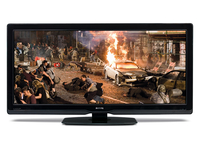
Philips has announced it will be bringing out a 3D-ready version of its flagship Cinema 21:9 TV in 2010.
The huge TV, which Philips claims is the only one on the market to offer a full cinematic experience, will use a different type of 3D technology to many of its rivals.
The Philips range of 3D TVs will be using Active 3D technology, which uses a wireless transmitter to communicate with the glasses.
New technology
The signal tells the glasses when to open and close in sync with the pictures on screen, allowing sharp and clear 3D images.
Philips claims that this "allows each eye to view its own FullHD image with no loss of resolution or brightness."
There's no word on a UK release date for this new 3D ready 21:9 TV, but Philips has promised more details later in the year.

| |
Read More ...
Samsung reckons it can shift 10m Wave phones
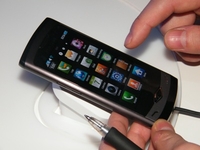
Samsung appears to be betting big on its new Bada platform for its mobile phones, throwing out some big targets to achieve.
The most impressive is the pledge to sell 10 million of its first Bada-powered phone - the Wave - by the end of the year.
That's an even bigger mountain for Samsung to climb as it's been given a UK release date of April this year - meaning it will have to shift over one million Waves a month to achieve its target.
A spokesperson for Samsung told Total Telecom that it's given itself this lofty figure to achieve, and the app store will be brought up to speed to create an attractive platform for consumers.
Making waves
The plan is to offer over 1,000 apps by the end of the year - which would put Bada on a roughly equivalent level with Microsoft Windows Marketplace and the Palm App Catalog.
Samsung has also pledged to keep supporting to Android platform from Google, despite some speculating that Bada was designed to rival the open source platform:
"bada is very important to Samsung but we're pursuing a multi-platform strategy. We are the number two handset developer globally and we have to provide different handsets in different markets, for different market segments," Dr Justin Hong, VP of Samsung Mobile said to Total Telecom.

| |
Read More ...
Video: Apple's immense new iDataCenter

Apple's new iDataCenter in Maiden, North Carolina is immense, as a new aerial video posted to YouTube shows.
Exactly how big? Well, it's around 500,000 square feet of pure server farm.
The new facility set Apple back a cool $1 billion and is around five times the size of Apple's existing 109,000 square foot centre in Newark, California.
Key to Apple's cloud
The new centre is seen as a key component of Apple's cloud computing strategy. You can see what it looks like from the sky from this short 35 second long video.
It is set to provide the back-end for Apple's moves into cloud computing, with much talk about the possible shift of iTunes libraries currently stored on users' desktops to remote online storage centres such as this one.

| |
Read More ...
Amazon seals British Library deal for free Kindle classics

Amazon has sealed as deal with the British Library to make a whopping 65,000 books available to Kindle owners and via CreateSpace's Print on-Demand service.
The books were digitised as part of a partnership with Microsoft's Livesearch, and just hours after agreeing a patent deal with Microsoft, Amazon has now launched a joint venture with the British Library for tens of thousands of 19th century philosophy, history, poetry and literature.
The content will be available on Amazon's sites in the United States, UK, France and Germany, bringing a host of unique content to the public.
Literary gems
Chief Executive of the British Library, Dame Lynne Brindley, said: "The British Library's deal with Amazon to make literary gems available through print-on-demand and the Kindle e-book reader is a landmark agreement in more ways than one.
"Unlocking 65,000 titles of 19th century material for new generations to discover, the deal also shows how innovative public sector institutions can keep moving ahead, even in a tough economic climate.
"Re-imagining our relationships with both private and public sector partners is absolutely essential for extending our ability to connect with our users.
"The British Library has much to offer major commercial organisations such as Amazon, giving us an opportunity to leverage the high value of our collections to ensure doors that might have been closed for lack of funding remain open."
The content will include work from the likes of Charles Dickens, Jane Austen and Arthur Conan Doyle as well as books like Strange Story by Edward Lytton.

| |
Read More ...
CompactFlash Cards to hold 188 petabytes
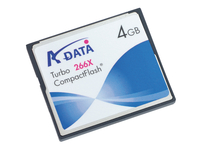
CompactFlash cards are generally only used by professional and 'prosumer' photographers that need to save large amounts of high-res digital photo data on their DSLR cameras.
However, the news that the latest version version 5 of the CompactFlash standard will be able to hold as much data as AT&T carries on its entire network in a week has made us sit up and listen.
200 years of movies
The latest CF cards are set to hold a mindblowing 188 petabytes of data. The equivalent to 188,000 one-terabyte drives, or, as Wired was quick to point out the equivalent of around "two centuries' worth of the porn industry's annual output"
By comparison, CompactFlash 4.1, which is the current standard, offers snappers a maximum of 137 GB of data.
The new CF standard uses 48-bit addressing, hence the new (theoretical) data limit of 188 petabytes.

| |
Read More ...
Asus announces 'world's safest motherboards'

Asus has announced what it terms the world's safest motherboards – with Asus Protect 3.0 featuring protection shields, anti-surge features, and system-optimized efficiency.
The company believes that it has set a new standard in 'total motherboard protection' with the launch of the ASUS Protect 3.0 Design which 'helps protect the earth, systems, and users.'
Triple protection
That's because the motherboards are equipped with 'intelligent anti-radiation shielding' which will apparently lower transmission of harmful radiation by up to 50 per cent – that's the bit that protects the users.
Anti-surge protection helps enhance component and system longevity, which is obviously the part which protects the system.
And the boards also include the ASUS EPU (Energy Processing Unit) chip to 'reduce system-wide power consumption by up to 80.23% and to ensure a more environmentally sustainable operation.'
"In fact, 10 million EPU-enabled motherboards can help eliminate up to 207,430 tons of CO2 - equivalent to Australia's annual carbon emissions," Asus' release insists.

| |
Read More ...
UN warns of growing electronic waste mountains

The UN has issued a stark warning that the world could face mountains of electronic waste in the coming decade.
Electronic waste – or e-waste for short – is one of the UN Environment Programme's most pressing problems right now, with the UN claiming that e-waste in China and South Africa could quadruple within the next decade and India may even face a five-fold increase in the amount of waste it has to try to process.
The real problem lies in the unregulated 'recycling' of used TVs, computers and electronic equipment.
Dumping grounds
Electronic waste currently totals around 40 million tons a year worldwide according to the UN report. China produces 2.6 million tons and the United States tops the chart with 3.3 million tons.
UNEP Executive Director Achim Steiner said: "The world is now confronted with a massive wave of electronic waste that is going to come back and hit us, particularly for least-developed countries, that may become a dumping ground."
A particular problem in India is waste from old refrigerators that contain hazardous chlorofluorocarbons and hydrochlorofluorocarbon gases and which could triple by 2020.

| |
Read More ...
Gary Marshall: Stop insulting the elderly with crappy technology

There are plenty of reasons to worry about growing old.
You can feel invisible in a world that caters overwhelmingly for the young. Your body can let you down. You can end up driving a Toyota, or a Kia.
And you have to put up with people patronising you silly while trying to sell you overpriced rubbish.
Take a bow, Sagem, and take a bow, Broadband Computer Company. You've both sat down and thought, "Hmmm! What can we make for the generation that invented the personal computer, the internet and most of the technological innovations we take for granted as they move into their twilight years?"
The answer you came up with was "Expensive crap a toddler would find too simple." Nice!
Sagem's Cosyphone is aimed at the over-50s. Not only does it have really big buttons and numbers, but it has near field communications technology, too.
Need to call somebody? Why not wave a big picture of them in the air, like a simpleton? "It uses cards, which can be customised with a photo or other information and pre-programmed with the number of the doctor's surgery, or a friend or relative. To make a call, the user simply "waves" their phone over that card to speak to that person or send a text message."
Remember, this is a phone for the over-50s, a group that includes such drooling basket cases as Sir Tim Berners-Lee, Bill Gates and Chuck Norris - people who continue to do amazing things and who can kick your face off if you look at them funny (well, in the latter case at least).
Easy PC?
Meanwhile the Broadband Computer Company has Alex, a system for novices and people scared of technology. For a mere آ£399 and a further آ£9.99 per month for technical support (or آ£24.99 per month if you'd like broadband, too), you too can have a low-end laptop running Linux with an ultra-simplified front end.
Amusingly, the available technical support includes technical support by post. Don't use that option if the laptop's on fire.
We're sure Alex's intentions are pure, but it's quite a lot of cash for what's essentially Google's Chrome OS with a Fisher-Price makeover. It limits users to specific hardware - printers are only supported if they're listed as "approved" in Alex's literature, for example - and it could easily leave its users in a technological cul-de-sac if the parent company goes bust.
Our big concern, though, is that Alex isn't simple enough. There are genuine considerations for older users - Windows, Linux and Mac PCs really haven't nailed the combination of simplicity and accessibility that older users really need - but we're not convinced Alex addresses them.
The Broadband Computer Company says it has started from scratch, but it hasn't. If it had really reimagined the PC from scratch, it wouldn't have a mouse; it'd have a multi-touch screen. It wouldn't have taken the familiar Windows-style interface and made the buttons bigger; it'd have removed the buttons altogether.
It wouldn't have stuck with a no-name laptop running a thinly disguised Linux; it'd have a whole new form factor, with a whole new OS.
It'd have come up with something awfully like the iPad.

| |
Read More ...
Samsung planning Apple iPad competitor
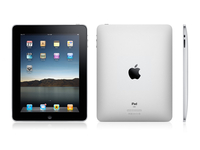
Samsung has promised that it will react to Apple's iPad announcement, believing that it will create a new category in the market.
JK Shin, president of Samsung's mobile division, said that the company is interested in the new segment.
Speaking to Bloomberg he said the company will respond to Apple's announcement, although stating that it's too early to give out any more details.
Dual role
Samsung also provides part of the CPU used in the iPad, leading to an interesting situation where it would be both a competitor and a supplier to Apple - although with very different parts of the company,
"This is normal, we have to compete in the market," Shin told Bloomberg. "At the same time, they are our customer and we are the supplier of components to them."
In related news, the Apple iPad has been given a tentative pre-order date in the US of 25 February for the Wi-Fi-only version of the tablet according to AppAdvice - although this is very much an unconfirmed rumour by the site.

| |
Read More ...
Sony set to launch 3D cameras

Sony is set to follow Fujifilm and release a 3D capable point-and-click camera aimed squarely at the consumer market.
Sony confirmed it plans to release a 3D camera this week, with Sony's president of Personal Imaging and Sound, Masashi Imamura, telling Digital Photography Review that the company plans to fully integrate 3D technologies in its consumer camera range soon.
"Mr Imamura admitted that 3D imaging is an area into which Sony is keen to expand," noted Digital Photography Review.
3D TVs, Blu-rays, cameras
Fujifilm released the world's first 3D consumer cameras, the FinePix Real 3D W1 and FinePix Real 3D V1, back September 2009 - though both received a rather muted reception amongst critics and consumers alike.
Sony is set to bring its LX900 and HX900 3D TVs to consumers later this spring and is also soon to release its range of 3D-ready Blu-ray players, in anticipation of a number of triple-A Blu-ray releases planned in for later in 2010.
TechRadar spoke with Sony's PR company who are not releasing any further details on Sony's 3D camera plans right now. For more on Sony's 3D plans head over to www.sony.net/united/3D/

| |
Read More ...
Review: Metronic Eco Zapbox 2

Listed by some vendors simply as the '441808', the headline features on the Metronic Eco Zapbox 2 are low power consumption and 'auto-retune'.
The latter is a curiosity as the box doesn't automatically retune itself when updates are required. Instead, you're required to press a button (amusingly labelled 'SOS') for three seconds, at which point the automatic scan mode (accessible in the menus also) kicks into action.
About the same size as an FTA sat receiver, the adapter is light, with an all-black finish and glossy front panel adorned by power, channel change and volume buttons but without any proper display to speak of, save for a single indicator light.
On the rear sits a UHF loopthrough (there's no modulator for watching DTT channels via UHF if required), two Scarts (RGB is only supported on the TV Scart) composite video output and coaxial and phono connectors for audio.
Low power
A low-power mode (on by default) lowers the amount of power the Zapbox 2 consumes in standby from 3W to 0.7W (it uses up to 3.5W in operation), but requires a longer power-up period.
The remote design is functional, but we'd have preferred larger, more clearly signposted buttons for the most-used features.
Channels are displayed as a single list with the option to lock, delete, move and edit them. Oddly, 'editing' doesn't mean renaming but changing numerical data for audio, video and PID data, which seems redundant for Freeview watchers.
Just one favourites list can be created. Now-and-next data is displayed on the information banner, but not synopses (pressing info just brings up a page of technical data).
A fast-moving, seven-day three-quarter screen EPG shows data in grid form for five channels at a time (again TV and radio are grouped together) with the current channel running in the top right next to a synopsis. You can skip day by day, set programme reminders and schedule up to eight timer events with once, daily and weekly repeat options.
Pictures are reasonably solid and colourful with RGB Scart enabled, and a little fuzzier with the composite option. Audio is acceptable via the phonos and especially good via the coaxial digital audio option.
The Eco Zapbox 2 has its share of operational quirks and isn't the most comprehensive adapter around in terms of features. But if your local reception is up to scratch it's a decent second-room DTT upgrade.
Related Links
| |
Read More ...
Government dumps plans to cut off illegal filesharers

The government has backtracked on its initial Digital Economy Bill proposals to cut off people illegally sharing copyrighted movies and music online.
The latest move is seen as a tactical response to a recent petition on the Number 10 website "to abandon Lord Mandelson's plans to ban individuals from the internet based on their use of 'peer to peer' file sharing."
The petition said: "The increasing role of the internet in access to society should not be underestimated. Cutting off households deprives families of education, government services and freedom of speech."
Backtrack
The government now claims: "We will not terminate the accounts of infringers – it is very hard to see how this could be deemed proportionate except in the most extreme – and therefore probably criminal – cases.
"We added account suspension to the list of possible technical measures which might be considered if our measures to tackle unlawful file-sharing through notifications and legal action are not as successful as we hope.
"This is but one of a number of possible options on which we would seek advice from Ofcom – and others – if we decided to consider a third obligation on technical measures. However what is clear is that we would need a rapid and robust route of appeal available to all consumers if we decided technical measures were needed."
Open Rights Group
However, the Open Rights Group that campaigns on digital rights, still says this is not a change in the government's position.
"When is 'disconnection' not disconnection? When it is 'account suspension', of course," notes the ORG.
"The government therefore felt justified in a response to a petition on Friday in claiming that were not intending to 'disconnect' families from the net after accusations of copyright infringement. If you think they mean that their internet cabling will still be plugged in at the wall, then that's true.
"If you think they mean that these families will be able to connect to the internet, well, no they won't. Their connection will be switched off.
"Please do not be confused by the government's semantics. BIS [the Department of Business, Innovation and Skills] and DCMS [the Department of Culture, Media and Sport] decided in the summer that they would not refer to 'disconnecting' users, because that sounds harsh and over the top. 'Temporary account suspension' sounds much more reasonable.
"'Temporary account suspensions' sound like the government would to suspend accounts for a few hours, or at most a day, to fit most people's idea of 'temporary' and 'suspension'. We doubt 'suspensions' would be so brief. We can assume what the government means to you and me is 'disconnection'."

| |
Read More ...
Google Earth finally coming to Android phones

Google has finally popped out Google Earth for Android mobile owners - but only if you're using a certain version of the system.
The new service is only available for those with Android 2.1 phones - which at the moment is only the Nexus One, and that's only available in the US right now.
Google has been slightly odd in its reasoning over waiting to release Google Earth on Android - stating that it was waiting for the technical side of things to improve first:
"With a 1GHz processor, advanced 3D graphics, and Android 2.1, Nexus One packs a lot of performance in a thin package," said Google on its official blog.
Pushing it to the limit
"Ever since we got our hands on one, we have been putting it through its paces, drawing complex scenes of 3D imagery, terrain, roads, and other layers, and Nexus One never misses a beat.
"Now that we have put the final touches on the app, we are happy to announce that the latest member of our family is ready for the world -- Google Earth for Android.
"This is our fastest mobile version of Google Earth yet, with a smooth framerate and a beautiful 800 x 480 screen."
We're not sure whether other devices that get upgraded to Android 2.1 - like the HTC Hero or Motorola Milestone will have the same level of depth as the Nexus One version.
However, the iPhone, which is a less powerful device than the Nexus One, has been rocking Google Earth for a while now - so at least we know the platform works.
If and when you're an Android 2.1 user, head on over to the Android Market to download it.

| |
Read More ...
Review: Vuzix Wrap 920

I love the idea of video glasses – getting a large-screen or projector experience from a pocket-sized device on a plane or train is enticing. But this simple idea is a big challenge; you need tiny, lightweight, low-power, high-resolution screens and a lightweight focusing mechanism.
The Wrap 920 from Vuzix is the latest and most advanced in its video eyewear range, along with lower-resolution 4:3 and widescreen models, and motion-sensing models designed for video gaming.
Inside the stylish wrap-around body are two 640 x 480 LCD screens, plus an adjustable focusing mechanism with stereo headphones attached.
Video and power are supplied by the matchbox-sized control unit that connects to your video source via the supplied composite video and iPod adapters, or optional VGA and HDMI adapters. This also lets you adjust the volume, brightness and contrast.
Heavyweight
It weighs about 85g – about two or three times the weight of regular glasses – and feels it after a while. Despite the adjustable bridge, it tends to slip down the nose as you watch and for feature-length viewing the experience gets tiring.
The focus is adjustable using a tiny screwdriver in the control box and your eyes soon relax into the experience, rather like using a pair of binoculars. There's enough room in front of your face for lightweight prescription specs, too.
Another design flaw is the headphones, which attach to the front body and don't have any cable guides to keep them tidy, causing tangles if you don't unplug them when not using the eyewear. Fortunately, the sound experience itself is quite high quality for in-ear headphones.
Vuzix claims the Wrap 920 gives the experience of watching a 67in screen from a distance of three metres. These days you'd expect that to be a hi-def, widescreen display. Instead, it's like unboxing an old NTSC projector from 10 years ago, complete with a 4:3 picture.
It looks like it's a lot more than 3m away, too, and subtitles are barely readable, so you couldn't use it as a private laptop display.
Considering the viewing experience on a portable DVD player or an iPhone is as good or better, let alone a hi-res netbook or HD laptop, it's hard to see the benefit of these, unless you want to watch adult movies in a public place.
A 720p resolution is surely the minimum for today's buyer, and will be welcome.
Related Links
| |
Read More ...
In Depth: Is the iPod killing music?

"The iPod has f***ed all of this, in a way. The decade we've just left will never be forgotten."
So says Simon Drake, 24-year-old owner/producer of indie record company Naim Label, who is trying to explain to TechRadar what the last 10 years have done to the music business - a time in which music has seemingly been commoditised, debased and devalued by everything from the X-Factor to CD giveaways, digital downloads and ringtones.
"When iTunes launched in 2005 in the UK in terms of selling music, it's amazing. Even the way they [Apple] dictated price: based on the knowledge that they were going to sell millions of iPods worldwide, saying 'screws you guys, we're going to sell it for 79p a song'. It's changed music. It has accelerated the culture of the under-pricing of music."
Music as a commodity
While 79p sounds like a great deal for the average X-Factor fan, Drake argues that the effect has been to make life much harder for specialised labels like his.
"We don't really shift enough units for iTunes to want to place our business. If all of my album sales were iTunes album sales I would have been out of a job a long time ago. What's happened is that Apple has dictated the price of music to the market, which at the time, was drastically less than it needed to be.
"It's fine if you're a major label, you can find other ways of making money, but we don't licence stuff to TV. We rely on the sales of music to the consumer. That's always been a big issue of mine. I've always been slightly angry that they [Apple] rushed off and set their own price and have dominated the market ever since because it [the iTunes Store] is so easy to use."
And dominate it has. Apple's iTunes Store became the biggest music retailer in the US last year with 25 per cent of all digital and physical music sales. Compare digital downloads alone, and iTunes' dominance rises to 69 per cent of the total US market.
In the UK the situation is arguably even worse, with iTunes share said to be around 90 per cent.
The impact is there for us all to see. Squeezed by supermarkets on the one side and digital downloads on the other, old school record shops have been rapidly disappearing from our high streets, leaving those that remain to focus on other, more profitable, areas instead. Last year HMV said music sales accounted for just 28 per cent of its revenue, a fall of 9 per cent in just two years.

NO-POD: Naim's Simon Drake has forthright views on the impact the iPod has had on the music industry
Another complaint you'll hear from creatives about the iPod and digital downloads is that they've not only devalued the financial currency of music, but they've made it disposable too. Ian Morrow, record producer (Seal, Wet Wet Wet, Lisa Stansfield) and co-founder of Kerchoonz, the social networking and music download site says:
"I was listening to what Warners said about its decision to remove its music from streaming sites and they were talking about the value of music - and the value of music is really important. Just by it being like running water, everywhere all the time, it has no value. It is a complete commodity. There is no 'must go down to the record shop this afternoon, because they'll probably be sold out by Monday'."
That's great if you're a massive music fan who doesn't like paying huge sums for long-deleted albums, but it also means the artefact - the record, the song, the download - no longer has any intrinsic value - at least not to a certain generation.
You can download something one minute and delete it the next - there's no sense of ownership or occasion like you had with a CD or vinyl collection any more.
Short attention spans
"It [the iPod] has become so prevalent in people's live's now that it's really helped accelerate this culture of having a very short attention span," says Naim's Simon Drake.
"In terms of what it does for the music itself? You watch kids on an iPod in a group, they'll play 20 seconds of a song, they'll all scream and laugh, and then they'll change it to the next 20 seconds of another song.
"We're not actually helping develop any love or desire towards music or the thought process behind actually making it. One of my biggest problems, is - as someone from the independent sector who's not trying to make a quick buck - I'm trying to make compelling albums that people will hopefully sit down and enjoy in their entirety.
"I don't think for a minute that Apple thought that was going to be the case. It's human nature, our will to be lazy is becoming ever more present. it's our fault, not Apple's fault."
One thing that frequently gets laid at the iPod's door is the issue of sound quality: from the way music is consumed as low bit-rate MP3 and AAC files, to the oft-cited argument that music producers now mix music so it sounds great on the crappy earbuds bundled with iPods. In truth, it's actually a lot more serious than that, says Kerchoonz Ian Morrow:
"If you get a kid who wants to be an [sound] engineer and wants to work in studios, they're all listening to things outside the realm of the way you're meant to hear... If you want a drum kit to sound good, you need to listen to it in a room, not on headphones.
"That's a major thing with the kids that are coming through. Most of the kids that I've heard demos from, they're all crap - the drums sound terrible. The first thing I say to them is have you heard a drum kit - go and stand right in front of it.
"If it sounds crap when you listen to it, it's going to sound crap when you record it. Now when you listen to things on headphones all the time, you're never going to learn that perception of what sound actually is."

HELPING ARTISTS: Ian Morrow and Indiana Gregg are the founders of Kerchoonz
Morrow's Kerchoonz co-founder and singer/songwriter Indiana Gregg agrees:
"I see kids who are talented, who could be into music or becoming sound engineers, but their point of reference is so screwed up. If you're going to produce something that has the sound of an MP3, that's all we're going to have probably 20 years from now when they all grow up.
"Because if you don't have a point of reference... it's like being a musician without any influences. You grow up in a cave and suddenly you want to be the next Beethoven? It's not going to happen."

LESS ABOUT MUSIC: Music is becoming less important to HMV. This diagram from its 2009 financial results shows that music makes up 28 per cent of its revenue – a fall of 7 per cent since 2009
Alan O'Rouke, MD and founder of Vita Audio is more optimistic. His company is just one of the many that has adapted to the changed landscape brought about by the iPod:
"Apple Premium Resellers are doing good business on audio systems these days. People are buying them from there.
"They're not going into hi-fi shops. Hi-fi shops still have this strange enigma where you don't go in there unless you know what you're talking about, like the Not The Nine O'Clock News sketch, you know? Very true really. [Apple Premium Resellers] provide a bright, fresh environment where it's good to go in. A lot of hi-fi shops are fairly back in the Dark Ages.
Roger Batchelor, product marketing consultant at Denon is another optimist:
"Many artists have more freedom and are running their own websites and have more control over the way their music is distributed than ever before. Music has always been a commodity for some, even back in the '60s and '70s we had those Top Of The Pops LPs with studio bands playing the hits of the day for the casual listener.
"At the same time, there were, and still are, dedicated music fans who love music with a passion."

| |
Read More ...
Nvidia will unveil next-gen graphics on 26 March

Nvidia will unveil its GTX 400 series 'Fermi' graphics cards at PAX east 2010 on 26 March.
The excitement at Nvidia's next-generation chips is understandable, with the company finally leaping aboard the DirectX 11 train months after its rival AMD got its own next-generation cards to market.
"To clarify, launch date for GeForce GTX 480 and GTX 470 is 26 March, 2010," read the tweet from Nvidia's account.
The 400 series, which will comprise the GTX 470 and GTX 480 at launch, will be a major step for Nvidia as it looks to take the graphics card to the next stage.
Features
That means the silicon has been designed from the ground-up to match the latest concepts in parallel computing. The basic features list reads: 512 CUDA Cores, Parallel DataCache, Nvidia GigaThread and EEC Support.
This brings 3 billion transistors and a card that should take GPGPU to a whole new level.

| |
Read More ...
Jonathan Ross says Natal 'not quite there yet'

British TV personality and radio DJ Jonathan Ross was invited to a secret Microsoft event this week, in order to try out the company's new Project Natal motion control tech.
Known for his love of videogames, Ross concluded that Natal was good, but still in need of some tweaking before its October 2010 launch.
Impressive but not quite there yet
"OK. Before bed. Natal on Xbox impressive. Not quite there yet I think but they have 'til october and if they get it right... sky's the limit," Ross tweeted.
You can see Ross playing Natal over on YouTube as he was filmed at this week's London event playing one of Natal's ball-swatting mini-games.
"They say that by release all lag issues will be resolved and response time should be nearly instant," reads some pop-up text.
MTV Multiplayer had the following to say about the Natal demo:
"I had a pretty large sample size, sitting through 5 demos, capturing about 40 different movements from a variety of journalists. Across those 40 movements, the fastest life-to-screen transition was .08 seconds, while the slowest was .12 seconds. A tenth of a second was the consistent average, though."
"In its current state, Natal is not instant, one-to-one motion capture."

| |
Read More ...
Review: Manhattan DT-100+

Two years after the launch of the Wotsat silver award-winning DT-100 Freeview adapter comes the Manhattan Plaza DT-100+.
The compact case design remains pretty much unchanged from its predecessor save for now being predominantly black and having a flap on the right of the front panel that conceals a USB port. A green four-digit LED display shows the number of the channel to which you're tuned and the time when in standby and sits alongside channel-zapping and power buttons.
On the rear are four UHF connectors that allow you to pass the TV signal on to other equipment (a patch cable is supplied). There's also a modulator for outputting Freeview channels via UHF.
Two Scarts see RGB as well as composite supported on the TV Scart (the VCR Scart offers composite only) and there's a separate composite output. An S/PDIF connector and stereo phonos are provided for audio and there's a dedicated power switch.
A pretty good line-up then, although those with large-screen HDTVs might have liked to see an upscaling option via HDMI as found on some Freeview PVRs (presumably this would have put up costs).
Simple menus
The remote's curved edges fit snugly in the hand but, while reasonably well-positioned, its buttons are rather on the small side. You can skip between TV and radio channels at the press of a button.
The mostly blue menu software isn't particularly flashy but its simplicity means it's easy to get to grips with. The receiver's automatic scan makes short and effective work of scanning for channels. A more in-depth manual option comes with signal and quality graphs and the ability to enter frequency, UHF network and more.
Channels in the main list can be re-ordered and renamed using an onscreen keyboard and up to 10 favourites lists can be created and named. A clearly laid-out EPG supports seven-day DVB data displayed in grid form for five channels at a time with the current programme running in the top right of the screen and a synopsis on the right. You can skip back and forth by day and use it to directly schedule timer events.
Up to eight events can be scheduled (also manually) with once, weekly and daily repeat options. Neat trick-play features are the ability to 'pause' (effectively freeze-frame) TV while the current programme continues in the background and generate a mosaic of stills for what's on nine channels at a time.
Multimedia credentials
The aforementioned USB port allows for playback of JPEG/BMP/GIF images, MPEG-2/VOB/dat/(certain) avi video and WMA, MP3 and Ogg Vorbis audio files as well as the application of software updates from flash drives. Folders are recognised and JPEG browsing comes with rotate zoom and slideshow options and the ability to play music at the same time.
Audio files can be fast-forwarded but not playlisted. Our test sample played MPEG-2 TV recordings and also some of our XviD files encoded in an avi container.
Playback is handled using coloured buttons on the remote and there are five speeds for rewind and fast-forward.
Composite pictures are predictably soft, but those via RGB Scart are colourful and among the sharpest we've seen on a DTT adapter.
Audio performance is solid from TV and radio sources as well as reasonably high bit-rate MP3s both via our test TV's (a Samsung LED) speakers and when connecting the digital and analogue connectors to a home cinema system.
Related Links
| |
Read More ...
Twitter: 50 million tweets being sent a day

More than 50 million tweets are being sent a day, according to the latest statistics from Twitter, and even the Dalai Lama is joining in with the fun.
With traffic still growing on the micro-blogging platform, Twitter's data shows a major rise even since January, where some statistics put the daily average at 39 million tweets being sent each day.
"As a member of the Twitter analytics team, part of my job is to measure and understand growth. The graph above tells a story of how we've grown over the past three years in terms of number of tweets created per day. Please note that tweets from accounts identified as spam have been removed so the counts in this chart do not include spam," blogged Twitter's Kevin Weil.
600 Tweets a day
"Folks were tweeting 5,000 times a day in 2007. By 2008, that number was 300,000, and by 2009 it had grown to 2.5 million per day. Tweets grew 1,400% last year to 35 million per day. Today, we are seeing 50 million tweets per day - that's an average of 600 tweets per second. (Yes, we have TPS reports.)," he added.
"Tweet deliveries are a much higher number because once created, tweets must be delivered to multiple followers. Then there's search and so many other ways to measure and understand growth across this information network.
"Tweets per day is just one number to think about. We'll make time to share more information so please stay tuned."
One person who is now contributing to those 50 million daily tweets is the Dalai Lama who has now got a verified account on Twitter.
There have been a few fake Dalai Lamas in the past, but this one is the real deal (well, it's officially from his staff at least).

| |
Read More ...
Review: Icecrypt S4000

Not so long ago the idea of a fully fledged twin-tuner, hi-def PVR with a sub-آ£500 price tag would have been wishful thinking. Today it's a reality, courtesy of the S4000 from Turbosat's housebrand Icecrypt.
This well-specified box of Linux-powered tricks sells for آ£340 (with a 320GB hard disc or آ£300 without). Other welcome features include hardware blind search, two CI slots, full DiSEqC compatibility for multi-satellite flexibility, the potential that networkability brings and multimedia playback.
Build and connectivity
As far as styling is concerned the S4000 is quite smart, but not particularly distinctive. The front panel's most prominent feature is a fluorescent display, underneath which is a strip of buttons for volume/channel changes and basic menu access.
To its left is the backlit standby button, to its right a hinged flap that lowers to reveal the two CI slots and a convenient USB port. A dual-slot card reader was obviously considered at one time, but the second has been blanked off.

The remote handset that drives the S4000 is disappointing. Its keys have a tacky feel and an unwanted tendency to 'bounce', causing overshoot. It can, however, operate many TVs and DVD players.
Both DVB-S/S2 tuners support loopthrough and so single-dish users can drive the second tuner with the output of the first. For optimal viewing/recording flexibility, though, you'll need a dual LNB. HDMI and component outputs support hi-def (and upscaled standard-def) video.
The HDMI output can convey either bit stream or decoded (PCM) digital audio; these signals are also available optically. 'Legacy' TV/VCR Scarts are also present, as are analogue stereo and composite outputs. Completing the connectivity are a second USB port, RS232 serial terminal and Ethernet.

Setup
Getting the S4000 going is straightforward, thanks to a well-designed set of installation menus. From 'dish setting', you can specify how your outdoor equipment is connected (independent feeds or a single LNB with loopthrough), and what type of LNB you're using.
The full range of DiSEqC permutations are catered for here – 1.0/1.1 switchboxes, and 1.2/USALS motorised mounts. As far as the latter are concerned dish-movement possibilities are somewhat restricted – you don't get a more precise 'step' option or auto focus.
A welcome touch is the 'extended signal' metering – oversized signal/quality bars, plus a bleeping noise that rises in urgency as the signal increases. It's then a matter of choosing a satellite/transponder and, after setting dish positions (if necessary), you can proceed to the search menu.

This has several modes: 'auto' (all/FTA channels, TV-only), 'manual' (a single-transponder search with basic parameters, including frequency/polarity/symbol rate), and 'advanced' (which builds on the manual search by adding PID entry).
The final blind search option steps through the entire band twice, first with vertical polarisation and then horizontally. As it does so it identifies and stores any transponders it finds. These transponders are then searched, and the channels added to the database. What a pity there's no automated multi-satellite search.
Other menus look after the 'service list manager' (delete/move channels, organisation of favourites lists and other groups), parental locks, recording matters (timeshift buffers, start/end padding, commercial skip intervals), network setup and AV configuration. As far as the latter is concerned your choice of 576i/p, 720p and 1080i is available from the component and HDMI ports.
The S4000 is sadly incapable of delivering standard-definition and high-definition video simultaneously – it's one or the other. The TV Scart can be switched between RGB, composite and S-video.
Basic use
Pressing the 'info' button gives you EPG-derived information about the current programme, plus a smattering of service data. Teletext, subtitles and alternative soundtracks can be easily accessed via handset controls. Another button switches the receiver between radio and TV modes.

Subtitles on our test model were on by default. You can turn subtitles off in the 'language' (setup) menu, but if you do so they can no longer be selected via the subtitle button. The channel list can be sorted alphabetically or by transponder, satellite/group, encryption or provider/ network.
Also available here is 'service find', which allows you to home in on a channel by entering one or more characters of its name. What a shame it lacks a dedicated handset button – one of these has, however, been allocated to favourite channel (and satellite) selection.
On which subject, you can organise favourites directly from the channel list. All 12 (renameable) favourites lists have checkboxes. Ticking the box adjacent to a specific list adds to it the selected channel.
We're pleased with the seven-day EPG, which offers two modes – 'timeline' (simultaneous coverage of six adjacent channels) and 'magazine' (the selected channel's current broadcast, plus the next five programmes).
The EPG can set the 60-event timer by merely highlighting the desired programme and pressing 'enter'. Doing so once merely changes channel at the appropriate time – you have to press it twice if you want to schedule an HDD recording.
PVR and multimedia
A picture-in-picture facility, with full control over the choice of 'main' and 'sub' channels, is offered. A related feature places the two channels side by side. The 'mosaic' button doesn't work, and neither does the one marked 'V.Format'. However, the 'resolution' button fulfils its brief, cycling through the display options from 576i to 1080i.

Other features are a calculator and calendar. No picture zoom facility is provided. Networking facilities are currently limited, although improvements are apparently on the way. Currently, you can use the feature for firmware updating or the transfer of files to or from a networked PC.
This is particularly interesting as it provides users with a sensible alternative to US as far as the transfer of recordings to a PC is concerned. Networking also eases the transfer of compatible multimedia files from the PC to the S4000 – you can then play them through your AV system.
Turbosat expects that a full web interface will be added before long. It would allow the receiver to be remotely controlled, possibly via the internet.
No provision has been made for editing recordings. The only functions here are delete, rename, lock, create new folder and move.
The 'playlist manager', which has its own handset button, allows you to switch between the internal HDD and external USB devices and cycle through the S4000's recordings, 'imported files' (e.g. XviD content), music (MP3) or photos (JPEG). Individual files can be selected, but you can also 'tag' multiple files for sequential playback.
The S4000 is compatible with standard-def DivX and XviD files, but mkv files and high-definition content are ignored.
The S4000 is always timeshifting. You can thus wind back by up to two hours– a default setting that can be changed. Courtesy of a 'timebar', it's easy to jump to a specific part of a programme.
'Retrospective' recording isn't allowed however, the timeshift buffer file could be copied to a PC. As with other twin-tuner PVRs, you can record two different channels whilst playing back a file.
Performance
Tuning into the BBC HD with a Samsung Full HD LCD TV reveals that that picture and sound quality are superb. Visuals are characterised by natural detail and colour fidelity.
Changing to a SD channel yields the expected drop in quality, but the S4000 puts up a good fight. Upscaling works well – a more significant contribution to picture quality would be the broadcaster's technical standards. Some are truly awful; others demonstrate that there's still plenty of life in standard definition.
The SD outputs fare well. We tried RGB, component and S-video with no noticeable ill-effects. Depending on the source quality, XviD/DivX playback can be excellent. Sound quality from TV/radio channels and high bit rate MP3 files alike, cannot be criticised.
The photo playback function is welcome, but multi-megapixel pictures are not displayed full-screen. Instead, the central area of the picture is blown up to fill the screen.
Scanning speeds are average. It took over seven minutes to find 1,245 TV channels and 409 radio stations on the Hot Bird cluster's 94 transponders. A blind search of the same satellites took 21 minutes but is better at sniffing out programme/news feeds.
The receiver is quite responsive in everyday use – channel changes are speedy – but the mediocre handset is a letdown. Reception of all the channels we tried was consistently dropout-free, indicating good sensitivity. Power consumption is better than average.
Related Links
| |
Read More ...


No comments:
Post a Comment