

UK student's Folding Plug up for design award

A UK student has been nominated for a Brit Insurance Designs Award for his radical redesign of a plug.
Dubbed the Folding Plug, Min-Kyu Choi from the Royal College of Art has managed to make a plug that folds up to the width of a MacBook Air, with the live pins spinning out 90 degrees when it is in use.
On Choi's Made In Mind website, he says about the plug: "The UK Folding Plug transforms from a bulky three-pin plug into a portable, hassle-free plug ideal for people on the go.
"When not in use, the UK Folding Plug transforms into a 10mm-thick flat object. We are glad to announce that a product range built around this design will be launched in 2010."

The plug is so flat that Choi has also created a multi-adaptor for it which is about the size of a normal plug but houses three Folding Plugs.
The idea has already won Choi the International Design Excellence Award and he's also been a finalist at the Wallpaper Design Awards 2010.
While the winner of the Brit Insurance Designs Award won't be announced until 17 March, an exhibit of all the entrants is on now at the British Design Museum where it will stay until 6 June.
For the first time ever, TechRadar has plug envy!

 |  |
Read More ...
MSI announces two 3D gaming notebooks

Next month MSI is launching a pair of gaming notebooks, the GX640 and GX740, both just 3.2kg and 2.8cm thick.
At the heart of the notebooks are Intel Core i5 dual-core processors and ATi Mobility Radeon 3D discrete graphics cards that offer full DirectX11 support.
The company promises exceptional 3D graphics for 3D games.
There's also a digital/analogue 7.1 channel audio output and five onboard speakers - two hi-fi 3D speakers above the keyboard, two more along the front and a woofer in the laptop's base.
The GX series are the first gaming notebooks to be fitted with GDDR5 (Graphics Double Data Rate, version 5) memory.
For those thinking beyond games, the notebooks employ MSI's Cinema Pro technology that includes high-definition movie mode, and five power management levels to save on energy. Users can flip between Game, Movie, Presentation, Word Processing, and Turbo Battery.
The notebooks start at آ£999. But that does include a gaming bag and mouse.

It's been a busy week for MSI. the company also recently introduced the Wind Top AE2220 Hi-Fi all-in-one PC.
The emphasis of this desktop, unsurprisingly, is sound, with noise-cancelling technology and a pair of full-range 5W hi-fi speakers as part of its audio arsenal.
It also offers a 21.5 inch Full HD (1920x1080) 16:9 multi-touch display, Blu-ray, and both VGA and HDMI inputs, allowing gaming consoles to be hooked up to it. You can pick one up for آ£799.99.

| |
Read More ...
Now 3 announces HTC Desire for UK

3 has decided that it will also be releasing the HTC Desire for the UK - long after it rivals did the same thing.
The HTC Desire was unveiled to the world by the Taiwanese manufacturer on Tuesday, and T-Mobile, Orange and Vodafone instantly announced they would be stocking it in the UK.
O2 exclusively revealed to TechRadar it would be doing the same thing the next day, but now 3 has decided to join the party as well.
However, it seems likely that 3 will be launching the phone last of all the UK networks, with only a 'Spring' UK release date mentioned, rather than March for T-Mobile and April for the rest.
Why the wait?
We can only assume that 3 was still in talks to range the device (which will arguably the most high-end smartphone on its books) when it was unveiled - otherwise waiting until now to announce the Desire is confusing.
Sylvia Chind, head of branded devices at 3 said: "HTC is producing some fantastic internet phones at the moment, and are really leading the pack.
"Like us, they really understand what consumers want from the internet on their phone - a flexible and intuitive interface, coupled with a reliable 3G network that offers a strong and speedy connection.
"Our network is growing every day and the HTC Desire is one of many internetphones set to enter our range this year to really make the most of it."

| |
Read More ...
Silverlight to power Windows Phone 7 Series apps?

Silverlight is looking likely to being the developer platform for Windows 7 Series applications, with Microsoft set to make an official announcement in March.
The Flash rival is to be shown-off at Mix10, where Microsoft is offering attendees the chance to learn how to work with the Windows Phone 7 Series.
So far Redmond has been very coy about revealing any details about the OS, although Mix10 will feature a Silverlight bootcamp.
When asked, a spokesman would only say: "While we are not sharing details about the Windows Phone 7 Series development platform or marketplace publicly at Mobile World Congress, you can expect much more information about the developer tools and opportunity to come at MIX in March."
However, it's a move that makes sense for Microsoft. The company has been touting Silverlight for some time now, and it will offer the "natural user interface" it wants, and which has already been adopted by the iPhone.
Questions remain
Although Silverlight apps are coded with another Microsoft product, Visual Studio, meaning developers don't need to learn any new skills to move from desktop to mobile apps, its adoption will raise some questions.
It already has a lot going for it, since it will be ideal for video, audio, and data-based apps so vital on a smartphone.
Microsoft CEO Steve Ballmer has already said that the first version of Windows Phone 7 Series won't support Flash, making Silverlight the obvious platform.
Silverlight is the official web multimedia player of the 2010 Winter Games in Vancouver. But you can't blame it for the problems the event is having.

| |
Read More ...
T-Mobile nabs BlackBerry Storm 2

The BlackBerry Storm 2 has got a new home, courtesy of T-Mobile, who is now offering the smartphone to its customers.
The BlackBerry Storm 2 was announced back in October 2009, with Vodafone grabbing first-dibs for the UK.
The new deal by T-Mobile is آ£35 a month, with the phone coming for free.
This is for those who take out a 24-month contract and includes 600 minutes, 500 texts and unlimited internet.
Phone features
The BlackBerry Storm 2 is a touchscreen smartphone, complete with 3.2MP camera, access to BlackBerry App World and built-in GPS and Wi-Fi.
It comes packing a 3.25-inch screen and 2GB on-board memory storage.
Vodafone did announce to TechRadar back in October that the deal it had in place to stock the BlackBerry Storm 2 was not an exclusive one, merely a first-to-house option.
Go to T-Mobile.co.uk for more details.

| |
Read More ...
Exclusive: Highfield offers tentative backing for Canvas

Ashley Highfield – one of the senior figures behind the BBC's iPlayer and now MD of Microsoft in the UK – has told TechRadar that Project Canvas is "potentially a good thing for the television industry".
Project Canvas is a BBC-led consortium that aims to bring a set of standards, marketing and branding to IPTV, in what many commentators are suggesting could do for the technology what Freeview did for digital television, and turn it into a mainstream proposition.
Although Canvas has been provisionally green-lighted by the BBC Trust, it remains mired in controversy with Sky foremost in a list of critics who believe that the BBC should not be involved.
The next generation
Highfield believes that IP to the TV is very much a key progression for UK television, but also insisted that all players must benefit from the controversial project.
"I don't want to go too much into detail on Canvas but potentially it is a good thing for the industry," said Highfield.
"The [BBC] Trust has got its work cut out to make sure that all players are able to benefit from driving IP to the TV.
"It's something that from my time at the BBC I've always thought of as the next generation of TV sets of and the future of Freeview and it was something to help bring about.
"That's really all that I can say, Microsoft has a good relationship with the likes of Sky and Virgin Media we are absolutely not partisan."

| |
Read More ...
Exclusive: Highfield offers tentative backing for Canvas
Ashley Highfield – one of the senior figures behind the BBC's iPlayer and now MD of Microsoft in the UK – has told TechRadar that Project Canvas is "potentially a good thing for the television industry".
Project Canvas is a BBC-led consortium that aims to bring a set of standards, marketing and branding to IPTV, in what many commentators are suggesting could do for the technology what Freeview did for digital television, and turn it into a mainstream proposition.
Although Canvas has been provisionally green-lighted by the BBC Trust, it remains mired in controversy with Sky foremost in a list of critics who believe that the BBC should not be involved.
The next generation
Highfield believes that IP to the TV is very much a key progression for UK television, but also insisted that all players must benefit from the controversial project.
"I don't want to go too much into detail on Canvas but potentially it is a good thing for the industry," said Highfield.
"The [BBC] Trust has got its work cut out to make sure that all players are able to benefit from driving IP to the TV.
"It's something that from my time at the BBC I've always thought of as the next generation of TV sets of and the future of Freeview and it was something to help bring about.
"That's really all that I can say, Microsoft has a good relationship with the likes of Sky and Virgin Media we are absolutely not partisan."

| |
Read More ...
In Depth: Chrome OS vs Ubuntu Netbook Remix

Although Chrome OS is based on Ubuntu, Google has no intention right now of targeting the mass market.
Instead, Chrome OS will be certified to run on specific hardware, which at the very least will need either an x86 or ARM CPU and a solid-state drive (SSD) for storage.
Most SSDs are faster than hard drives, which enables Google to squeeze the boot time as low as possible. SSDs are also much more expensive, but that's mitigated by the fact that Chrome OS is designed to operate in as little storage space as possible – we think you might be able to buy a Chrome OS netbook with just 1GB of storage.
Boot speed
Chrome OS is the fastest-booting Linux distro around, excluding ones that fire up the kernel and nothing else. Even the super-light xPUD is slower. Part of this is due to its focus on netbooks, which don't have optical drives or older hardware such as serial ports. Chrome OS doesn't bother checking if the majority of devices exist.
Another key to its speed is that Google has written its own BIOS, which is the part of the system you see before Linux loads. BIOSes have been obsolete for some years now, but the need for backwards compatibility keeps them in place.
Google has no interest in this, so a Chrome OS device is geared towards getting control to Linux as soon as possible.
User interface
We don't like having to type the "OS" in Chrome OS every time, but it's necessary because Google's web browser is just called Chrome, and it's set the web browser world on fire with its incredible speed, powerful features and slimline design. Chrome already has more than 40 million users worldwide, and that's growing fast.

Chrome OS is little more than a full-screen version of the Chrome browser. Everything you interact with is done via a tab in that web browser, so there's no way to move windows around, no way to maximise or minimise stuff, no (obvious) way to install more software and, crucially, no way to break things through customisation.
The reason we put "obvious" in there is simple: Linux is Linux and a determined user can find their way to a command line and thus to freedom, but by default Chrome OS is locked-down tighter than tight.
Programs
Chrome OS comes with a wide range of Linux programs, but only the ones that work out of sight and are needed to make the system run. There's no Firefox, no OpenOffice.org, no Gnome, KDE, Gimp or any of the other Linux software we're used to.
Instead, there's the Chrome web browser and Google's online services. Want to type documents? Use Google Documents in Chrome. Email? Gmail. Chat with friends? Google Talk. Share photos? Watch videos? Organise your diary? Picasa Web, YouTube and Google Calendar.
Google wants you to do everything online using your browser and using its services.
Storage
The problem of working with everything online is that internet access isn't as pervasive as some might need, and no one wants to find their files are hard to reach or, worse, unavailable.
Google is tackling this using its Gears technology. This enables web apps to run offline in a local database, then automatically be resynchronised with the online version when the connection resumes.
Data is cached locally in case the user needs to do something without the internet – and everything is also stored online so that if the user breaks their netbook, they can get another one, sign in to Google and pick up where they left off.
Future
Chrome OS is about a year away from release, so what we have today is likely to change a lot. But we don't think we'll see too many alterations in the user interface area – Chrome evolves independently of Chrome OS, and the rest of the UI experience is what Google has now in Gmail and more. So, why is Chrome OS not launching now?
Google wants to certify hardware, which means it needs its partners to be ready or the roll-out will be messy. We think it'll focus on pushing down boot speed even further, then polishing the boot experience so it's as smooth as possible.
After the initial release late next year, we expect to see work going into bringing Chrome OS and Google Android closer together.
As a respin of its standard desktop distro, Ubuntu Netbook Remix (UNR) is fairly hardware agnostic – it prefers to have an Atom CPU and an SSD, but neither of those are required.
In fact, largely thanks to the appeal of the Ubuntu brand name, UNR has probably received more widespread testing than any other netbook distro and so works well on virtually everything out there. There are even special versions of UNR available for Dell Mini netbooks, but generally you can run it on whatever you like.
Boot speed
While UNR is more lightweight than standard Ubuntu, it's also nothing like as streamlined as Chrome OS or even Moblin. That means slower boot speeds: 30 seconds is normal at the moment, although work is under way to make Ubuntu 10.04 boot much faster.
If you want to try the faster boot speed now and don't mind risking a little system instability, run these three commands:
sudo add-apt-repository ppa
ubuntu-boot/ppa sudo apt-get update
sudo apt-get dist-upgrade
User interface
Although UNR's interface is far from a standard KDE or Gnome desktop, it does use the same menu structure – Accessories, Games, Graphics, Internet etc. But rather than have these hidden away under a conventional edge-aligned menu structure, they're all visible from the home screen of UNR – just select the section you want and its icons take up most of the screen on the right.

So, the UI is nice and simple to find your way around, but it's not perfect: most apps are forced to run in full-screen, with exceptions made for things like Gimp or calculators that rely on fixed UI sizes.
Unlike web pages, many desktop Linux programs just don't look so good at high resolutions, so even though UNR is able to run on any Intel-compatible device you please, don't expect it to shine on a 20-inch monitor.
Programs
UNR is Ubuntu, albeit with a fancy front-end. As a result, you can open up the Software Centre (introduced in Ubuntu 9.10) and install just about anything you can think of, courtesy of Debian's software repository.
Ubuntu is toying with the idea of Ubuntu on ARM; Karmic is the second Ubuntu release to ship with an ARM version available. That said, it's designed for specific ARM hardware that few people own.
Over time, we think this ARM port will mature into a full product, front-ended by UNR. If you do find yourself using UNR on ARM, note that the software selection is more limited than for the traditional Intel architecture.
Storage
UNR is designed like any other traditional Linux distro – when you use OOo, your files are saved on your local storage device. Many netbooks ship with hard drives, since they offer the most bang for your buck; don't be surprised if you see UNR shipping on netbooks with 160GB hard disk space!
The exception to this (new in UNR Karmic) is Ubuntu One, a service from Canonical that enables you to sync files online then share them with others. Don't get your hopes up, though: Ubuntu One is still under construction, and we're not sure how well it works under heavy load.
Future
No matter how fast Chrome OS might be, it'll never be more than just a web browser unless Google executes a gigantic U-turn. This leaves the way wide open for full-fat (albeit with glossy front-end) distros that make your netbook into a true desktop replacement, and that's where UNR shines.
It's also enormously beneficial that Chrome OS is based on Ubuntu, because it means that the Ubuntu team can backport any patches from Google as they need to.

| |
Read More ...
Hands on: Panasonic Viera TX-P50VT20 review (3D TV)

The Panasonic Viera TX-P50VT20 will be the very first 3D TV to hit UK shores and it's a masterpiece.
We got our first look at the آ£2,000 3D TV at Panasonic's annual launch event in Munich this week - it's certainly a great-looking set, and well-specified too.
Panasonic struck a panel-sharing deal with Pioneer at the beginning of last year – a deal which included a Pioneer promise to hand over the patents protecting its own market-leading but now extinct Kuro plasmas.
Rumour has it that these new 2010 NeoPDP plasmas are the first Panasonic TVs to come sprinkled with that Pioneer magic. Certainly, the 'Infinite Black Pro' label and a 5,000,000:1 native contrast ratio would indicate this.
- Coming soon: full Panasonic Viera TX-P50VT20 review
3D TV features
The VT20 series, which also includes the super-expensive 65-inch TX-P65VT20 3D TV, comes with the already-established 600Hz sub-field drive 'Intelligent Frame Creation Pro' tech which uses interpolation to smooth over the motion judder that comes from most source material.
And other assorted features include a generous helping of HDMI inputs, DNLA-network access and Viera Cast web TV, as well as two USB slots which can be used to attach external storage not only for playing back videos and viewing pictures, but also for recording TV.
It goes without saying then, that this is a leviathan in the TV world – a genuine world-beating televisual monster. We haven't yet been able to view the TV in test conditions, but the pre-production samples at the brightly lit show oozed class.
Playback of high-definition video was beautiful as expected, but, of course, it's the 3D aspect which makes this TV so interesting.
The third dimension
If you spend the (minimum, maybe more than) آ£2,000 required to bag yourself one of these TVs, included in the box will be two pairs of IR battery-powered 3D specs. Panasonic's 3D TVs use a different 3D system to that you've probably experienced at the cinema.
Consequently, the 3D glasses will cost possibly as much as آ£100 each if you want to buy additional pairs.
Click to see full-res version 3D TV: What the pictures look like without the battery-operated 3D glasses
We found the 3D specs fairly uncomfortable, actually, and while they look stylish, the amount of light that creeps in from the sides can be distracting. And this is by no means our biggest complaint about 3D on the small screen.

We find watching 3D pictures, through 3D glasses, on TVs extremely awkward and uncomfortable. The novelty value of watching 3D on a TV is certainly compelling – but after a while it's just distracting, and it's punishing on the eyes.

If you suffer from eyestrain, you just won't like it. It's that simple.
What's more, our reaction was echoed amongst a good proportion of the other tech journalists who made the trip to Munich.
We were able to watch various sports in 3D, we played Avatar: The Game in 3D, we watched film and TV clips in 3D. But our opinion didn't really change – if we had owned this TV, we'd spend most of the time watching in crystal-clear 2D – it's just a lot more relaxing that way.

Other drawbacks, of course, include the fact that to actually make use of the 3D features, you'll need to drop more cash on either a 3D Blu-ray player, or pay for a subscription to Sky 3D (no word on how much of a premium will be added to this service yet).
In conclusion then, there's no denying that this TV is exciting. The consensus was one of admiration across the board.

However, our opinion about 3D TV is still one of scepticism. It would be unfair to criticise Panasonic for this though – the same applies to Samsung and LG and all the other TV manufacturers who've been experimenting with 3D.
Panasonic says that its 3D-ready sets carry a premium of around آ£350, so we'll be very interested to see just how many people think early adoption of 3D is a worthwhile investment.

| |
Read More ...
Hands on: Panasonic Viera TX-P50VT20 review (3D TV)
The Panasonic Viera TX-P50VT20 will be the very first 3D TV to hit UK shores and it's a masterpiece.
We got our first look at the آ£2,000 3D TV at Panasonic's annual launch event in Munich this week - it's certainly a great-looking set, and well-specified too.
Panasonic struck a panel-sharing deal with Pioneer at the beginning of last year – a deal which included a Pioneer promise to hand over the patents protecting its own market-leading but now extinct Kuro plasmas.
Rumour has it that these new 2010 NeoPDP plasmas are the first Panasonic TVs to come sprinkled with that Pioneer magic. Certainly, the 'Infinite Black Pro' label and a 5,000,000:1 native contrast ratio would indicate this.
- Coming soon: full Panasonic Viera TX-P50VT20 review
3D TV features
The VT20 series, which also includes the super-expensive 65-inch TX-P65VT20 3D TV, comes with the already-established 600Hz sub-field drive 'Intelligent Frame Creation Pro' tech which uses interpolation to smooth over the motion judder that comes from most source material.
And other assorted features include a generous helping of HDMI inputs, DNLA-network access and Viera Cast web TV, as well as two USB slots which can be used to attach external storage not only for playing back videos and viewing pictures, but also for recording TV.
It goes without saying then, that this is a leviathan in the TV world – a genuine world-beating televisual monster. We haven't yet been able to view the TV in test conditions, but the pre-production samples at the brightly lit show oozed class.
Playback of high-definition video was beautiful as expected, but, of course, it's the 3D aspect which makes this TV so interesting.
The third dimension
If you spend the (minimum, maybe more than) آ£2,000 required to bag yourself one of these TVs, included in the box will be two pairs of IR battery-powered 3D specs. Panasonic's 3D TVs use a different 3D system to that you've probably experienced at the cinema.
Consequently, the 3D glasses will cost possibly as much as آ£100 each if you want to buy additional pairs.
Click to see full-res version3D TV: What the pictures look like without the battery-operated 3D glasses
We found the 3D specs fairly uncomfortable, actually, and while they look stylish, the amount of light that creeps in from the sides can be distracting. And this is by no means our biggest complaint about 3D on the small screen.
We find watching 3D pictures, through 3D glasses, on TVs extremely awkward and uncomfortable. The novelty value of watching 3D on a TV is certainly compelling – but after a while it's just distracting, and it's punishing on the eyes.
If you suffer from eyestrain, you just won't like it. It's that simple.
What's more, our reaction was echoed amongst a good proportion of the other tech journalists who made the trip to Munich.
We were able to watch various sports in 3D, we played Avatar: The Game in 3D, we watched film and TV clips in 3D. But our opinion didn't really change – if we had owned this TV, we'd spend most of the time watching in crystal-clear 2D – it's just a lot more relaxing that way.
Other drawbacks, of course, include the fact that to actually make use of the 3D features, you'll need to drop more cash on either a 3D Blu-ray player, or pay for a subscription to Sky 3D (no word on how much of a premium will be added to this service yet).
In conclusion then, there's no denying that this TV is exciting. The consensus was one of admiration across the board.
However, our opinion about 3D TV is still one of scepticism. It would be unfair to criticise Panasonic for this though – the same applies to Samsung and LG and all the other TV manufacturers who've been experimenting with 3D.
Panasonic says that its 3D-ready sets carry a premium of around آ£350, so we'll be very interested to see just how many people think early adoption of 3D is a worthwhile investment.

| |
Read More ...
Sony outs TX5 - world's first waterproof Cybershot camera

Sony has announced its first-ever waterproof Cybershot to come to market – the Sony Cybershot TX5.
And if that wasn't enough of a world first, Sony is touting the TX5 as the world's slimmest waterproof camera as well. And at 17.7mm it's as skinny as a journalist's wallet.
The TX5 houses a 10.2MP Exmor R CMOS sensor and also has 4x zoom capabilities, 720p HD movie shooting and a 3-inch LCD touchscreen.
Shock tactics
If you were to test the TX5 to the extreme, Sony assures us that it would be able to handle temperatures as low as -10 degrees Celsius, water depths of 3m and you can drop it from a height of 1.5m without the fear that you've just borked your brand-new camera.
Features on-board include Sony's rather marvellous Sweep Panorama mode and 10fps burst mode.
H55 is alive
Sony also announced the arrival of the H55. It may not be waterproof, but it does have some super-zooming capabilities.
Brandishing a 14.1MP sensor, the camera can zoom optically up to 10x and will stop shake due to its Active Mode feature.
Thankfully Sony has also opted to add an SD card slot to the cameras, so you can use the cards you have lying around rather than resort to the company's proprietary Memory Stick media.
If you want to use Memory Stick, though, there is an option for this too.
The new Cybershot DSC-TX5 and DSC-H55 have a UK release date of March 2010. Pricing is still to be confirmed.

| |
Read More ...
Review: HP EliteBook 6930p

HP, the world's number one laptop manufacturer, makes an enormous range of machines, including what they describe as business-rugged models. The EliteBook 6930p is one such laptop and is designed for use by small, medium and large businesses.
The 14.1-inch produces a sharp enough image for reading and editing office documents. Unlike the Hi-Grade's screen, it doesn't feature a shiny Super-TFT coating, meaning there are no reflections in bright or rapidly changing light to worry about.
HP's DuraCase technology is in evidence here and the laptop's chassis is made from a magnesium alloy, the hinges from metal alloy, and the palmrest and lid from anodised aluminium. The result is a sturdy, but at 2.4kg a surprisingly light, machine that provides protection for your data.
This machine has also passed the same rigorous US military standard (MIL-STD- 810F) as the Hi-Grade, and can withstand drops from 2.9ft, sandstorms, vigorous vibrations and an altitude of 15,000ft.
The keyboard is mounted firmly on to the magnesium alloy chassis and, although there is a little flex, provides a crisp and responsive action. HP has coated the keyboard in a protective substance to enhance the longevity of the keys, and it gives the board an almost rubbery feel.
As well as the standard touchpad, a rubber pointing stick – located in the centre of the keyboard – with dedicated mouse buttons has been included and works in the same way as the Dell.

Performance is only second to the Dell here, making it a better proposition - power wise - than the Hi-Grade, and you'll have no problem running business applications and software quickly and smoothly.
Capacious storage
As well as an optical drive with LightScribe compatibility, the machine has a 250GB hard drive. Not only can you carry around significantly more data and larger applications, but a greater degree of future-proofing is also provided, and you won't have to worry about regularly shifting data on to an external hard drive to free up space.
As mentioned above, the 2.4kg the machine weighs is impressively light and the 422-minute battery life is also decent, and almost matches the Getac here.
The HP EliteBook 6930p is a great business tool that boasts impressive rugged qualifications. It isn't as tough as the Dell or Getac, but it's not designed to be – instead it offers a successful mix of the regular and rugged and makes a great portable partner.
Related Links
| |
Read More ...
HTC Desire, Legend and HD Mini UK release dates and prices

HTC Desire, Legend and HD Mini – three handsets which wowed the crowds at this week's Mobile World Congress in Barcelona – have been given UK release dates and pricing, pointing to a spring launch for the trio.
Both the HTC Desire and Legendcome packing Android 2.1 and are already destined to be contenders for the best phones of the year.
The HTC HD Mini is a Windows Mobile 6.5.3 phone which, as its name suggests, is a smaller version of the HD2 and comes brandishing a 5MP camera and Sense UI overlay.
Price details
EXpansys has spilled details of UK release date and UK pricing of all three phones, with the HTC Desire the most expensive handset at آ£449.99.
The HTC Legend is in second place, costing آ£399.99, followed closely by the HTC HD Mini at آ£349.99. All HTC handsets have a 12 April UK release date.
If you don't fancy shelling out all that cash, then T-Mobile, Orange, Vodafone and O2 have announced they will be stocking one or more of the phones.
T-Mobile actually pips eXpansys' 12 April release date on the HTC Desire by two weeks, offering the handset from 26 March.
Go to www.expansys.com for more details.

| |
Read More ...
Review: Hi-Grade Notino R5500

Although not a specialist in rugged machines, Hi-Grade – a company based in the UK – has released the Notino R5500.
It is a semi-rugged machine which isn't designed for quite the same extreme conditions as the Dell E6400 XFR and Getac B300, but has a variety of features that make it considerably more durable than the average laptop currently on sale.
The 15.4-inch screen boasts a 1280 x 768-pixel resolution and is very crisp and clear. The screen itself is shock-mounted to reduce the risk of damage from an impact and is also very bright, making it great for viewing in brightly lit conditions.
Alloy chassis
The chassis features the majority of the standard semi-rugged technology and is built from a magnesium alloy, similar to the Getac.
Like the Dell and Getac, it has passed a version of the US military standard, although a slightly older one (MLT-STD-801F), but it is still cleared to survive a drop of 2.4ft when switched off and closed – so is ideal for those worried about knocking their machine off a desk.
The chassis also features large and secure rubber feet on its base, ensuring a good purchase on most surfaces – this in itself reduces the chances of knocking it off a table, for example. Despite the strength of the chassis, some of its panels are surprisingly flexible and we can see them splitting under moderate pressure.
This hasn't affected the functionality of the spill resistant keyboard, however, and although it is a little spongy, this laptop's typing action is surprisingly comfortable, with the tapered keys providing a springy action which we found satisfying to use.

The touchpad is also spill-resistant, but it is easy to brush while typing, meaning that the cursor behaves erratically, which can be infuriating.
Multi-tasking
As with all the laptops here, performance is decent and you will have very little trouble in multi-tasking various office applications and programs, meaning that you can concentrate on your work when you're out in the field without worrying about wasting time waiting for software and the laptop itself to load.
The 160GB hard drive is not only shock mounted to protect your data in the event of a drop or bang, but also features an internal connector cable designed to absorb the shock of a drop.
A nice touch is the inclusion of a lock on the optical drive. This stops the tray from popping out and becoming damaged if the laptop does get dropped or takes a knock.
There's a great deal to like about Hi-Grade's R5500 and not a lot to dislike. If you're after a semi-rugged machine for using on a daily basis you could certainly do a lot worse than this.
Related Links
| |
Read More ...
Adobe Photoshop celebrates 20th birthday

The venerable picture editing software Photoshop turns 20 this week, with celebrations re-uniting the team that designed it, as well as on – of course – Facebook and Twitter.
Photoshop has become the byword for picture editing, and is seemingly ubiquitous in the modern world.
The National Association of Photoshop Professionals in the US will be hosting an anniversary party in San Francisco, with plenty of guests.
Adobe, the company behind the software, will have a broadcast bringing together the team that created Photoshop to discuss and demonstrate their work.
Shantanu Narayen, President and Chief Executive Officer at Adobe, said: "For 20 years Photoshop has played many different roles – it has given creative people the power to deliver amazing images that impact every part of our visual culture and challenged the eye with its ability to transform photographs.
"It's no exaggeration to say that, thanks to millions of creative customers, Photoshop has changed the way the world looks at itself."
500 units a month
In 1987 Thomas Knoll developed a grayscale pixel imaging program that blossomed into a way to process digital image files. Called Photoshop, it was licensed by Adobe, with the first product hitting shelves in 1990. Knoll recalled that originally Adobe expected to sell 500 copies of Photoshop a month.
"We knew we had a groundbreaking technology on our hands, but we never anticipated how much it would impact the images we see all around us," he said. "The ability to seamlessly place someone within an image was just the beginning of Photoshop's magic."
Just remember that the next time you look at pictures of Jordan.

| |
Read More ...
In Depth: What can iPad tell us about the next version of Mac OS X?

Let's kick off with a quick question: how many active OS X users do you think there are in the world today? 10 million? 15 million? 20 million at a push?
How about 75 million and counting?
Apple's Phil Schiller dropped that bombshell at the Worldwide Developer Conference (WWDC) last June and that number's sure to have soared since then.
Why? Because that 75 million figure includes iPhone and iPod touch users. Pretty soon it'll include iPad users, too.
The numbers are significant for a couple of reasons: 1. it's putting Apple's operating system in front of millions of people who've never gone near a Mac before and 2. the iPhone OS and iPad OS are part of a growing OS X family, of which Mac OS X is part. So what should that tell us about the next version of Mac OS X?
Snow Leopard synergies
Fundamentally, the three OS X variants already have much in common – they are all based on a Darwin core with a Cocoa framework and Apple technologies such as Core Animation, Core Image, Core Video and Core Location.
It's a two-way street. The underpinnings of the iPhone and iPad operating systems are based on the same stuff that powers Mac OS X, but it also works the other way around - QuickTime X on Snow Leopard is the direct result of enhancements needed for QuickTime on Phone.
iPhone OS features have appeared in other Mac applications – iTunes 9 now sports similar drill-down menus to the iPhone's own iPod application, for example, while Core Location now helps Snow Leopard set your Time Zone on the Mac.
Apple owners will also have noticed that the glass trackpads on current MacBook Pros are also getting bigger and that they use multi-touch – a feature that first appeared on an Apple product with the iPhone.

PHONE TO DESKTOP: Some user interface elements are shared between different OS platforms - iTunes 9 drill-down menus originally appeared on the iPhone
What's clear, though, is that Apple isn't going to suddenly junk 26 years of Mac OS X development in favour of an upstart OS like the one on the iPad. Susie Ochs, Senior Editor of MacLife says:
"Mac OS X is a lot more flexible, customisable. iPad OS is more walled off and basic since it's tied to one specific gadget."
One possibility is that Apple could go down the Microsoft route and bring full touch-screen capabilities to Mac laptops, or even to Mac desktops like the iMac. Ochs says:
"If people like using a touchscreen device and get really used to it, maybe Apple will put the touchscreens into some of its real capital-C computers too."
However Alykhan Jetha, CEO of developer MarketCircle disagrees. He told TechRadar:
"What they [Microsoft] have done [with Tablet PC] is take a desktop metaphor and shoe-horned into a tablet with a stylus and it doesn't work. It obviously doesn't work because it [Tablet PC] has not succeeded."

THANK THE PHONE: The huge improvements in the performance and capabilities of QuickTime X on Mac OS X 10.6 Snow Leopard are down to Apple's experience with the iPhone
"The iPad is fundamentally different," Jetha continues. "It's even different from the iPhone. One of the things you immediately notice about the iPad is that the Unlock slide is in the middle of the screen. If it's in the middle of the screen you can't unlock it with one hand… The design cues are telling you that it's a two-handed device…"
"The interactive metaphor is very different on the tablet to the desktop. Will it [the iPad] replace the desktop in its current form? No."

| |
Read More ...
Review: Getac B300 (2010)

Getac is a company that specialises in building rugged devices, from handheld computers, through tablets, to full-sized laptops. The B300 is one such laptop and has many of the same rugged ratings as the Dell Latitude E6400 XFR, alongside some nice features.
The Getac's magnesium alloy case looks and feels extremely tough, and indeed boasts many of the same rugged ratings as the Dell.
The Ingress Protection rating of 65 makes it invulnerable to dust and capable of withstanding sustained exposure to jets of water, and the laptop also passes the tests set by the US military's MIL-STD-810G rating.
This means it's capable of operating at the extreme temperatures of 60ثڑC and -29ثڑC and can also be dropped from as high as three feet and still continue to operate.
Black Out
The laptop has several features which will appeal to those linked with covert operations. A Black Out function means that it's possible to kill all sources of light on the machine – such as the backlit keyboard, screen and even status lights – useful for those looking to remain undetected in the dark.
There's also a clever Night Vision mode – exclusive to this machine – which makes the laptop panel readable with night-vision goggles on.
As with the Dell, the Getac's 13.3-inch screen is both shock-protected and touch-sensitive. The latter works, but is much less sensitive than the Dell's and navigating through the operating system isn't as swift and seamless as we would like.
The 1024 x 768-pixel resolution provides pictures that aren't particularly sharp, although reading word documents and spreadsheets is still easy.
Keyboard issues
We mentioned a major design flaw above and in this case it's the backlit keyboard.
To ensure water and foreign objects don't get into the system through the keyboard, Getac has put a single-piece of rubber matting over the keys. This makes them both impossible to hit properly and also extremely spongy – the unfortunate result is that if you expect to type regularly on the machine, it's borderline unusable.

Performance is decent enough for office work, but portability particularly impressed us. The 427-minute battery is excellent, meaning you can spend time in the field without panicking about running out of power, unlike the Dell.
Overall, the Getac B300 is a really difficult proposition. Protection for your machine is excellent – although just pipped by the Dell – and there are innovative features that some will find invaluable, but the keyboard is truly terrible and ultimately a major deal-breaker for us.
Related Links
| |
Read More ...
New Kaspersky mobile security will disable stolen phones

Security company Kaspersky has brought out a new version of its mobile security suite with additions that let users disable and wipe information on stolen handsets.
The new software, Kaspersky Mobile Security 9.0, builds on the last version, which was introduced in 2009.
As well as letting users wipe the handset and disable it, users can also locate the stolen handset by GPS, receive a notification if the handset's SIM card is changed, and even send a message offering a reward for the handset's return.
Sergey Nevstruev, Director of Mobile Services at Kaspersky Lab, said: "With the new version of Kaspersky Mobile Security we went even further into the domain of privacy protection for mobile users, be it personal data leaks, somebody gaining temporary access to your phone, or annoying calls and texts.
Privacy of contacts
As if that weren't quite enough, the new software will let users keep contacts invisible to others by designating them as private.
As Nevstruev noted: "Those of us with smartphones use them every day to send and receive personal text messages, make calls, access the Internet, and communicate via social networks. Smartphones store lots of information about our private lives."
About the only thing it won't do, it seems, is bring your phone back by itself.

| |
Read More ...
US WarGames-style cyberwarfare simulation highlights vulnerability

The Bipartisan Policy Centre (BPC) hosted Cyber Shockwave this week, a simulated cyberattack on the US, and it showed that that the country still has a long way to go to fight off such warfare.
The simulation took the form of an attack in a single day, via a malware program on 20 million smartphones. This disrupted mobile service and spread to take down the Eastern seaboard power grid and an energy trading platform.
Former administration and National Security officials played the part of a Cabinet that had to deal with the crisis. They had no idea what to expect, and had to react in real-time.
The results will be aired this weekend in a CNN documentary called We Were Warned: Cyber Shockwave. In discussions after the event, participants agreed that the country still has a long way to go in dealing with this type of attack.
Former head of Homeland Security Michael Chertoff noted that cyber-terrorism "ought to be treated as a threat of sufficient seriousness that we give it the priority attention we've given weapons of mass destruction."
A long way to go
The issues raised while dealing with the attack proved interesting, such as personal privacy weighed against national security, and the need to act in a bipartisan manner.
Jason Grumet, Founder and President of the BPC, said: "Cyber ShockWave demonstrated the tremendous challenges the government has in dealing with potential cyber attacks.
"Our goal for Cyber Shockwave was to identify real policy and preparedness issues that need to be addressed in order to combat an attack of this magnitude that escalates rapidly and is of unknown origin."

| |
Read More ...
Review: Dell Latitude E6400 XFR

Dell is one of the world's best known laptop manufacturers and makes a broad range of machines for both business and consumer markets. The Latitude E6400 XFR is a fully-ruggedised laptop that offers comprehensive protection for your data, and is the ideal travel partner to take with you to the ends of the world.
Dell has gone to extraordinary lengths to ruggedise this laptop. Its exclusive Ballistic Armor Protection system is the first line of defence. It utilises a chassis metal called PR-481 which ensures that the laptop can be dropped from a height of three feet, while the screen is open and operating, and it will still continue to work.
The laptop also boasts an Ingress Protection rating of 65 - the same as the Getac B300. This gives complete protection against dust and also low pressure jets of water (from all directions), making it suitable for working in both the desert and heavy rain.
Super cool
The laptop is also designed to keep working in extreme temperatures, with a range that is highly impressive – from as hot as 63ثڑC and as cold as -29ثڑC. The zinc lid hinge and aluminium lid latch are both very tough, and all the various port covers feature oversized catches, which make them very easy to use, even when wearing thick gloves.
The 14.1-inch screen is bright and crisp. It features a technology which makes the panel easy to read in bright light, and also boasts intuitive touchscreen functionality which successfully enhances the overall user experience.

The backlit keyboard makes for a good typing experience and features a robust rubber pointing stick alongside the touchpad and mouse buttons fitted below.
Great performer
Performance is exceptional thanks to the dual-core Intel processor and this is the fastest rugged laptop we've seen to date. You will certainly have no problems running office applications, such as spreadsheets, and even more resource-intensive applications run quickly and efficiently.
The 128GB Solid State Drive – and therefore your data – is not only protected by the external casing, but is positioned in a cage surrounded by shock-absorbing materials. The cage is also built to dampen shock and dissipate thermal energy.
Portability isn't as good as the Getac here and the 263-minute battery life will mean you have limited time in the field without purchasing extra batteries. It's also quite a heavy machine, clocking in at just over 4Kg.
It's impossible not to be impressed by the E6400 XFR, however, and if you want to give your data the best chance of survival in extreme conditions, few laptops are better.
Related Links
| |
Read More ...
Exclusive: Microsoft: We want people to Google in Bing

Microsoft's UK MD Ashley Highfield has told TechRadar that he wants people to 'Google in Bing' saying the company's still-fledgling search engine is Dyson to Google's Hoover, and admitting that the software giant may need to take a leaf out of Apple's book.
Highfield passionately believes that Bing is simply a better search product than Google search, admitting that the hardest job will be to convince an apathetic public that it should switch.
"Bing is an easier to use, prettier, much more of its age search engine than Google," asserted Highfield. "We just need to get more people aware of that and using it.
"It's hard, I'm not sure consumers care that much at the moment - certainly publishers do, people who want to protect or exploit their own intellectual property – they care – advertisers, agencies - most of the value chain cares about not having one dominant supplier or gatekeeper to all internet traffic.
"But consumers have to see clear value proposition for them. I believe Bing's got it. I believe Bing's got it in spades. I think it's just a better search engine – it's quicker to find what you're searching for whether it's instant answers or hovering over search results, the way we handle video visual search, the home."
Following Apple's example
Highfield believes that Microsoft needs to create an emotional connection with users, and make Bing a little more loved.
"I'm beginning to think that what we need – in the way that Apple does so brilliantly – is to create a more emotional connection with our audience to get Bing a bit loved," said Highfield.
"I think that it could be [whereas] Google is a utility - but you don't tend to love Thames Water."

Dyson to Hoover, Google in Bing
Microsoft has not been shy about comparing Bing to cool products – with UK Search Lead Paul Stoddart telling TechRadar at the launch of the UK version of Bing that it was 'the Apple of search' and Highfield, too, has a comparison.
"We've got a PR story to tell," admitted Highfield. "When people have used a product for the best part of a decade they don't realise that - particularly as 'to Google' has become a verb - their Hoover is looking a bit old fashioned next to the Dyson.
"We're Dyson – we've got the better product. Now Dyson came from nowhere and has become the UK's number one hoover.
"I want people to Google in Bing."
Highfield is keen to push the message that Microsoft UK's extensive local search team is working hard to make Bing the best British search engine.
"If we can capture the best of both worlds and show people we have a fresh innovative standalone team, a team in Britain making Bing the best British search engine, but also saying that this is a Microsoft product – and we're proud of that – and therefore this is a quality offering, then that's our trick," he adds
"Bing is new, fresh and not another 'here today and gone tomorrow' project; this is trench warfare and it won't be over in days and months but years."

| |
Read More ...
Windows Mobile 6.5 gets Classic re-brand

The much criticised phone OS, Windows Mobile 6.5, is being rebranded as Windows Classic by Microsoft in a bid for the operating system to co-exist with Windows Phone 7 Series.
When you think of WinMo 6.5 (and its updates) the last thing that comes to mind is the word 'classic', but the re-branding exercise is so that consumers don't get confused when both operating systems are on retailers shelves via handsets come Christmas time.
WinMo 6.5 not dead
Even though Windows Phone 7 Series was announced at Mobile World Congress this week in Barcelona, Microsoft has no plans to kill off its 6.5 counterpart.
In fact, the HTC HD Mini has been announced brandishing the OS.
According to the blog I Started Something, in an interview Microsoft also noted that Windows 6.5 will continue to be updated.
Currently on Windows 6.5.3, Microsoft hinted that more support for the platform will happen in the future.

| |
Read More ...
Exclusive: Microsoft open to PlayStation on Windows Phone 7?

Microsoft hasn't ruled out the possibility of another console platform appearing on its Windows Phone operating system.
Speaking to Michael Chang, senior product manager for the mobile communications marketing group at Microsoft, he pointed to the company's open standpoint on competitor products:
"If you look at our history in mobiles, we have never blocked anything off this platform because we compete in the same space, at least not in the phone space."
History of openness
"While I won't cite a specific scenario, I think our concept of openness with partners and our mobile ecosystem often includes our competitors, such as allowing Exchange on other devices.
"We think it's pretty clear - I was slightly worried that when we showed off Xbox Live on the Windows Phone 7 platform people might think it was Microsoft trying to own the [mobile] world.
"But the simplest way to put it is that there's a very obvious reason we called it the Games hub and the Music + Video hub: Zune and Xbox are key parts, but not the only parts, of the overall Windows Phone experience."

| |
Read More ...
MWC 2010: Hands on: HTC HD Mini review
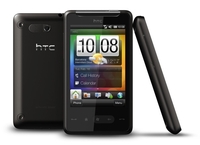
HTC might have released two behemoths in the Legend and Desire, but it's shown it wants to keep a hand in the Windows Mobile game by releasing the compact-yet-powerful HTC HD Mini.
The phone has measurements of 103.8mm x 57mm x 11.7mm, and while it's not the slimmest or tiniest mobile on the market, it certainly has some decent ideas behind it to make sure it's not seen as lagging behind its high profile Android brothers.
The first element is the industrial design, with a smooth black metal chassis held in place by four obvious screws.

HTC told us that this was actually fairly hard to design, as the supporting screws are usually in more random places, and it was quite a task to get it put together in this way.

The phone has a 3.2-inch capacitive screen, which looks a little smaller than that on the HTC Legend, although that's mostly down to the smaller chassis.
The screen is multi-touch enabled, and certainly plays well under the finger, responding instantly to any input you care to throw at it.

The home screen isn't as well stocked as its Android brethren, as there's no Friend Stream element added in.
However, you do get a dedicated Twitter client in the shape of Peep, and we'd imagine most people will be happy to have their social networks separated.

There's a 5MP camera on the back of the HTC HD Mini, with the speaker next to it to continue the industrial design theme, although there's no flash. However, the camera is autofocus enabled, and will work well enough to capture day to day imaging - just don't throw out your dedicated compact.
Windows Mobile is still in the 6.5.3 version, which is a lot more finger friendly, but still is light years away from where it needs to be (Microsoft, hurry up with Windows Phone 7 Series phones).

The touch sensitive panels on the front of the phone offer easy access to the main functions of the device, but don't really do it justice when it comes to quick navigation as it can be a little unresponsive.

Sliding up and down the hexagonal menu view works nicely, and the icons are much easier to hit than on resistive screens - so we're pleased HTC is the pioneer in the WinMo-capacitive display movement.
The most stark difference between the HTC Legend and the HTC Mini comes when using the keyboard - where one is hyper sensitive and accurate (the Legend) the HD Mini's is not in the same league.

Typing out a text message took an age, and the accuracy of the letter strikes was woefully low - a contrast made all the more stark as we'd been fondling the Desire mere moments ago.
At least the multimedia elements of the phone were better taken care of with the excellent Sense UI sorting your tunes and other media into categories like albums and artists.

Simply sliding your finger along the bottom of the screen allows you to slide between each category, and there's an Apple Cover Flow-like system to let you glide between each album.
Another cool feature that lives on the HTC Windows Mobile phones is the music player will keep running even when the phone is locked.

This means that you can change a track without needing to unlock the phone - a really nifty feature and one we hope Microsoft makes more of when Windows Phone 7 turns up.

We weren't able to test the internet browser on the HTC HD Mini, due to a lack of signal in the display zone.
However, we did manage to boot up the search screen and have a go with pinch and zoom - it worked pretty well, but then again there wasn't a lot of screen furniture to resize.

The HD Mini offers both HTC's rendering of the Opera Browser and Internet Explorer, although we doubt you'd want to open the latter unless you want to look at some patchy Flash video.
Overall, we weren't as impressed with the HTC HD Mini as we were with its bigger brothers - the Sense UI helped, but we can't help but feel that the Windows Mobile operating system just isn't up to as much as Android.
We'd love to know why there's so much disparity in the accuracy between the keyboards on the Android and WinMo phones - it's a real bone of contention for us.
However, given how highly we rated the HTC HD2 when we had it in for a full test, there's every chance the HD Mini could shine in the same way, once we crack open all the functionality Windows Mobile has to offer.

| |
Read More ...
Sony to charge for cross-game chat on PSN?

Cross-game chat could be a feature of the restructured Playstation Network (PSN), but with a catch – you'll have to pay for it.
The Official PlayStation magazine in the US has stated that cross-game chat is definitely on the cards but it could prove costly for users, noting: ""Aside from the 3D goodness, cross-game party chat is the obvious 'next big feature', even though it might be restricted to paid [PSN] subscribers."
The article also stated: "Sony's current service is one of the PS3's best features, so we'd begrudgingly welcome a revamped PSN with extra subscriber functionality, like cross-game-chat and exclusive PSN downloads."
New features
The magazine also lists its predictions for 2010, saying there was a 75 per cent chance of dedicated cross-game voice chat being implemented, probably in late spring.
Cross-game chat is something that Xbox Live subscribers have long enjoyed, at no extra cost – though getting on Xbox Live does cost. To make it viable, Sony will have to come up with something special.
Sony's certainly made no secret of the fact that it's considering PSN paid subscriptions, although the company has stressed they would only be for new features, not items that are currently free.
It's believed the subscription services could include unlimited access to PS1 and PSP games on PSN.

| |
Read More ...


No comments:
Post a Comment