

In Depth: Happy birthday, Digg: five years of the best and worst of the web

Digg has achieved an incredible amount in a very short time: its 20-million-plus users can make or break stories, knock entire websites offline and, er, break into Bohemian Rhapsody for no good reason.
The original Digg was the result of three months work - "We started working on developing the site back in October 2004," founder Kevin Rose told ZDNet.
The site launched on 5 December 2004 with a simple, ad-free design by Dan Ries, but it really started cooking with gas in 2005.
That year brought Digg 2.0, friends lists, a brand new interface and the new Diggnation podcast, and things got better still in 2006 with the arrival of categories for technology, science, world and business news, videos, entertainment and gaming.
By that time Digg had become a very big deal, driving enormous amounts of traffic to any site featured on its front page. The numbers were so big that Jason Calacanis of the relaunched Netscape offered top Diggers cold hard cash if they jumped ship. Rose wasn't exactly impressed. "Think of what your loyal Netscape users must think," he responded. "You're essentially telling them that they aren't good enough and that you have to pay better users."
Spammers, scammers and copyright keys
Calacanis wasn't the only one to note Digg's power. In recent years there's been an ongoing battle between Digg and people who want to rig it, such as right-wing blogger Michelle Malkin, groups with particular political agendas and even mainstream publishers.
In 2008, Digg even had to get the lawyers in when one firm, Usocial.net, offered to pay Digg users to surreptitiously manipulate the site. The reason is simple enough: Diggs mean traffic.

DON'T RIG DIGG: Digg's popularity means it attracts unwelcome attention: Usocial.net (shown here) had to be threatened with legal action over its attempts to manipulate Digg
As Kevin Rose wrote at the height of the Digg gaming frenzy, such attempts are a sign of Digg's success: spammers and scammers are an on-going pain in the backside for Google, for Yahoo and any other site with serious numbers of users. "Besides the technology and algorithms we maintain, our strongest tool in this effort remains our community," Rose says.
"I'm constantly amazed and grateful to the 99.9% of our users who want to make Digg a better place by contributing great content, digging and burying stories, and alerting us to behaviour that seems out of the ordinary."
That doesn't mean the users necessarily do what Digg would like them to. In what Rose describes as "my scariest day at Digg" in 2007, Digg users posted the encryption key that protected the HD-DVD movie format - and they posted it again, and again, and again.
As Rose recalls, "We had people recording the code to music, putting it on YouTube and saying 'you can't take this down, it's just a song. That was my favourite; that and the people who took the digits and converted them into Klingon!"
Despite Digg's best efforts, they couldn't stop users from posting the code - so they stopped trying. As Rose wrote on Digg the Blog: "You've made it clear. You'd rather see Digg go down fighting than bow down to a bigger company. We hear you, and effective immediately we won't delete stories or comments containing the code and we will deal with whatever the consequences might be. If we lose, then what the hell, at least we died trying."
As if that wasn't remarkable enough, the New York Times report on the story described Digg users as "sophisticated Internet users".
For a while Digg's users seemed to have peaked at around 20 million, but a slew of changes have made Digg more useful and increased traffic accordingly. Earlier this year the DiggBar was released amid some controversy - it frames linked websites, which many people see as extremely bad manners - and the search system was tweaked to make results more relevant.
The site also integrated Facebook Connect and introduced Digg Ads, a bold move that puts adverts in the regular news stream and enables users to digg or bury them. Meanwhile, the Diggnation podcast remains one of the best podcasts on the net, adding a .net award to its stable of accolades just this week.

DIGGNATION: Famed for its high production values and professionalism, the Diggnation videocast picked up a prestigious .net award just this week
So what's next? An iPhone app is on the cards and the API has been opened up to enable third-party applications to digg and bury stories, and that's likely to be extended so that third-party apps can also submit and comment on stories.
The single front page may also become multiple home pages - "We've always had this universal homepage which we are promoting stories to, but now we are going to start promoting it at a category level to get more longer tail content," Rose says.
Profit ahead
Most significantly of all, Digg is about to become profitable. Speaking to Business News, CEO Jay Adelson reported that Digg Ads are doing brilliantly, achieving click-through rates up to 100 times more than standard display advertising.
Digg Ads are so good, Adelson reckons, that Digg could offer them to other online publishers. For now, though, Digg's priority isn't money: it's growth. As Mashable reports, Digg's traffic "has nearly doubled since August 2008… in the last 30 days alone, the social media website grew by 10.23%."
Mashable reckons such growth means Digg could well be an acquisition target by a firm with deep pockets - and of course we know that Digg has flirted with Yahoo and Google in the past. Could 2010 be the year that Digg finally gets snapped up? We wouldn't bet against it.

 |  |
Read More ...
Review: Ei System Sorrento 1

The Ei System Sorrento 1 laptop is sold through PC World and fits into the same entry-level category as its Advent brand.
While its limited power and specification fall behind its rivals, the low price is ideal for those on a budget.
The plain design immediately shows this machine's budget roots and puts function firmly ahead of form. The staid black and gun-metal grey chassis is resilient throughout, but the glossy lid features a dated patterned finish that won't be loved by style-conscious consumers.
Weighing 2.4kg, the chassis is light enough for semi-regular travel use, although the poor 94-minute battery life severely restricts mobility. This is well below the three-hour minimum we expect from a modern laptop.
Limited usability
Usability is equally limited. Despite featuring a large keyboard with a comfortably spacious design, the keys provide a very spongy typing action, which makes it difficult to type quickly and accurately. The board also flexes slightly.
The 15.6-inch screen is far more pleasing. Its 16:9 aspect ratio is ideal for watching movies and working across multiple windows. Images are bright and sharp, with strong colour and contrast, as well as deep black levels, providing one of the best displays at this price.

At such a low price, performance inevitably falls behind its more expensive rivals. The Intel Celeron processor and 2048MB of memory provide the most basic levels of power for word processing and simple photo editing, but don't expect enough power for regular multi-tasking.
This level of performance is continued for 3D tasks. The integrated SiS graphics card is one of the lowest-powered chips on the market. It won't suit gaming or video editing and the Acer Aspire 5738-644G50Mn provides five times the performance here.
Storage is also quite poor, but suits basic home use. The 160GB hard drive will hold thousands of songs, videos and photos, but is vastly bettered by its rivals. You can watch movies and create your own CDs and DVDs, however, using the built-in DVD rewriter.
This laptop also fails to feature an integrated camera or HDMI port, again restricting the machine to basic home use.
It does ship with Microsoft's Windows 7 operating system, however, providing the latest software features.
While the Sorrento 1 falls behind its rivals in almost every way, the significantly lower price has to be taken into account. While you'll get far more for your money with the other machines here, the Ei-Systems is nevertheless still a reasonable choice for your first laptop.
Related Links
| |
Read More ...
Review: Acer Aspire 5738-644G50Mn

Acer is the world's second largest laptop manufacturer and offers a range of high-quality machines at affordable prices. Combining power, mobility and a strong specification, the Aspire 5738-644G50Mn is a very attractive laptop indeed.
Despite sharing the same-sized 15.6-inch widescreen panel as its similarly priced rivals, the 2.7kg chassis is fairly heavy but not too cumbersome as to no longer be easy to carry about.
Unusually, however, it also offers an impressive 291-minute battery life, making it highly portable for those that don't mind the extra weight.
The screen features a 16:9 widescreen aspect ratio. This makes it wider than many older laptop screens and ideal for watching movies and multi-tasking. Images are sharp, bright and vibrant, but the glossy Super-TFT coating makes it one of the most reflective panels we've seen.
Performance excels, thanks to the Intel Core 2 Duo CPU. Combined with 4096MB of memory, smooth multi-tasking is easy and our test software ran quickly at all times.
Build quality is generally excellent throughout, with a resilience that belies the low price. The glossy blue lid has a finish that is less prone to scratching than other such coatings we've seen, and the textured black and gun-metal grey interior is equally well made and sturdy.
This level of quality extends to the user interface. The wide keyboard features a unique design, with all the keys sitting high above the chassis. While this makes it easier for dirt to settle beneath the keys, usability is excellent, with a firm, responsive and accurate typing action.

The large touchpad is equally usable. Gesture control functionality is provided for scrolling, rotating and zooming files and photos with your fingers. A button next to the pad lets you disable it, if you prefer to use an external mouse.
Ample storage
Storage is comprehensive. The 500GB hard drive is a decent size for a laptop so whole families can store their files with ease. The dual-layer DVD rewriter and 5-in-1 card reader also let you save data to CD, DVD and memory cards.
802.11n Wi-Fi and Gigabit Ethernet provide high-speed wireless and fixed connectivity for the fastest possible network connections. An HDMI port also lets you connect to an external HDTV for the sharpest high-definition images.
Offering power and features far beyond what we expected at this price, the Aspire 5738-644G50Mn is an exceptional laptop and a true bargain. Even at a higher price, we would have no problem recommending it.
At this low price, there really is no reason not to take a look.
Related Links
| |
Read More ...
Opinion: Was eBay buying Skype the worst ever tech deal?

Was Ebay's historic Skype acquisition the worst deal in the history of the PC industry? Maybe not, but it's got to be on the shortlist. Dr Faustus negotiated himself a better contract.
First, let's consider the price. $2.6billion (in cash and shares) is a lot for any company to shell out, even for something as then-exciting as Skype and a share in the fledgling VoIP revolution.
Next, factor in the fact that if Ebay ever had a clue why it wanted Skype in the first place, we never saw it.
PayPal for $1.5billion? Sure. It's now the standard method of buying and selling on Ebay proper – that one makes sense. Skype? We didn't even see the much-mocked idea of buyers calling sellers to ask questions come to fruition, never mind anything that justified the exorbitant price.
No wonder Ebay has been trying to sell it on, but what exactly does it have to sell?
In a twist of fate that must have led to at least one former contract lawyer filling in a fast food job application form, we found out that Ebay had bought Skype, but not the key peer-to-peer technology behind it, which was still owned by the software's original developers.
To put this situation into some sort of context, it's the equivalent of Ebay having one wish and spending it on a lifetime's supply of tuna, but failing to persuade the genie to hand over a can opener.
But wait, that's not all! Just in case there wasn't quite enough salt poured into its already gaping wound, the moment Ebay finally managed to wash its hands of the whole messy business by finding a buyer for the service, Skype's original owners popped back up and hit the online auction house with a lawsuit, finally squirting actual blood from the emaciated cash cow's poor, withered udders. Right into Ebay's sobbing face.
What I'm trying to say here is that, firstly, I think this deal could probably have gone a little better.
Secondly, if there are still any giant corporations out there that disagree with me, and which honestly believe that urinating away billions of dollars on something as obviously foolish as the initial Skype purchase could be seen as a good investment, well, you're in luck. I hereby offer my services as a professional remora.
Happy to help
For one month only, you can get frustration, public mockery and all the angry shareholders you've ever dreamed of for one easy payment of $1billion. Order today to ensure disappointment!
I promise that it'll be the worst money you've ever spent, ensuring that anything else you do in business will be mere static.
Why would anyone pay for that? Well, wouldn't you like to go to bed knowing that your worst decision is behind you? You can't put a price on that kind of peace of mind, but luckily I can – and I'm waiting for your call! Do it now and I'll even throw in my special money-back guarantee – an absolute guarantee that you will never, ever get your money back!
In Ebay's case, however, there's a chance that its terrible decision might eventually pay off. Assuming it can get past the lawsuit issue, it stands to make a couple of billion back when the sale goes through. It would also be good news for Skype, which would finally be able to reengineer its missing piece of technology, embrace the developer community (something that it's largely failed to do over the last few years) and continue being the VoIP world's only known name.
More big deals to come?
After all, when was the last time you phoned someone from an IM client? It will be interesting to see how many more unbelievably big deals are struck in the future. In most cases, it seems that companies such as Google and Yahoo have spent their fortunes and not received much of a return on their investments.
Anyone who put together a $1billion bid for Facebook must be breathing a sigh of relief that it didn't go through now that the platform has largely lost the world's interest.
Only Twitter remains as a tech-world darling that the big online corporations might consider buying a piece of, just in case. For everyone else, it's time to stop thinking in terms of billions.
Millions, yes, fair enough. But when you're buying technology rather than talent, you tend to find that the original inventors cash out as soon as possible, usually in a thoroughly grumpy mood, leaving the service you've invested in to die on the vine. Even corporate support often seems like too much to ask.
Personally, I always try to avoid services built to 'flip' (to be sold off for megabucks) in favour of ones from companies such as 37Signals that seem prepared to keep rolling.
Nothing appears to get in the way of a good service more than too much money becoming involved too quickly. Except for bankruptcy, obviously, but that's a much less fun problem to dream of having.

| |
Read More ...
Apple move suggests streaming for iTunes

If seemingly imminent plans by Apple to buy a small online music specialist from California go ahead, it could signal the end of music downloading as we know it.
The apparently solid rumours that Jobs and co. are set to snap up Lala, a cloud-storage music website, suggests that Apple is either looking to add streaming music to iTunes or build something even more innovative.
No offline tracks
Lala's ability to make entire music collections available from the cloud obviates the need for users to keep downloaded copies offline on any of their own media, whether that's a portable player or a computer hard drive.
Should iTunes eventually morph into a music library in the sky, as many observers are speculating, then both downloads and music copying could disappear.
What's left?
After all, when companies like Apple are merely selling the right to listen to music stored remotely on hardware with permission to access it, then there won't be a lot left to copy.

| |
Read More ...
EU browser ballot issues rumbles on and on...

If you were wondering if the long-running European 'browser ballot' issue that has Microsoft pitted against other browser makers could get any more ridiculous, then rest assured that it just has.
The latest development saw Opera complaining to the European Commission that the idea of presenting Windows users with an alphabetical list of browsers available for download would unfairly favour Apple's Safari, as it features first on the so-called ballot screen.
Random list
As a result, Microsoft has agreed to present the browser list in a random order, meaning everyone has a theoretically equal chance of being picked for the playground rounders team, sorry... picked as the default internet browser within Windows, we mean.
The browser ballot, which is likely to come into effect next year, is an attempt to avoid antitrust action against Microsoft if it doesn't offer Windows users something other than Internet Explorer.
The facts that Firefox is already fast catching up on I.E.'s market share in Europe and that it's a simple matter of going to a website to get any other browser is, it seems, neither here nor there for the Commission.

| |
Read More ...
BenQ gets into e-book market with the nReader

To Kindle, Sony Reader and Nook, we can now add the name nReader, after Taiwanese firm BenQ revealed its own e-book reader this week.
The nReader will go on sale in Taiwan and China next month for the equivalent of around آ£170 and will be based around a six-inch touchscreen.
Like the market-leading Kindle, the nReader will allow users to download books wirelessly using either a 3G connection or a Wi-Fi network.
Online store too
BenQ says the device's 2GB of flash memory will be enough for 4,000 books and that it can be expanded using a microSD card.
Most significantly, perhaps, the multilingual (English, Chinese and Japanese) e-book will launch with a new online store offering the usual mix of books, magazines and newspapers.

| |
Read More ...
Student orchestra with iPhones for instruments

As if the iPhone wasn't already enough of an attention hog, a US college has equipped a group of students with the Apple device and told them to go make sweet music on it.
The University of Michigan students are using the iPhone to perform a live concert featuring their own compositions. Each handset has a strap for attaching it to a player's wrist and a speaker so the audience can hear the result.
Just blow it
Every phone has been programmed to resemble a different instrument, with the microphone serving as a mouthpiece for blowing into and the motion sensor allowing software to produce a variety of responses and sounds.
According to course leader Georg Essl, the idea behind using the iPhone was to see what could be done with the now-ubiquitous smartphone.
Piano tuner
Buried deep in the BBC story, however, is one of the more unusual iPhone-related nuggets we've yet seen.
Apparently, the piano tuner for the prestigious BBC Scottish Symphony Orchestra uses an iPhone app as a routine part of his work tuning Steinway pianos. Like we said, ubiquitous.

| |
Read More ...
Sony Ericsson Xperia X2 delayed until 2010
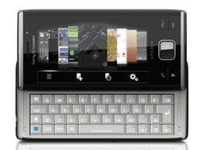
Sony Ericsson's flagship business device, the Xperia X2, looks likely to be delayed beyond its Q4 release date.
According to the Vodafone official site, the phone will now be delivered in January 2010, meaning another blow for Sony Ericsson following the debacle with the Satio.
The Xperia X2 wasn't in a finished state when we had a good play with it in October, so it's possible that the software still isn't up to scratch as yet.
Xmas blues
The big blow for Sony Ericsson is that the Xperia X2 will now miss the Christmas shopping period (traditionally one of the busiest times for mobile phone sales) and will fall into the post-festivities blues period.
Either way, we feel sorry for the Swedish-Japanese alliance - after the Xperia X1 was widely seen as disappointing and early reports mixed over the X2, missing the release deadline is the last thing it will need.

| |
Read More ...
Singing robot heads are the creepiest thing around

An art demonstration using three mechanically controlled human heads to sing could be the scariest thing we've seen all year.
Set up as part of an art installation in Switzerland, the $75,000 (آ£45,000) these animatronic heads will serenade anyone that cares to watch them.
Controlled by a computer to make the singing seem realistic and synchronised with the music, that doesn't stop us reaching for the holy water.
For the love of all that is good and pure!
We know we're supposed to love technology, but when it has rolling eyes, mouths that you can see through and, for some reason, a desire to sing in a scary high pitched voice, we want to kill it. Kill it dead.
If you want to see them in action (and let's face it, you know you do despite what we've just said) check out the video. Then sleep with the light on.
Via Engadget

| |
Read More ...


No comments:
Post a Comment