

Has ink entry patent outed the Apple Tablet?

Apple has filed a patent for inputting text that looks suspiciously like it could be on the long-anticipated Apple Tablet device.
Although patents do not necessarily equate to actual devices, one submitted by Apple for inputting text through a stylus, comes with a diagram of a device that looks like either a Newton or an oversize iPhone.
This tallies with rumours of an Apple touchscreen tablet device that have been floating round the tech world ever since the arrival of the popular iPhone and iPod touch.
The latter devices, of course, do not have pen input – but, like the Microsoft Courier video that was leaked – the potential for handwriting recognition and hand-drawn diagrams with a stylus are clear.
The patent was filed in July and the transcript reads:
"METHOD AND APPARATUS FOR ACQUIRING AND ORGANIZING INK INFORMATION IN PEN-AWARE COMPUTER SYSTEMS
Abstract
"An ink manager running at a computer system receives ink information entered at a pen-based input/display device and accumulates the ink information into ink strokes.
"The ink manager communicates with a handwriting recognition engine and includes an ink phrase termination engine that is configured to detect the occurrence of one or more ink phrase termination events by examining the ink information.
"Upon the occurrence of an ink phrase termination event, the ink manager notifies the handwriting recognition engine and organizes the preceding ink strokes into an ink phrase data structure.
"The ink manager may also pass the ink phrase to an application executing on the computer system that is associated with the ink information, and it, in response, may return a reference pointer and a recognition context to the ink manager.
"The reference pointer and recognition context are then appended to the ink phrase data structure. Utilizing the recognition context identified by the application, the handwriting recognition engine generates one or more hypotheses for the ink phrase, and provides them to the ink manager.
"The ink manager forwards the hypotheses together with die reference pointer to the application and may also append them to the ink phrase data structure."

 |  |
Read More ...
O2 customers spend 39 billion minutes on phones

O2 has announced that it has 5.7 per cent more customers than last year, up to 21 million.
This equates to 39,680,000,000 minutes spent on the phone from O2 customers in the last year, which would probably give you a very warm ear.
This, as it states on its blog, is enough to fill the Wembley Stadium 233 times over - although that doesn't count the space for those queuing for hotdogs.
Better than the O2 Arena?
However, as T3 points out, it hasn't mentioned its own Wembley rival, the O2 Arena, but a calculator-toting O2 employee has informed the site that it could fill that space, and the two surrounding nightclubs, 739 times over (although it probably doesn't want to publicise the smaller capacity).
And O2 is also furthering its Broadband deal, with 527,126 customers, which it calls a 'huge increase' year on year.
We'll be interested to note how the network fares in the next year, having replaced its exclusive deal for the iPhone with one for the Palm Pre - with Vodafone and Orange on the iPhone scene will it be able to continue the same growth?

| |
Read More ...
Google StreetView outs firetruck hit and run

Google's StreetView cars managed to spot more than just an uneven road sign when it caught a fire truck involved in a hit and run.
The incident occurred in Holland, where a woman was knocked off her bike by a speeding vehicle, leaving her sprawled in the road.
Thankfully, she appears to be unhurt, with the Google StreetView team performing the rescue operation (of lifting her up and asking 'are you OK?' - presumably in Dutch).
Taken down
The location on Google Maps is still visible, but the frame in question has been apparently removed by Google.
Of course, we're assuming this is a real event, and not somebody seeing the Google StreetView car and hurling themselves to the ground - but surely nobody would be that evil...
The Street View team might have been trying to make up it s Karmic debt, after it was spotted injuring a deer at the start of this year.

| |
Read More ...
46 million 3DTVs 'by 2013'

A new report suggests that in just four years there will be 46 million 3DTVs in existence – pushing the format very much into the mainstream.
Although there is a lot of deliberation at the moment with regards to whether 3D in the homes will actually be a success, US-based research agency GigaOM Pro believes that in just a few years the format's tipping point will come.
"While the initial shipments of flat-panel 3DTVs will be small in 2010 due to premium pricing strategies by the large TV manufacturers, volumes are likely to grow quickly in just a few short years as manufacturers begin to implement 3D as a standard feature across their HD flat-panel product lines," explained Alfred Poor of Giga OM Pro.
Choosing 3D
Poor also noted that the mini 3D revolution that's happening in cinemas at the moment, will echo people's love for the format in the home, explaining: "Just as many consumers are voting with their wallets today for the 3D version of their favourite movies in the theatre, we expect over time that many will choose 3D for their favourite shows and movies at home as well.
"The latest movies and shows will become available in 3D on Blu-ray, Pay-TV channels and even streaming online, which will help drive consumer adoption of 3D-capable TVs as prices drop in coming years."
This will be good news for the likes of Sony and Panasonic who are hoping that 3D will be a success in the home. Both companies are investing heavily in the technology and are set to release a range of 3D-capable panels sometime in 2010.

| |
Read More ...
Vodafone first to offer HTC HD2
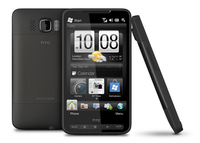
Vodafone has announced the availability of the HD2, with price plans to match the high-end features.
We loved the HD2 when it appeared last month, and as our review attests, it's one heck of a smartphone.
So it's good news that it's finally coming to the UK on an official carrier, with Vodafone offering it on 18- and 24-month contracts.
In for the long haul
Both deals will give you a free phone (which is retailing for only آ£500 SIM free) although you'll have to pay at least آ£35 a month on the two-year deal, and آ£40 for the 18-month version.
However, this includes unlimited internet and email and more minutes than you could shake a virtual-timekeeping stick at.
The former element is particularly useful, as the HD2 allows you to broadcast your 3G signal, with the phone functioning as a wireless router.
We're glad to see the phone appearing in the UK, and it will be interesting to note which other networks offer it too.

| |
Read More ...
In Depth: 10 Photoshop tutorials for digital SLR owners

As the popularity of the DSLR grows and grows, you might want to start thinking about getting creative with your photography and improving your shots.
Post-production editing in Photoshop can be a fun way to add life to your images, and there's some pretty cool stuff you can do, too.
Whether you're new to the editing game or an old hand, we present 10 of the best Photoshop tutorials to create something special, courtesy of our colleagues on PhotoRadar.com
1. Create brilliant HDR images in Photoshop
How to use Photoshop to fix misaligned shots, colour temperature mismatch, avoid halos and surreal images and correct movement artefacts.
Read Create brilliant HDR images in Photoshop
2. 10 Essential RAW fixes
We all know that shooting in RAW, as opposed to a compressed file format like JPEG, is the way to gaining maximum control over your photography. But what should you do with your photos once you've taken them? Here are 10 fixes that'll make you glad you switched to RAW.
3. Recreate the Top Gear effect in Photoshop
To get your car looking like it's straight from Top Gear, all you need to do is make a few tweaks, selections and use Adjustment Layers in Photoshop. Video sequences in the programme itself are filmed using glass gradient filters over the camera lens, giving a polarising filter effect. This effect is great for making car bodywork really sparkle and gleam. This tutorial will show you how to achieve the same effect.
Watch Recreate the Top Gear effect in Photoshop
4. Create a joiner photo from 16 exposures in Photoshop
Photo-joiners are montages made up of several different pictures. In film days, photographers would simply stick prints together but today this can be achieved in Photoshop to great effect.
Watch Create a joiner photo from 16 exposures in Photoshop
5. Create perfect monotones with adjustment layers
Discover how easy it is to use multiple Adjustment Layers to enhance your mono shots in no time at all. The latest versions of both Photoshop Elements and CS include updates to their black and white conversion features.
Read Create perfect monotones with adjustment layers
6. Create a multiple exposure in Photoshop
In the old days of film, multiple exposure images required either carefully winding back your film or a heck of a lot of skill in the darkroom. In the age of Photoshop, shooting a variety of shots and aligning and blending the layers is a doddle. Follow this tutorial to find out how to impress your mates and get them asking : wow, how did you do that?
Watch Create a multiple exposure in Photoshop
7. Create special lighting effects in Photoshop
Lighting effects can often make or break a photograph. Creative use of light can transform a shot by isolating detail, enhancing colour and forming a visual structure. Landscape photographers often have to wait hours for the perfect lighting moment. In this tutorial, discover how to recreate the look and effect of sunbeams using hidden tricks in Photoshop Elements.
Watch Create special lighting effects in Photoshop
8. Replace skies in Photoshop
Replacing the sky on an image with lots of foreground detail can seem like a challenging prospect, but in truth it can be easier than you think. Where complex shapes such as trees are involved, creating a super-accurate Layer Mask for the replacement sky is vital. This is achieved by by copying and modifying one of the greyscale channels from the original image and using a selection from the greyscale image to create the Layer Mask. Watch this tutorial to discover how this simple technique could potentially save dozens of shots from being wasted.
Watch Replace skies in Photoshop
9. Get the perfect night exposure in Photoshop
There are plenty of in-camera tricks available to help you get the perfect night-time exposure, but there's also a simple Photoshop technique that can also help you master it. All you need to do is shoot a scene at a range of exposures, then combine the shots to produce a rich image. Make sure you secure your camera to a firm tripod to take your shots - choose a mid-range aperture and shoot three 'bracketed' frames - one at normal exposure, one underexposed and one overexposed. Now follow this tutorial for how to combine the shots.
Watch Get the perfect night exposure in Photoshop
10. Create a fantasy landscape in Photoshop
It's possible to take elements from a variety of different source photos and combine them to create composite images easily with Photoshop. First you need to master the selection tools. In this tutorial we'll show you how to make a complex selection and modify it using a couple of different techniques. Also learn ways to blend separate source files together to master the art of convincing composites.
Watch Create a fantasy landscape in Photoshop

| |
Read More ...
Hands on: LG Android GW620 review

LG announced its new Android phone, the GW620, a few weeks ago and we got some hands on time with the little handset.
Basically an evolution of LG's QWERTY messaging phones, the GW620 looks a little bit like a slimmed down version of Motorola's Dext phone, with similar functionality too.
The phone is slim to hold in the hand, with a full slide out QWERTY keyboard. A 5MP camera sits on the back (with single LED flash), with the unit coming in with dimensions of 106 x 55 x 12 mm, which it pretty impressive when you consider it has a 3-inch screen and a slide out keyboard.

Behind the slide out section, there's an opening for a microSD card, and the up/down rocker switch too, with the microUSB and camera shutter buttons hidden around the edge for good measure too.

It fits nicely in the hand when in portrait mode - but the bad news is the screen is only resistive, meaning that scrolling and tapping our way through was a lot less intuitive that other Android phones.

It's the first Android phone to be this way (we think) and we can only hope that the cut in hardware is reflected in the final price.
Button wise - when the phone has the keyboard folded away - things are pretty limited on the front, with a menu, back and terminate button the only options to play with.

The interface is an odd fusion between LG's S-Class and the vanilla Android system - the menu is arranged in a way where the icons are grouped together rather than in the normal 'massive list of everything' version coined by Apple.

It mimics the S-Class interface in this respect, with a similar method employed on the likes of the new LG Chocolate BL40 and BL20 phones.
The same S-Class options are employed on the front home screen as well - instead of scrolling left and right to access new screens, you now get that 'spinning' cube interface for each new set of icons, which is a little cumbersome.

Another nice touch is the presence of Facebook and Twitter baked right into the handset - send messages from your social networks right from the phone, something that's becoming increasingly popular on today's handsets (especially those based on Android).
Media is laid out in a similar way to Motorola's Dext phone as well - in fact it's identical, so we're wondering if this is some kind of interface buried deep within Android that only Motorola and LG have managed to unearth.
Although pretty superfluous, the 'cradled' interface looks pretty snazzy, and that's important if Android is to go from geeky to mainstream.

The phone we tried was very slow and sluggish, with touch inputs not overly keen to respond - LG told us this was a pre-production unit but it was a bit worrying at how slow it was.

Anyway, it's coming soon and should be landing in Q1 of next year.
Search for the best LG GW620 deals at Omio

| |
Read More ...
Google Latitude now tells you where you've been

Google has updated its Latitude service, which tracks you and your friends' locations, to include a history of the places you have visited and alerts to let your mates know you are nearby.
The Google Location History will store, view, and manage your past Latitude locations. Once this information has been accrued, you will be able to see a visual plot on Google Maps of the places you have been.
Smarter alerts
Alongside this is something called Location Alerts. Although this feature has been around for some time, it's been updated to be smarter.
Instead of notifying friends every time you step out of the door, it will only notify your Latitude buddies if you happen to be in a place you are not normally in or at a regular jaunt at a different time.
Latitude is still only available on phones, and for privacy's sake you have to enable each new feature you want to use. But if you fancy jumping through these hoops and bringing about a bit of live-streaming to your life, then log on to google.com/latitude/apps for more information.

| |
Read More ...
Gary Marshall: Unemployment? There's an app for that

Modern mobile phones can do all kinds of things - including adding to the unemployment queues. When you install an app you're not just getting something that will make your life easier; you're contributing to the ultimate destruction of entire industries. Well, unless you're installing iFart, anyway.
There were two excellent examples this week. First, the car price guide Parker's launched a rather nifty iPhone app. Then, Nokia bragged about its Point and Find software, which can scan barcodes and automatically find the item on a price checking website. They're very different applications, but they could both have very serious implications.
Many industries depend on knowing more than you do. Car dealers know exactly how much your car is worth, and exactly how much the car they're trying to flog you is worth. You don't, and their job is to take advantage of that by paying below the odds for your car while getting you to pay over the odds for the new car.
Apps such as Parker's make that much more difficult: "A 2001 Saab 9-5 in average condition with 80,000 miles on the clock, you say? With metallic paint but not the AS2 stereo upgrade? My good man, with that price you're surely having a laugh!"
The more information you have, the less profit the dealer can make from you. The better informed the customers, the smaller the profit; the smaller the profit, the more cars the dealer needs to sell just to break even.
It's the same with other forms of retail. If you can scan the barcode on a flat-screen TV, a fridge, a Fimbles DVD or anything else you're thinking of buying, you can instantly discover where there's a better deal. It could be the shop next door, or a website. That's seriously bad news for high street shops, because the internet will undercut them almost every time.
It's not just shops, though. Estate agents should fear an app that enables you to point at a building, see whether the neighbours have planning applications or ASBOs, and discover the average selling price for every other house in the street - as well as showing other, nicer houses on the market.
Restaurateurs and hoteliers should worry about the apps that will show user reviews and scare off potential customers if their food or the beds aren't any good.
The only reason this hasn't happened already is that our net connections are at home, not in the high street, but of course smartphones are changing that.
The combination of cameraphones, apps and Augmented Reality is enormously exciting - unless you're a car dealer, or a shop owner, or a restaurateur, or a hotelier, or… well, pretty much any retail business.
Wholesale destruction of previously invulnerable businesses? There's an app for that.

| |
Read More ...
CES 2010: AMD, Ford and Nikon honoured

AMD's ATI Radeon HD5870 graphics card, Dell's Alienware TactX keyboard and Nikon's Coolpix s1000pj have all picked up the accolade of being named in the CES2010 'Best of Innovation Honorees'.
Before the January tech conference, the CES innovations awards serve to point to some of the biggest game-changers in technology in 37 categories.
The best of these innovations are put into the 'Best of' category, and this year's awards sees some big names picking up the honours, along with a host of less high-profile winners.
DX11 innovation
AMD's ATI Radeon HD 5870 is the world's first Direct X 11 graphics cards – and brings some key innovations to the PC, although NVidia is yet to unleash its DX11 cards.
Genesis Advanced Technologies' Genesis 7.1f high end speakers picked up a nomination for its 'elegant' efforts, Plantronics Savi Office was included for its neat phone to computer switching technology and Sanyo picked up the eco nomination for its eneloop bicycle.
Nikon's Coolpix s1000pj has a built in projector – which pushed it into contention - and Dell's Alienware branded TactX keyboard was considered a big success for gamers.
Other winners were: Crystal Cable BV for its natural glass Arabesque speakers, Intellitouch for its Eos Converge multi-room audio system, Sonic Innovations for the Sonic Touch hearing aid, Sirius XM Radio for XM SkyDock satellite radio and Ford for its In-dash computer.
You can look through the nominees for all the categories at the CES website.

| |
Read More ...
Microsoft makes WinMo marketplace safer

Microsoft has added in support for Windows Marketplace for mobile, designed to improve the experience for users.
Although only a nascent service, Microsoft has noted teething problems with the marketplace, and has moved to improve things.
This includes stronger anti-piracy protection, and guidelines on how developers can protect their apps too.
You can also now buy and browse for applications on your PC, with the applications then delivered wirelessly to phones and will install when Marketplace is run on the phone.
Couldn't be happier
Over on the Windows Team Blog, Microsoft has said how happy it has been with the take up of the service since Windows Mobile 6.5 launched:
"Marketplace has been extremely active and I couldn't be happier with the reactions from both developers and customers. We've been open for just over one month and already we can see that there's demand for an application marketplace that doesn't compromise on quality or experience."
Windows Marketplace for Mobile is still in its infancy, but it needs to populate quickly in order to compete with the existing applications offerings from Apple and Google.
Many have pointed out that a rich ecosystem of Windows Mobile applications already exist, and Microsoft will be hoping it can draw on this resource to help bolster numbers in the portal.

| |
Read More ...
Review: MSI X600-055UK

The X600-055UK is the second machine we've seen from MSI's ultra-slim X-series range, following on from the smaller X340.
With a 15.6-inch screen, this machine is a more rounded package, while still providing excellent mobility. The 15.6-inch screen features a glossy Super-TFT coating, which is reflective in direct sunlight.
With LED backlighting, it's also a bright panel, however, and so is easy to view in most conditions. There's enough space onscreen for comfortable multi-tasking and the 1366 x 768 pixel resolution and 16:9 widescreen aspect ratio prove ideal for watching films.
You'll find a mid-range ATi Mobility Radeon HD 4330 graphics card supporting the display. It provides the X600 with enough performance to handle basic graphics tasks with ease and you'll even be able to play older games.
Photo and video editing tasks are carried out with aplomb, making this lightweight laptop a surprisingly adept multimedia choice. The widescreen display creates plenty of space for the user interface, with a decent keyboard that proves comfortable even over longer periods of use. Unlike the X340, there's no sign of flex when typing and the keys move with a reassuringly accurate action.
A numeric keypad is crammed in alongside and, although it's not the largest we've seen, it aids data entry nonetheless.
Despite measuring just 25mm at its thickest point, the chassis is remarkably tough. The plastics are strong and the screen remains free from vibrations when typing, but the left-hand side of the palm rest heats up after prolonged use, and the display flexes slightly in the centre.
CULV processor
As with the smaller X340, this machine uses an Intel CULV (Consumer Ultra Low Voltage) processor, but this is the first system we've seen to feature a CULV Core 2 Duo chip.
Running at 1.6GHz, and backed by 4096MB of DDR2 memory, performance is akin to regular Core 2 Duo processors, proving easily able to carry out intensive tasks and run multiple programs smoothly. Battery life is also good, letting you work for 248 minutes.
There's no optical drive, but there is plenty of storage space on offer, thanks to the 500GB hard drive. There's also a 2-in-1 flash memory card reader, making it easy to access photographs from most digital cameras.
Networking features come in the form of 802.11n Wi-Fi and Gigabit Ethernet.
Providing excellent performance in a large yet thin and light chassis, the X600- 055UK offers a great compromise between size and power. As with much more expensive systems, you'll be able to work on the move without resorting to a smaller and slower form factor.
Related Links
| |
Read More ...
CES 2010 'not as big as 2009 conference'

CES 2010 will not be as big as its predecessor, according to the show's organiser Gary Shapiro.
Shapiro – the chairman of the Consumer Electronics Association (CEA) – the body behind the tech world's biggest show, confirmed that he expected attendance to fall short of 2009's 113,000 total.
Shapiro said CES for 2010 will "not be as big as this year or the year before ... similar to other major trade shows."
Credit crunched
The credit crunch is most likely responsible, with company's world wide cutting back on expenditure, and avoiding the big splash products that typically litter CES every January.
However, the total of attendees is still being estimated at 110,000 – which suggests that the Las Vega conference is a long way from sliding into obscurity.
Plus, major manufacturers are likely to be present and, hopefully, ready to give the tech industry a big kick up the behind for 2010.

| |
Read More ...
Review: Samsung X120

The Samsung X120is a small, stylish and very usable ultraportable laptop that is worth a look if you're after a well-priced machine to keep you productive on the move.
The glossy 11.6-inch screen is bright and detailed, so you'll have no problems viewing all manner of data, from pictures to spreadsheets. The viewing angle is also good, making the screen simple to read from all angles.
The shiny Super-TFT screen coating creates distracting reflections when viewed in bright conditions, however.
The chassis is built from hard black plastic, providing good protection for the laptop's internal components and an attractive silver stripe runs round the edge of the chassis. The lid boasts a shiny silver finish, although it manages to avoid attracting many fingerprints and smears.
Spacious keyboard
Despite the compact chassis, the keyboard is large. There's a little flex, but it provides a comfortable typing experience.
A large speaker sits at the top of the keyboard forcing the keyboard itself down. This means the palmrest is very small and often forces your hands to rest on the surface the machine is sitting on.
The touchpad is responsive, but the mouse buttons are positioned on either side, rather than underneath it. This makes successfully operating the touchpad and buttons with one hand almost impossible, which may irritate some.
The Consumer Ultra Low Voltage (CULV) Intel processor is combined with 3072MB of memory and provides sufficient performance for office applications and you'll have no problem surfing the web and creating spreadsheets.
This isn't a multimedia laptop, however, and the integrated Intel graphics card ensures that 3D performance is limited to basic photo editing, with all but the simplest of games out of the question.
Portability is generally great and the compact 1.4kg chassis is no trouble to carry around. Battery life, at 199 minutes, is decent enough and, while it won't provide all-day computing, you'll have plenty of power for the commute.
It's worth noting that there's no built-in optical drive, so you'll need to buy an external drive to read and write CDs and DVDs.
Wireless networking is courtesy of high-speed 802.11n Wi-Fi, with basic 10/100 Ethernet providing wired networking capabilities.
There are three USB ports for attaching peripherals and also VGA and HDMI ports for hooking up to analogue and digital external screens and projectors.
If you're after a well-priced ultraportable there are now more options than ever on the market, but thanks to its great design and good portability, we'd be very tempted by the Samsung X120.
Related Links
| |
Read More ...
In Depth: 15 Task Manager tips to make Windows 7 perform like a dream

At first glance Task Manager looks like nothing more than a geeky way to tell you what you already know, the names of the programs running on your PC.
Explore out favourite Task Manager tricks, though, and you'll find all kinds of options for monitoring your system, detecting and resolving problems, especially in its most modern Windows Vista/Windows 7 incarnation. Here's what you need to know.
1. Browse your processes
Press Ctrl+Shift+Esc to launch Task Manager. By default the first thing you'll see is the Applications tab, but this is misleadingly named and of little much use as it just lists top-level windows. If you want to see what's actually running on your PC then click the Processes tab, click "Show processes from all users", and scroll down the list. If you don't know what a process is then right-click it and select Properties to get more information, such as the folder where it's stored, which will usually offer additional clues.
2. Troubleshoot startup problems
Windows Media Player is known to crash from time to time (you may have noticed this). Occasionally it'll crash without having any visible window, though, so you won't see there's a problem. Then, when you come to restart the program, nothing will happen because it's blocked by the crashed copy in RAM.
If you find Windows Media Player won't launch, then, fire up Task Manager, click the Processes tab and look for a WMPlayer.exe process. If you find one, and there's no window, then it's probably crashed. Right-click it in Task Manager, select End Process, and once it's shut down you should be able to start Media Player as normal.
Much the same problem can happen with other applications, so if something won't start, or is just misbehaving, then it's always a good idea to look for previous instances of the program. Don't use the "End Process" on anything unless you're 110% sure that it's safe to do so, though - terminating something system-critical can lock up or crash your PC immediately.
3. View memory use
It's often interesting to see which programs are using all your RAM. To find out, click the Processes tab, then click View > Select Columns, and ensure Memory - Working Set and Memory - Private Working Set are checked. You'll now see two estimates for your processes use of RAM.
The first, "Memory - Working Set" shows you how much physical memory is currently being taken up by each process. Some of this RAM may be shared by other processes, though (shared DLLS, for instance) so this figure tends to overestimate memory use.
The second, "Memory - Private Working Set" shows you how much physical memory this process alone is using (that is, it can't shared with anyone else). It will almost certainly consume additional RAM, though, so this figure tends to underestimate memory use. It's a little more reliable than the Working Set alone, but really you need to see both.
Now click the "Memory (Private Working Set)" column header so the largest figures are at the top. You'll immediately get a good feel for where your RAM is going, and which programs (if any) you need to close or tweak to get some of it back.

RAM HOGS: Find out which programs are hogging your RAM in seconds
4. Identify RAM-hogging services
Your list of processes should contain many called svchost.exe (if not, then you've not clicked "Show processes from all users"). This is the service host, a process that's used to run several Windows services. But what if this turns out to be grabbing large amounts of RAM? Which services might be to blame?
To find out more, right-click a particular svchost.exe and select Go To Services. Task Manager will open the Services tab and all the services managed by this particular instance of svchost.exe will be highlighted. Task Manager has no way to tell you how much each RAM each of the services are consuming individually, unfortunately, but this does at least greatly reduce your options. (And a hint: in most Windows Vista installations, ReadyBoost is by far the greatest resource-hogging service.)
5. Diagnose disk thrashing
Ever wondered exactly why your hard drive's been thrashing for ages, even though there's no-one at the PC? Click the Task Manager Processes tab, then click View > Select Columns, and check I/O Read Bytes and I/O Write Bytes. Click OK.
The new columns will show you the total amount of data read or written by a process, which applies to network activity as well as your hard drive. The busiest processes will have the largest figures, and if a process is active now then its totals will tick up as you watch.
6. Spot resource leaks
Sometimes processes grab more and more Windows resources, without ever quite getting around to releasing them. 32-bit Windows in particular has only a limited supply, and if this goes on for too long then your PC will become unreliable, then eventually lock up or crash.
Task Manager can help you spot a resource leak, though. Click the Processes tab, then click View > Select Columns, check Handles, User Objects and GDI Objects, and click OK. Now check these occasionally, along with the memory figures we mentioned earlier. Some of these may rise dramatically, on occasions - an antivirus tool will use many more handles when scanning, for instance, as they're used when accessing files - but if a particular resource figure is high, keeps rising, and never falls back to its starting point, then you may have a problem.
7. Stop a runaway process
If a particular process has gone rogue, using all your CPU time and reducing everything else to a crawl, then Task Manager may be able to help.
First, press Ctrl+Shift+Esc and wait for Task Manager to appear. If your runaway process is completely tying up the CPU then this can take a while, but if you don't want to reboot (you've an application with unsaved data, say) then be patient. We'd give it at least 10 or 15 minutes.
When Task Manager appears, look for the process consuming all your CPU time (click Processes, then click View > Select Columns and check CPU if that column isn't displayed). If you want to kill the process completely, then you could right-click it, select End Process and it'll die (most of the time).
This doesn't always work out as you expect, though. If the process is system-critical, maybe a Windows component, then terminating it may crash your system immediately (and it always introduces a risk of system instability). If you've data you need to save elsewhere then it may be better to try and slow down the rogue process, reduce its grab on your resources, so you can use other programs again and close everything down properly. Fortunately Task Manager can help here, too.
Right-click your CPU-hogging process, select Set Priority > Low, and Windows should immediately give more CPU time to just about everything else on your PC. The program will still be running, it just shouldn't interfere with other apps to the same degree, and they should be accessible again.
If there are still problems, right-click the process and select Set Affinity. This option lets you decide which CPU cores a process can use. If you clear one of these then that core will become available to other applications, which should significantly improve their performance.
8. Understand CPU utilisation
Occasionally your PC will seem slow, as though something is using all your CPU time, but the regular CPU column won't display an obvious candidate. So what's going on?
Launch Task Manager, and click the Performance tab to see a graph of your CPU Usage History: it's pretty, but there's more to it than that. Click View and select Show Kernel Times (so it's checked). What you'll now see is two graph lines: one green, representing total CPU utilisation, and one red, representing the time consumed by the kernel.
When the green peaks are high, red peaks low then the culprit is a user mode process, probably just a regular application. But if the red peaks are consistently high then that shows your CPU time is being grabbed by something in the kernel, probably a driver, but perhaps also a Windows component, maybe even some deeply embedded malware.

FIND THE CULPRIT: Is a buggy driver grabbing too much CPU time? The Performance graph can offer useful clues
9. Create a dump file
If a program has locked up then you may able to use the Windows Debugging Tools to find out why.
Launch Task Manager first, click the Processes tab, right-click the hung process and select Create Dump File. When the process file has been written then Task Manager will give you its name and location.
Then launch the debugger WinDbg, and click File > Open Crash Dump File. Entering the analyze -hang command may tell you more about why a program has locked up, and if not then you can always use other debugger commands to tell you more about the process, its use of RAM, and so on (see the debugger documentation for details).
10. Control your services
If you need to stop or start a Windows service then you could launch the Services applet (services.msc). But why bother? In Windows Vista or 7 it's much quicker to do it from Task Manager. Just click the Services tab, right-click the service you need, and choose the Start or Stop option.
Be careful, though - stopping a critical Windows service can result in your PC locking up immediately (and tinkering with some third-party services is almost as serious). Don't try this unless you know exactly what you're doing.
11. Restart Explorer
Have the taskbar and desktop disappeared for no apparent reason? Explorer has probably crashed: press Ctrl+Shift+Esc and press the Processes tab to check for yourself. If Explorer.exe isn't listed then click File > New Task, type Explorer.exe and click OK to restart it.
Or, if Explorer won't start, your system is generally trashed and you'd like to reboot gracefully, then enter the command shutdown -r and your system should restart.
12. Discover system information
Launching Task Manager and clicking the Performance tab will reveal the total amount of RAM installed in your PC (check the Total in the Physical Memory box).
And the Up Time figure in the System Box tells you how long it's been since you last restarted Windows. The longer this is, the more likely that resource leaks or other issues will begin to cause problems. If your PC's been running for several days, and you're noticing odd behaviour, then consider rebooting - it just might help.
13. Monitor network utilisation
Click the Task Manager Networking tab and you'll see a graph that tracks your current network use over time. This can be useful if you've a network-hogging process that fires on a regular basis, for instance, as you should see a spike on the chart.
Click Options > Tab Always Active if you want Task Manager to keep collecting network usage data, even when the tab isn't displayed. Click View > Update Speed > Low to reduce the sampling time, which allows you to squeeze more minutes of activity onto a single screen. And click View > Network Adapter History to choose exactly what you'd like to graph: the bytes sent, received, or their total.
14. Talk to network users
If you're working on a networked PC then you may want to warn anyone browsing your system that you're about to reboot, close a process or do something else potentially dodgy. Click the Users tab to see who else is connected to your PC right now. By default you'll only see their user name - click Options > Show Full Account Name to see their network PC name, too. Then right-click a user and select Send Message to issue a warning, or Disconnect to kick them off immediately.
15. Use something better
Learning the Task Manager basics is important, as they'll let you diagnose problems on just about any PC. But the tool can only take you so far, and for really in-depth information and control over your applications you'll want to use something better. Process Explorer is the best known alternative and an excellent tool, but Process Hacker is also worth a look - if anything, it's even more powerful.

PRO TOOL: Process Hacker provides great control over everything running on your PC

| |
Read More ...
Review: Sony Bravia KDL-40Z5800 LCD TV

Although the current recession might have given many of the big names in AV quite a battering over the past 18 months, one name at least seems to have not only survived relatively unscathed but actually potentially benefited from the hard times: Freesat.
The BBC/ITV-led, free-to-air satellite broadcasting system, complete with a couple of HD channels, has attracted people to its service far faster than the vast majority of industry analysts – and us, to be honest – ever predicted.
The latest figures show a viewer base of 600,000 households as of September 2009, with a 50 per cent growth occurring in the quarter leading up to the release of that figure.
At the same time, Sky has for once struggled to meet its latest subscriber target, limping towards its desire for 10 million subscribers by the end of the year (and probably failing to reach it), rather than charging over the target line with months to spare as it often has before.

These facts, together with anecdotal evidence from many of our own friends and relatives, leads us to suspect that as the recession has bitten harder, more and more people have ditched Sky's subscription service in favour of the subs-free Freesat offering. Especially as they can use their existing Sky dish to get it.
All of which suggests that Sony's timing with its 40-inch KDL-40Z5800 couldn't be better. For this model is the very first TV from Sony to feature a built-in Freesat HD tuner, following in the footsteps of numerous Freesat models from Panasonic and a couple of models from LG.

Actually, we're kind of surprised that the 40Z5800 didn't arrive in the UK sooner.
After all, Panasonic has been making Freesat TVs for well over a year now, while LG's F7700 models came out as far back as March.
Panasonic had an initial exclusive deal with Freesat that explains some of the delay in Sony getting its Freesat finger out, but we can only hope that the time it's taken since Panasonic's deal ran out around the turn of the year is down to Sony wanting to make sure that its Freesat debut is something a bit special.

We'd kind of imagined that Sony would have wanted to announce its Freesat debut with some kind of grand design statement.
So it comes as a surprise – and something of a disappointment – to discover that Sony has merely dressed the 40Z5800 in the same smoky grey colour scheme, glassy finish and slender bezel as the brand's Z5500 TV range – a TV range with which, as we'll discover, the 40Z5800 has much in common.
On the upside, the Z5500 models are, for our money, the most attractive TVs Sony has done for a while, though, so at least the 40Z5800 has chosen the right 'stock' to base its look on.
The 40Z5800's connections broadly mirror those of the Z5500s too, meaning you get such goodies as four HDMIs, a USB port able to play video, photo and music files, and an Ethernet port for accessing files on a PC or Sony's Applicast online service.
But the 40Z5800 also features, of course, one notable addition: a port for attaching a satellite feed.
As usual, if you already have a dish installed that used to point at Sky, all you have to do is attach one of the LNB feeds coming from that dish to the TV and bob's your uncle: you're ready to 'go' Freesat.
If you don't have an old Sky dish set up, though, then you need to be aware that 'Freesat' doesn't quite live up to its name. For you'll have to get a dish installed, which will cost you around آ£80 on top of the TV's price.

Given that the 40Z5800 already costs the not inconsiderable sum of آ£1,350, we wouldn't have thought this extra آ£80 would be a deal breaker for most people.
But if it is, you will doubtless be chuffed to know that at the time of writing, you can reduce the 40Z5800's price by آ£100 by trading in your current TV in at participating stores before 29 November.
More than just Freesat
Getting back to the TV rather than the story surrounding it, we were intrigued to discover during setup that the satellite tuner inside the Z5800 isn't only geared up for Freesat.
For we were given the option of installing Freesat channels or doing a simple DVB-S scan, with the latter bringing in any free to air channels (many of them foreign language ones) available from the satellites your dish is pointing at. However, you can't use Freesat and DVB-S simultaneously. It's one or the other.
The Freesat package currently offers more than 140 TV and radio channels. So obviously you're going to need an electronic programme guide to 'surf' them.
It has to be said that the one used by the 40Z5800 doesn't do anything very exciting – it's just a long list of channels, really, with their programmes presented in clear white text on grey background boxes.
Still, while in an ideal world the picture of the channel you were watching when you chose the EPG would continue to play in a small box while you browsed the listings, the 40Z5800's efforts to put your huge new channel collection into some kind of order work reasonably effectively and quickly.
There's none of the sluggishness noted with LG's Freesat EPG, for instance.
While Sony might not have gone to town in design terms for its Freesat debut, it has made sure that the Freesat tuner is far from the 40Z5800's only claim to fame. For the set also has a number of features on board to do with its picture processing.
For instance, as well as Sony's latest Bravia Engine 3 video system, it enjoys 200Hz processing – and this is 'real' 200Hz, where the image actually does refresh 200 times a second, rather than being something that relies on a combination of 100Hz and a scanning backlight, as happens with many rivals' 200Hz systems.
The only moan we would make about the 40Z5800's 200Hz approach is that it only features High, Standard and off settings; there's not the same flexibility in customising its activities that you get with Samsung's 200Hz models.
Other smaller but still notable little bits and bobs among the 40Z5800's onscreen menus are separate MPEG and 'standard' noise reduction routines, a black correction system, Sony's Live Colour engine for boosting colour saturations, and a reasonable degree of gamma adjustment.
To conclude this section, we need to talk for a moment about its online functionality. First of all, it's a shame that there's no Wi-Fi support on the 40Z5800, given that Samsung's online TVs allow a wireless connection via an optional USB dongle, and Philips' online TVs have full Wi-Fi connectivity built-in as standard.
Also aggravating is the current lack of any really meaningful content on Sony's AppliCast online service.
All you've got, essentially, are a few downloadable photos you can use as screensavers via the TV's PhotoFrame mode, an onscreen clock, an onscreen calculator, weather reports, and a few news stories, mostly to do with Sony's own products! Here's hoping we start to see this service being expanded considerably sometime soon.
The 40Z5800's onscreen menus use the icon-heavy, double-axis system we've seen on a number of previous Sony TVs – and it's a system we generally like, aside from the fact that it takes a little getting used to when you first get the TV.

The remote control is a pleasant enough device for the most part, with our only niggle being that the circle within a circle design at the remote's heart can lead to a few wrong button presses, especially if you're using the remote in the dark.
We also found ourselves a little confused initially about which digital tuner we were watching – Freeview or Freesat – at any given moment. The onscreen labelling should definitely be more helpful in this regard. But again, this potential for source confusion reduced over time, as we got to know our way around the TV better.

The best way to sum up the 40Z5800's pictures is to say that they're seemingly the same as those of the 46Z5500 we tested recently, minus that larger TV's noticeable backlight consistency problems. Which is another way of saying that the 40Z5800's pictures are for the most part really bloody good.
The 200Hz engine, for instance, does a really quite excellent job of tackling LCD technology's problems with motion blur and judder, achieving a strikingly – but crucially not excessively – smooth picture while generating precious few unwanted side effects.
In fact, if you set the MotionFlow system to Standard rather than high, you'll be hard pushed to notice any glitches at all – even though the picture still looks markedly more fluid and clean than it does with the system turned off altogether.
This motion clarity is joined by some extravagant sharpness when showing HD sources – this has long been a strength of Bravia LCD TVs, and it's given added emphasis here by the extra motion clarity caused by the 200Hz system.
Bravia Engine 3 has also proved highly successful in rescaling standard definition pictures to full HD screens, so it's no surprise to find the 40Z5800's standard def pictures combining sharpness with a relative lack of video noise.
Next, there's the sheer dynamism of the 40Z5800's pictures, as some impressively deep black levels sit side by side with searingly rich colours and pure, bright whites in a way seldom seen outside of the plasma or, especially, LED-backlit worlds. What's more, as noted earlier, there's no evidence that we could see of the distractingly different backlight levels in the picture's corners spotted with Sony's 46Z5500.
Whether this is a result simply of the 40Z5800 using a smaller panel than the 46Z5500 or reflects some improvements to Sony's manufacturing processes is currently impossible to say – so if you're thinking of buying a 46Z5800, try and check one out before you buy.
The only issues we have with the 40Z5800's pictures, really, are 1) that many of its presets are none too clever, requiring extensive calibration, 2) that the viewing angle is a little limited and 3) that the automatic backlight system can occasionally look a touch too obvious.
But these really don't amount to much versus all the good the TV does.
We should probably finish this section by saying that actually, there's nothing specific we need to say about the 40Z5800's Freesat pictures. They come out just as well through the TV's various picture processing bits and bobs as those of the Freeview tuner – except, of course, when they're HD and thus a million times better than Freeview!
Pictures as strong and dynamic as those delivered by the 40Z5800 clearly deserve to be partnered by equally potent audio. But unfortunately the 40Z5800's speakers seldom if ever rise above a fundamentally average level of performance, mostly thanks to the way a core lack of power prevents the TV from filling your room with an immersive soundstage.
Instead sound seems to become trapped inside the TV during heavy duty action scenes, as the speakers turn in on themselves to avoid distortion rather than opening up to meet the challenge.
While disappointing on such an otherwise high-powered TV, though, this audio state of affairs is hardly unique on TVs with extremely slim bezels.
Value
It's impossible to ignore the fact that there are much cheaper Freesat TVs available from Panasonic and LG. But then the 40Z5800 does go some distance to justifying its cost with its online functionality, good multimedia support, 'real' 200Hz engine and, above all, its terrific picture quality.
Although it would be nice to see Sony sticking a Freesat tuner into a much more affordable TV at some point soon, there's no doubt that the 40Z5800 is a fearsomely talented statement of future Freesat intent – and as such it actually just about manages to justify its cost to anyone with sufficient readies at their disposal.
We liked:
For the most part, Sony has integrated its Freesat tuner into what's essentially an existing TV chassis (the Z5500 range) really well. All the Freesat-related functions work slickly and efficiently, and the pictures from the Freesat tuner are outstanding.
In fact, the 40Z5800's picture quality with all sources, but especially Blu-ray, ranges consistently from very good to truly outstanding, as Sony's Bravia Engine 3 and 200Hz systems come together to spectacular effect.
We disliked:
With Panasonic and especially Philips both proving at the moment that it's possible to get good sound out of slim TVs, we'd really like to see Sony improving in this area for its next round of Freesat TVs.
We also found shifting between the TV's Freeview and Freesat digital tuners a rather confusing business at times.
The Applicast online system is currently impoverished too, and finally, as is so often the case with LCD TVs, we have to point out that if you're likely to have to watch the 40Z5800 from much of an angle, you're going to have to put up with a picture that loses a distressing amount of of contrast and colour saturation.
So you'd probably be better going for one of Panasonic's plasma-based Freesat TVs instead, as plasma technology is much more forgiving of wide viewing angles.
Final Verdict:
Despite carrying a slightly high price tag that inevitably forces us to look more keenly at its failings, the 40Z5500 remains overall a really terrific TV thanks to the way it combines the clutter-busting appeal of the built-in Freesat tuner with a totally uncompromising stack of picture processing which results in some of the very finest picture quality yet seen from an LCD TV.
Related Links
| |
Read More ...
New update to bring Facebook to Sony PS3?

Facebook's domination of games consoles looks set to continue with a leak from the company suggesting that connectivity to the social networking site is imminent.
ScrawlFX has managed to bag some images of the upcoming PS3 firmware update which were unwittingly posted on Sony's official PS3 site.
While the images have now been taken off, they clearly show a visual link to Facebook on the XMB, alongside the ability to choose your gamercard colours.
Social club
Facebook is expanding into the games sector at an incredible rate. Recently it was announced that the service will soon be available on the Xbox 360, alongside Twitter.
The arrival of Facebook and more recently Sky Player on the Xbox 360 has made the console into a real media hub.
Sony will no doubt want to follow suit, even though it has yet to get Sky integration, it already has TV capabilities through PlayTV and movie downloads are also just around the corner.

| |
Read More ...
Review: Epson EB-1735W

The Epson EB-1735W is the only LCD projector we have tested this month. In fact, as one of the main developers of LCD technology, Epson only offers this technology in its range of machines.
Weighing in at 1.7kg, this is quite a heavy projector, while the design is rather long, the supplied carry case does make it easy to carry. The unit feels exceedingly robust, with curved edges to the plastic casing and a built-in lens cover that you slide to reveal the lens.
As with the BenQ CP270, the zoom and focus rings are hidden away in the main body of the unit. However, as they have rather large dials, setting up the EB-1735W proved incredibly easy.
Connectivity on the rear of the unit is more than acceptable, with a standard D-sub port for hooking up to your laptop. Also, along with Video and S-Video ports, you'll find two USB ports for Type A and B connections. This means you can attach a USB memory stick and present directly from that, without connecting your laptop.
What's more, on the side of the projector you'll also find a slot for plugging in the supplied USB Wi-Fi adapter, which offers 802.11a/b/g connectivity to the EB-1735W.
As with the build of this device, when it came to image quality, we were just as impressed. The standard resolution of 1280 x 800 pixels matches that of many modern laptops, so getting the best image possible from the Epson is simple.
When it came to running video, we were impressed, as colours looked warm and true to life. In presentation mode, you will find that DLP machines offer better contrast than LCD units such as this, but even so, we found the EB-1735W to offer good all round colour balance.
The EB-1735W may not be the smallest, cheapest or lightest projector, but it's certainly one of the most accomplished. From the design, to the build and ease-of use, the quality of this data projector shines through.
Related Links
| |
Read More ...
Review: BenQ CP270

The BenQ CP270 data projector has a neat and compact design. The basic shape is square, with the lens hidden away inside the main body of the unit.
Also neatly protected by the main body are the zoom and focus rings. While this makes the device a little harder to set up, it means that it's less prone to damage when carrying around.
The touch-sensitive controls on the top of the unit are similar to those on the LG HS102 projector, with ten buttons featuring everything from Menu and Sourcing through to the ability to blank the screen – a nice touch when sharing the projector between users during presentations.
With an overall weight of 1.5kg, this is a truly portable device, given that it has 2000 ANSI lumens rating that will project bright and sharp images in all but the brightest of meeting rooms.
Limited connections
Connectivity on the back of the unit is rather basic given the size of the projector, and is certainly less impressive than the array found on the Optoma EP1691. You'll find a standard D-sub port, along with Video and S-Video.
However, to keep the price and size of this unit to a minimum you won't find audio options included.
When it comes to using this projector out and about, we found it a portable unit to travel with and, thanks to the HD Ready format, you'll be able to watch videos in widescreen format.
However, the CP270 has one of the poorer contrast ratio ratings, which came to the fore when running video through this projector. While the main image showed few signs of pixellation, colour balance was less impressive than with the Optoma and Epson units.
This would suggest the BenQ CP270 is better suited to office rather than home use. What's more, we found this a rather loud machine to run.
The CP270 is a decent data projector that offers a reasonable feature set for the price. While it's not the most powerful or portable model, we feel it offers good value for money.
Related Links
| |
Read More ...
MIT proposes digital cloud for UK

The UK is set to get an actual digital cloud in time for the Olympics which will house "a barometer of the city's interests and moods".
The idea has been proposed by researchers at MIT, after a competition was announced to build a new tourist attraction in London for the 2012 Olympics.
The structure dubbed as "the cloud" would consist of two 400-foot towers and a number of interconnected bubbles, which would include things like an observation deck and a series of digital displays relaying statistical information from the Olympics.
If MIT win the competition, then the 'mood barometer' aspect of the cloud would be powered by Google.
Sponsor an LED
Interestingly, the whole structure would be powered by solar energy and paid for by the public – in the form of micropayments.
"Everyone around the world can contribute to the Cloud - whether by visiting or by sponsoring an LED, helping to keep the London lamp aflame," says the blurb on the website www.raisethecloud.org.
Even if MIT fail in their bid to win the competition, it sounds like the researchers will still build the structure. Whether it will be made in London is not known.
The cloud has already got London Mayor Boris Johnson's seal of approval. he is quoted as saying it is remarkable.
To be fair, he probably says that everyday when he sits down at the desk marked 'Mayor'.

| |
Read More ...
Taiwan set to bring end to exploding laptops

Taiwan's Industrial Technology Research Institute has claimed to have come up with a way to solve the problem of Lithium-ion batteries exploding in laptops and mobile phones – and is suggesting that the technology will be available early next year.
The invention – called Stoba – is placed between the positive and negative side of the battery and, when the battery reaches 500 degrees centigrade (266 farenheit) it shuts the battery down.
It does this, rather niftily, but reacting to the temperature by going from a porous material to a film which prevents the reaction in the battery.
Testing, testing
"We have introduced a totally new material to the battery," Senior Researcher and Team Leader Alex Pang, told Reuters.
Pang stated that the material was already being tested by battery makers and that the product would ship in the first quarter of 2010 and that it adds just three per cent to he cost of production.
Which hopefully means we soon won't have to write another 'exploding laptop/phone' story ever again.

| |
Read More ...
BT still pushing fibre optics despite revenue drop

Communications giant BT has published its latest quarterly results, and although the company's Chief Executive Ian Livingstone suggests that there "remains a lot to do" in reducing costs, he insists that rolling out a fibre optic network is of paramount importance.
Revenue for BT is down by three per cent, or six per cent excluding foreign exchange movements and acquisitions.
It's not all bad news, however, with the Global Services Division earnings before interest, taxes, depreciation and amortization (EBITDA) up by 53 per cent on the first quarter, part of a company wide adjusted EBITDA of آ£1.436 million.
The company's net debt is down to آ£9.9 billion, and the dividend per share has been put at 2.3p.
Fibre in their diet
BT has already indicated that it is taking steps to improve its communications infrastructure – notably by stepping up the push for a larger fibre optic network.
"We have had another quarter of progress but there remains a lot more to do. With total cost reductions of over آ£900m in the first half, we have made significant headway towards our previous target of well over آ£1bn for the full year," said Livingstone.
"We now expect to generate at least آ£1.6bn of free cash flow this year, compared with our previous target of over آ£1bn.
"We are investing in the future of the business with an enhanced and accelerated programme of fibre deployment and wider roll out of faster broadband speeds, all within our capital expenditure plans.
"Given our operational performance, we expect to increase dividends by around 5% for the full year. The Board is declaring an interim dividend of 2.3p per share."

| |
Read More ...
Packard Bell offers up Freeview-certified PCs

Packard Bell has announced two new all-in-one PC systems that take advantage of Windows 7's touch capabilities and add a little Freeview TV into the mix – the oneTwo M and L.
It's the first time, according to Packard Bell, a PC has been Freeview certified which essentially means you will be able to watch the UK's free-to-air channels on the computer without the aide of a separate set-top box. The channels are shown through Windows Media Center.
Blu-ray support
The oneTwo M series comes equipped with 20-inch 600x900 HD display and offers up to six USB ports, a 5-in-1 card reader, an integrated webcam and in-and-out audio jacks.
Also on-board is an Intel Core 2 Quad processor, ATI Radeon Mobility 4670 with 1GB DDR3 video memory, and there's support for HD decoding and an optional Blu-ray drive.
If you do want to go for the Blu-ray option, then we would recommend getting the L series which, at 23 inches, has a bigger screen which is 1080p Full HD Ready.
Sound-wise, there's 5.1-channel surround sound support with additional speakers.
The systems also use Packard Bell's TouchPortal tech which makes use of Windows 7 touch controls.
The oneTwo M and oneTwo L are out now, with prices starting from آ£599 and آ£899 respectively. Got to www.packardbell.co.uk for more details.

| |
Read More ...
Wolfram Alpha finally added to Bing

Microsoft has announced that its partnership with Wolfram Alpha is about to come to fruition with news that the computational knowledge engine's data is to be added to Bing this week.
The first signs of a link-up between the two search newbies happened back in August, when it was reported that a deal was in place but no clear word on when users of Bing would see Wolfram Alpha results within the search engine.
Advanced algorithms
On its community blog, Microsoft finally announced the link-up, saying: Today we are excited to unveil some work we have been doing with Wolfram Alpha.
"Started in May 2009 by noted scientist Stephen Wolfram, Wolfram Alpha is an ambitious (and very cool) project to, as the company's website says, 'make all systematic knowledge immediately computable by anyone'.
"We'll be providing access to Wolfram Alpha's advanced algorithms and expertly curated data within the Bing experience. This new and exciting work is completely aligned with our broader goal of enabling faster, more informed decisions. Specifically, we will bring nutritional information and tools into Bing's search results, as well as some straight up hard maths and homework help."
So, if there is a maths problem puzzling you and you don't know where to turn then Bing, with a little guidance from scientist Stephen Wolfram, looks likely to be your saviour.

| |
Read More ...
Modern Warfare 2 twice as popular as GTA IV

Not content with hammering pre-sale records, Modern Warfare 2 has broken all sales records to achieve the best opening day sales for a game ever – selling 1.2 million copies in just 24 hours.
Backed by an extensive advertising campaign and the sort of word of mouth that only Apple can aspire to, Activision have produced a sure-fire hit in Modern Warfare 2, a game that is selling copies as fast as blockbuster movies sell tickets.
Price war
Back in April 2008, GTA IV set a new record of one-day sales bringing in – according to MCV – 609,000 sales. Modern Warfare 2 in the same time frame sold 1.2 million.
While the amount of money the launch has brought in hasn't been revealed, when GTA IV sold 926,000 units in its first five days on sale it took in around آ£40 million in the UK. Worldwide, this figure was more like $500 million.
One of the big reasons the game has sold so well has been put down to a supermarket price war. With the likes of Sainsbury's selling the title at a cut-price آ£26 (RRP is آ£59.99) many gamers have picked up a bit of a bargain.

| |
Read More ...


2 comments:
I like to share information that I've accumulated with the year to
help improve team efficiency.
Check out my blog post: SEO
I loved as much as you'll receive carried out right here. The sketch is attractive, your authored
material stylish. nonetheless, you command get bought an impatience over that you wish be delivering the following.
unwell unquestionably come more formerly again since exactly
the same nearly a lot often inside case you shield
this increase.
Feel free to surf to my site roblox hack; google.com,
Post a Comment