

Gary Marshall: Why everybody should be grateful for five years of Firefox

We're celebrating the anniversary of two big events this week: the fall of the Berlin Wall, and the birth of Firefox.
We'll remember one of them as bringing freedom to millions and dealing a hammer blow to a repressive regime, and we'll remember the other as that thing where Bono ponced around in front of the Brandenburg Gate.
If it weren't for Firefox, you'd be reading this in IE6 - the software equivalent of the horrible Trabants the East Germans tooled around in before the Wall came down.
It's a browser, certainly, in much the same way that a Trabant is a car. But the Trabant isn't a great car, and IE6 certainly isn't a great browser.
Actually, that's a bit unfair. IE6 wasn't bad in 2001, when it was the culmination of an extraordinary effort by Microsoft to crush Netscape.
From 1995 to 2001 Microsoft invested huge amounts of time and effort in Internet Explorer - and by huge we mean really huge: Spyglass developer Eric Sink says the IE4 team was 1,000 strong, "50 times the size of the Spyglass browser team… almost as many people as Netscape had in their whole company" - and by 2001 the battle had been won - at which point Microsoft effectively said "Internet Schminternet" and shut down the Internet Explorer team.
In one fell swoop Microsoft went from "Browser war!" to "Browser? Snore!"
That's when things got nasty. Viruses, malware and really horrible websites proliferated, and it wasn't until Firefox had spent three years comprehensively kicking Internet Explorer's electronic arse, bringing its market share down from nearly 100% to 70-odd percent (it's 62.11% today, says Wikipedia), that Microsoft magically and entirely coincidentally decided that it was time to bring out a new version of Internet Explorer.
Most of the stuff you take for granted today - including stuff in Internet Explorer - was popularised by Firefox. Integrated search. Tabbed browsing. Recently visited URLs in the address bar. A central download manager. Browser themes. Extensions. Password management. Third-party cookie blocking. Speed. Proper web standards support.
It doesn't matter what browser you use, or what platform your PC runs. If you use the internet, you owe Firefox a big thanks.
It's informed the design of other browsers, it's given Microsoft a well-deserved boot up the backside, and it's helped make the internet safer, smarter and standards compliant.
Not bad for a five-year-old, eh?

 |  |
Read More ...
Channel 4 3D week: programmes revealed

Channel 4 is all set for its 3D onslaught this month, with the channel releasing a list of programmes viewers will be able to see in 3D.
3D Week on Channel 4 is set to take place on 16 to 20 November, with those wanting to participate in watching the shows having to get their glasses from Sainsbury's stores.
Although the channel isn't breaking new ground with 3D – it's chosen to use old-school anaglyph tech – it does show that 3D is very much in vogue at the moment.
Good old-fashioned fun
As the channel says on its own website: "We are inviting viewers to celebrate 3D on TV. We're not talking state of the art IMAX technology here, but some good old fashioned fun"
The technology being to broadcast the 3D programmes is actually called ColorCode3D.
To whet your appetite for Channel 4's 3D week, here's our pick of the best shows on offer:
- The Queen in 3D
(Monday 16 November, 9pm)
Story of film makers Bob Angell and Arthur Wooster, who created the 3D colour newsreel of the Queen during her Coronation year they named 'Royal Review'.
- Flesh For Frankenstein
(Wednesday 18 November, 12.40am)
3D version of Paul Morrissey's macabre, wacky 70s take on the Frankenstein story, starring Udo Kier and Joe Dallesandro.
- Hannah Montana & Miley Cyrus: Best of Both Worlds Concert
(Date/Time TBC)
Miley Cyrus and her alter ego Hannah Montana take to the stage in this spectaular 3D concert taken from her sell out 2007 and 2008 North American tour.
- Derren Brown Presents The 3D Magic Spectacular
(Monday 16 November, 10pm)
Leading performers dazzle the audience with incredible trickery, while amazing archive footage features performances of some of the world's greatest magic tricks
Also shown in 3D will be the horror-show that is Friday the 13th Part III and a clip show of the greatest ever 3D moments.
Go to www.channel4.com for more details.

| |
Read More ...
O2 allows customers to unlock iPhones for free
O2 has confirmed to TechRadar that iPhone users will be able to unlock their iPhone for free and use it on any network they wish at the end of their contract term.
Some reports have suggested that a fee will be charged to perform this action, but O2 has told us that this will not be the case for contract users:
"The Apple iPhone has been available in the UK exclusively on O2 since November 2007. Once the iPhone becomes available on other UK networks, Pay Monthly customers on a consumer or business account will be able to unlock their iPhone without charge at any point during their contract.
"This also applies to BlackBerry and Xda. All other devices are unlocked on o2 automatically. Customers will still have to honour the remainder of the minimum term on their contract even if they place a non-O2 SIM into it.
"Pay & Go customers can unlock their iPhone or any other device on Pay & Go, after twelve months with O2, for a آ£14.69 one-off fee, which is deducted from their airtime balance."
Unlocking confirmed
CEO Matthew Key was quoted in The Times as confirming the network would be allowing customers to unlock the iPhone after it was rumoured the network would be blocking it.
""There is absolutely no truth in that rumour. Once the iPhone becomes available on other UK networks, we will allow O2 customers to unlock their iPhones, although of course they will still need to honour any outstanding contract period they have," he said
"At the end of their contract period, they are entirely free to move to another operator - though naturally we hope they won't want to!"
We have contacted Vodafone and Orange to find out whether they will also be allowing customers to unlock the device at the end of their contract, but we'd assume that this would be the case after O2's confirmation.

| |
Read More ...
In Depth: How technology will save music

Lord Mandelson's draconian anti-filesharing plans are designed to save the music business. But does it need saving?
Thanks to evil music pirates, sales of singles in 2009 are, er, higher than they've ever been. "This truly is the era of the digital single," Martin Talbot of the Official Charts Company says.
"The UK Top 40 is now almost entirely comprised of digital singles," the British Phonographic Industry says. So does the music business really need saving from technology - or is technology saving it from itself?
Our money's on the latter.
Sales of both digital singles and albums are rising, but overall sales are still in decline. However, if you look at the bigger picture, there are plenty of ways for the music industry to benefit from technology - and not just through the precision marketing that's possible thanks to data mining and social networking.
Industry body PRS For Music estimates the value of the UK recorded music market at آ£1.3 billion [PDF] and says that's one-third of the total music money pie. The recorded music slice is getting smaller, but that doesn't mean the pie is.
Music for free
So where will the money come from if not from sales of CDs?
First up, there's more to the music business than selling songs. PRS For Music: "The so-called disengaged majority – a full 60% of the UK population - may in fact engage with music through a variety of legal alternatives to music retail (eg live venues, YouTube, BBC and commercial radio). Importantly, some of these alternatives are provided for free at the point of consumption, with compensation taking place further up the supply chain."
A good example of this is YouTube or the free version of Spotify. Playback is free to us, but the sites generate advertising revenue that helps pay for the music they use. YouTube doesn't say how much it brings in, but according to Out-Law.com Spotify brings in around آ£82,000 per month in advertising income.
Free content can also be used to up-sell and cross-sell so, for example, somebody watching a Muse clip may well want to see Muse live or buy a Muse concert DVD. The free service didn't generate money directly, but it still generated money.
Subscription services can generate serious sums, too. U2.com's $50 annual subscriptions keep Bono in sunglasses, while Spotify's premium users generate annual revenues of up to آ£72 million (Out-Law again).
When you compare that to the آ£3 million Spotify is said to pay for the rights to stream music, it's clear that subscription services have the potential to be wildly profitable - which is presumably why MSN is making MSN Music a Spotify-a-like.
PRS For Music says: "[in] a worst case scenario, if the entire music buying population converted to services like Spotify, and only half of them converted to subscription, the industry would still break even."
Music in games
When Motley Crue released Saints of Angels as a single in 2008, they sold 10,000 digital copies in the first week. That same week, they also sold 47,000 copies via Rock Band. When Guitar Hero: Aerosmith shifted 567,000 copies in its first week, Activision boss Bobby Kotick claimed that the band made more money from the game than from any of their albums.
The numbers are staggering. In 2008, total US album sales - including downloads - were $428 million. In March of this year, Harmonix announced that in fifteen months, US sales of Rock Band had surpassed $1 billion in the US alone and that it had sold some 40 million songs as downloads to Rock Band players.
With Rock Band, Guitar Hero, Singstar, Lips, the Tap Tap Revenge games and many, many more offering downloads, it's no wonder that the Official Charts Company wants to include rhythm game downloads in the UK charts.

BIG MONEY: Where there's money, you'll find the Beatles. Rock Band and other rhythm games are a multi-billion dollar business
Another way tech can generate money is by producing on demand media, such as Abbey Road Live's concert service. The service, from industry giant EMI, will enable concertgoers to buy CD, DVD, USB or digital copies of the gig they've just been to. It's a similar idea to Live Here Now, also EMI-owned, which flogs recordings of shows from Blur, Pixies, Richard Hawley and Status Quo.
One of the most interesting ideas is that of the music maid, a digital valet for your downloads. Terry McBride, CEO of Nettwerk Music Group, explains to the Vancouver Sun: "Say you're having a party and you want nothing but the top 10 hits from 1980 to 1989. [The digital valet] would go out there and pull those 100 tracks, and that would be the soundtrack for your party that night. That has huge value."
He continues: "I've been talking for the last year and a half about digital valets and digital maids, which are things to come and clean up digital libraries, because they're no different from bedrooms. They can be a fricking disaster. These things are now coming."

BUY MORE: Live Here Now uses tech to create mementos of the gig you've just attended in the form of CDs, DVDs and downloads
Music 2.0
Mark Mulligan of Forrester Research has been studying online music since the first MP3, and Forrester's Music Product Manifesto describes "the product features that will save recorded music".
One of the key points is that music firms need to fight the correct enemy. "This isn't a fight to be the iTunes killer," Mulligan writes. "Rather, it's to be a P2P killer and an apathy killer."
What does that actually mean? Forrester makes four predictions. One, music will be platform agnostic: "The days of the living room revolving around one piece of proprietary music hardware are gone."
Two, music products will resemble mobile apps, delivering "multimedia content ranging from music videos through games to microblogging."
Three, music experiences will do more than just play nice tunes. They'll be interactive - something that we're already seeing with services such as RJDJ and MXP4.
And four, music services will be social. Think Last.fm, Spotify's collaborative playlists, YouTube's channels and comments and so on. More than anything, the future of music involves a change of attitude. As Mulligan puts it: "It is time to build music products around consumer needs, not business needs."

NEW BUSINESSES: In the past, record companies sold plastic things with music on them. If Forrester's right, in the future they'll sell multi-format musical experiences

| |
Read More ...
14 million Nokia chargers found to be defective
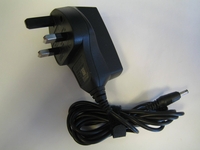
Nokia has surprisingly announced a 'charger exchange program' after it appears that a significant number are defective and could pose a health risk.
The chargers, which could number as many as 14 million, are from a Chinese manufacturing plant.
"The plastic covers of the affected chargers could come loose and separate, exposing the charger's internal components and potentially posing an electrical shock hazard if certain internal components are touched while the charger is plugged into a live socket," said Nokia.
UK dismissed
Nokia has moved to dismiss this problem for the UK, stating that the type of port in question is not the same as used for the British versions of its phones.
However, if you are worried about a phone you may have bought abroad / found then you can visit chargerexchange.nokia.com where Nokia will get you a nice and safe one sent out.
"We are undertaking this exchange programme as a proactive, precautionary measure. We are not aware of any incidents or injuries relating to these three (models of) chargers," Nokia spokesman Doug Dawson told Reuters.

| |
Read More ...
Review: Dell Inspiron Mini 9

The first netbook from Dell was eagerly anticipated and was certainly worth the wait, as the Inspiron Mini 9 (free on 24-month Vodafone contract) provides excellent mobility, connectivity and a stunning Super-TFT screen.
The black and silver chassis imitates Dell's full-sized Inspiron range and suits both consumer and corporate use. Along with the Toshiba, it is also one of the smallest netbooks you can buy. Its glossy lid is prone to scratches and smudges, however, and requires suitable protection.
As with the majority of netbooks, Dell has used a 3-cell battery, rather than the 4-cell battery used by the Asus Eee PC S101. While its 224 minutes of mobility is bettered by some rivals, it is still a capable result and lets you get some work done on the daily commute.
Although usability is generally strong, it's not without fault. The keyboard proves comfortable in use, but the full width of the chassis has not been used to its best ability. As a result, the keys are much slimmer than on rival netbooks, which may not suit typists with large hands.
The stunning 8.9-inch screen compensates somewhat – its compact size isn't ideal for multi-tasking, but colour reproduction, contrast and sharpness are fantastic. The glossy coating adds to this quality, but does increase reflections.
Mobile broadband
Where the Dell stands out is its wireless HSDPA broadband connectivity. A SIM card slots beneath the battery, for accessing the internet at high-speed wherever you travel. This makes it a great choice for business users and consumers requiring around-the-clock web access.
Unfortunately, a minimum 24-month Vodafone contract is required, starting at آ£25 per month for 1GB of monthly downloads. This means you'll spend آ£600 in total, so for users that don't require web access and want to save money, Dell sells the Mini 9 contract-free for آ£199 (inc. VAT).
In terms of office and graphics performance, the Dell is average. It is capable for basic daily use, as well as watching the occasional movie, but fails to match the higher abilities of the Asus Eee PC S101 or Samsung NC10.
Small hard drive
Storage is also disappointing. Despite using a mechanical hard drive, only 80GB of storage is provided; half the amount provided by the Samsung NC10. A 3-in-1 Flash card reader is also in place, but users wanting to carry large amounts of files should look elsewhere.
While the Mini 9 on a Vodafone contract is ideal if you need long-term wireless connectivity, the آ£600 asking price is too steep for those that don't. Nevertheless, this a still a highly capable netbook with plenty to recommend it.

| |
Read More ...
In pictures: Virgin Media 3D TV showcase
This week saw the first public demonstration of 3D TV in the UK, and TechRadar were on hand to witness proceedings.
The demonstration was brought to the UK by Virgin Media which has installed the technology into its brand-new Oxford Street store.
The store marks the 44th Virgin Media outlet in the UK and by showcasing 3D TV within it, Virgin hopes to show the public that there will be some interesting innovations to come from the cable company.

Peter Taddeo, Executive Director of Consumer Sales at Virgin Media, said about the 3D demo: "For the very first time we're showcasing exciting 3D television which I hope will give people a fun break from the hectic rush of Christmas shopping."
The demo TechRadar caught was five minutes from Coraline, a movie that was shown off in cinemas using 3D technology.
Using polarised glasses, the 3D looked sharp and was presented through the use of a 3D-enabled JVC television.

Don't get your hopes up too much about seeing 3D in the home from Virgin anytime soon, however. This is very much a showcase of things to come rather than a declaration of love for the format.
This is something to be expected for a company who has the subscribers of Sky firmly in their sights. Sky is the cable company's biggest rival in the pay-for TV world and it has already shown off its own trials of 3D in the home to a select number of journalists and executives.
Sky hopes to install 3D into homes in the UK by 2010.
Virgin has conducted trials of its own using similar technology - an HD stream interlaced with two pictures - but these were also closed to the public, using a private VOD network.

This is why the first public showing of 3D TV in the UK is an important one as it shows to consumers for the first time just what they can expect from the technology in the home.
Virgin Media told TechRadar that its V+ set-top boxes are already compatible with 3D, so the demo shows that if/when the company do decide to start piping 3D content through its boxes then consumers won't have to upgrade their equipment.

Alongside 3D TV, there are a number of other demonstrations of Virgin Media products and services at the Oxford Street branch, including: ultrafast fibre optic broadband; V+ HD boxes; bespoke 'Freedom' netbooks and the company's selection of mobile phones.


| |
Read More ...
Exclusive: Virgin Media's 3D TV tests 'a success'

Virgin Media has successfully tested 3D television through its existing cable infrastructure and on its current set-top box.
A source within the cable company told TechRadar that the trials, which took place on a closed VoD network over the last few months, had been a complete success and prove that Sky is not the only company that can carry the higher-bandwidth programming through its infrastructure.
Virgin Media is showing off 3D television in its new store on Oxford Street, running on a V+ box, and the cable network is capable of running 3D programmes through its network should demand become high enough.
"Virgin Media is always looking at new technology to see if it is something we would like to offer as a service to our customers," a Virgin Media spokesperson told TechRadar when asked about the trial.
Investigating
"We are currently investigating 3DTV and wanted visitors to our Oxford Street store to get a taste of some of the 3D content that is being produced and experience this technology for themselves."
Sky made a real splash with a 3D demonstration at the end of 2008, and had insisted that it will be carrying 3D programming by the end of 2010.
But it appears that one of its biggest rivals in the UK is making sure that it doesn't get left behind should the experiment prove to be a success.
Stereoscopic
The 3D being talked about by both Sky and Virgin is completely different from the anaglyph tech being shown in Channel 4's upcoming 3D week - using polarised technology that still needs glasses but not the much-derided red and cyan lenses.
To view the 3D, the viewer will need a 3D enabled television; still difficult to get hold of and considerably more expensive than traditional television sets.
The 3D demonstration at the Oxford Street store has been billed as the first public demo of this tech in the UK, and is likely to draw thousands of intrigued viewings from Christmas shoppers.
"For the very first time we're also showcasing exciting 3D television which I hope will give people a fun break from the hectic rush of Christmas shopping," said Virgin Media's Peter Taddeo last week at the announcement of the store.

| |
Read More ...
Hands on: Motorola Milestone review

The phone networks need a hot handset to woo Christmas shoppers, Google wants to kick-start the production of apps for Android, and if Motorola doesn't get a best-selling handset soon (its first since the RAZR) it might stop making phones.
No pressure then.
For a handset with so many expectations, the Motorola Milestone– which launched as the Droid in the US last week - is underwhelming in the design department.
It's certainly solid enough and benefits from a gorgeous 3.7-inch capacitive touchscreen. But the old-school boxy edges and painfully flat QWERTY keyboard have had little thought put in to them.
How many mobile keyboards have you seen that ship with two completely blank keys (bottom left and bottom right)?

We were hoping that pressing them together might temporarily inflate the low-profile keys to allow normal typing, but no such luck: almost every email, SMS and even text box we wrote suffered multiple typos.
TechRadar's recommendation: leave the keyboard hidden from view and concentrate on the beautiful WVGA (480 x 854) touchscreen instead.
Not only is this sharper than the iPhone's, it's brighter, too, pumping out photons while still managing a genuine all-day (7+ hour) battery life.

The US version lacks multi-touch gestures, although rumour has it that the Euro version, called Milestone (why not Kilometrestone?) will pick them up.
The four touch-sensitive keys on the face are decent, too, with the menu and search keys proving particularly useful.
The global search option was pretty good at tracking down data on the device and online (Google, naturally), and the voice search was impressive: even if searching for 'Motorola Droid' did initially call up pages referencing 'Bejeweled Floyd'. Which actually isn't such a bad name for a device. Or a cocktail.

The Motorola Milestone may be running Android 2.0 but the menu screen and interface still feel like a 0.9 developer's prototype.
Icons are small and overly spaced, the virtually sliding apps drawer feels old-fashioned and I swear the notification bar is lifted from Windows 3.1. However, clunky it might be, but it's also very practical.
The bar combines task manager and alert functions, showing the progress of downloads, incoming messages and even the last route direction from the eagerly-anticipated Google Navigation beta app.
Before we get to the cool stuff, though, it's worth trundling through the basics.
All the Google services (Mail, Apps, Search, Talk) are flawlessly handled, other email benefits from a single inbox, Facebook contact imports and Exchange support, there's visual voicemail (although it's a paid extra from Verizon) and a YouTube app.
While the media player is fairly rubbish, decent apps from imeem and Pandora mean you can stream tunes in the background through good on-board speakers or a 3.5mm jack. Calls are loud but sound slightly mangled by compression.
Browsing is slower than the iPhone, and much less rewarding without pinch-and-zoom, although the arrival of Adobe Flash 10.1 early next year might tip the balance in Milestone's favour.
Camera
The on-board 5MP may have more pixels than Apple's but it doesn't do much with them. Images are soft, noisy and often out of focus – and get even worse in low light. Video clips (720x480, 24fps) are much better: smooth, colourful and well exposed (in daylight, at least).


Distinguishing features
If there's one single reason to buy the Milestone, though, it's Google Navigation. Tying in neatly with Maps, Navigation turns the Motorola into a sat nav, complete with 2D or 3D maps, Street View images at turns and voice guidance.

We were extremely impressed by the speed of calculating routes (Seattle to New York in about five seconds), the integration of (free) traffic information and the ability to search for contacts or businesses along your route.
Map layers include bus information with live arrival times, local Wikipedia entries and Google Latitude drawing pins for your friends.

When you set a destination, the entire trip is downloaded, so that straying out of mobile phone coverage en route only impacts your ability to carry out searches (just don't make any wrong turns). Sadly, the Euro Milestone is expected to use Motorola's Motonav software instead of Google Navigation.

Ironically, the Milestone rises above the level of other iPhone 'killers' not by trying to tackle the iPhone head on (it can't) but because Moto-Google have succeeded in actually producing something different – the sat-nav killer.
Full review coming soon.

| |
Read More ...
Opinion: Harmless iPhone worm will spawn more dangerous offspring

Computer security headlines are dominated today by the discovery over the weekend of the world's first iPhone worm, dubbed Ikee.
No doubt the fact that it changed your lock wallpaper to a picture of 1980s pop throwback Rick Astley and displayed a message saying "Ikee is never going to give you up" didn't do it any harm in catching attention.
The Ikee worm can only infect jailbroken phones (those iPhones which have been tinkered with by their owners to run applications not approved by Apple) that have installed SSH and not changed their default root password.
That may sound like quite a combination of factors, but it's surprising how many people have chosen to jailbreak their phones to gain access to programs that Apple would prefer they didn't run.
It didn't take much Googling and internet detective work for me to determine that the author of the worm was 21-year-old Ashley Towns, a student living in Wollongong, New South Wales. He'd been pretty careless in covering his tracks and since his "outing" has been courting the media via his Twitter page.
Blame boredom
Inside the worm's code Towns pre-empted a question that many were likely to ask about why the worm was written:
"Why?: Boredom, because i found it so stupid the fact that on my initial scan of my 3G optus range i found 27 hosts running SSH daemons, i could access 26 of them with root:alpine. Doesn't anyone RTFM anymore?"
But can it ever be right to write a virus?
I don't think so.
Even if you are concerned about users being lax about computer security, it is still illegal to break into their devices and change data. It's even more irresponsible to release a worm - that by its very nature spreads virally under its own steam. That means, even if the hacker regrets his past actions and doesn't want his worm to spread anymore he can't stop the attacks from happening.
There are ways of raising awareness about security issues without breaking into people's property - a responsible computer enthusiast would have stopped well short of releasing a worm.
Worryingly, Towns told the media that he personally infected 100 jailbroken iPhones, which then would have gone on to try to infect other devices.
Furthermore, the code for the iPhone worm is now available for download from the internet. Ashley Towns' original incarnation of the Ikee worm may have been mostly harmless compared to most of the financially-motivated malware we see today - but who is to say that more money-orientated hackers won't write a more dangerous version?
A future version could be programmed to spread worldwide rather than just in Australia, and could silently steal private information from your iPhone.
My prediction is that we're going to see more attacks like this in the future.
So, if you're an iPhone user who has jailbroken their phone in order to add functionality that Apple may have denied to them, please change your root password and take security seriously. If you're careless you could fall foul of a hacker.
-------------------------------------------------------------------------------------------------------
Graham Cluley is senior technology consultant at Sophos, and has been working in the computer security field since the early 1990s. When he's not updating his blog on the Sophos website you can find him on Twitter at @gcluley.

| |
Read More ...
iPhone worm cripples handsets with Rick Astley
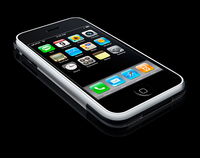
A new virus is infecting iPhones - the Ikee - forcing users to look at a picture of Rick Astley as their wallpaper.
It's only affecting jailbroken phones - those modified to run non-Apple approved software - but can jump from iPhone to iPhone with no input.
The hacker that developed the worm has been identifies as Ashley Towns (who goes by the handle ikeeex), who has stated that he initially infected 100 units with the worm.
"Due to the nature of it, it's kind of hard to tell, I know my phone hit about 100 alone but from there I have no idea," he said.
Waving hello to Astley
He said that the virus hit the first wave of people at 4am on 6 November, and has quickly proliferated around the globe.
There are reports of it changing the picture it sends as well, so if your background suddenly appears to have another picture, then you're probably a victim.
While some are labelling this attack as 'mobile vandalism', others are stating that it shows how unprotected jailbroken iPhones are, especially as mobile virus attacks are on the rise.
If you're one of the users affected by the virus, a conversation with the hacker has been published, where he tells how to unlock the code.

| |
Read More ...
News Corp preparing for a mass Google exodus?

Rupert Murdoch, CEO of News Corporation, has been speaking about the role Google will have in his company's online life and it looks as if all ties could be severed with the search engine.
Speaking to Sky News Political Editor David Speers, Murdoch outlined his plans for News Corp websites in the future and shrugged off the idea that being on Google was a positive thing for his company, explaining: "What's the point of having someone come occasionally who likes a headline they see on Google come to us?
"Sure, we can go out and say hey we've got so many millions of visitors we are better advertised and so on… the fact is there's not enough advertising in the world to go around to make all the websites possible. We would rather have fewer people coming to our websites but paying."
Pay wall
When asked by the interviewer why Murdoch hasn't taken News Corp's websites off of Google altogether, he told Speers: "I think we will but that's when we will start charging."
Murdoch also noted that this is something the company is already partaking in. "We did it already with the Wall Street Journal," he explained. "We have a wall but it's not to the ceiling.
"You can get the first paragraph of every story but then if you are not a paying subscriber then you will get [prompted to] a subscription form."
When asked if this model is what we can expect, Murdoch replied: "Maybe. There's a doctrine called fair use which we believed could be challenged in the courts and banish this forever but there are other models so we will take this slowly."

| |
Read More ...
In Depth: iPhone in the UK: two years on

Two years ago today, we stood inside the Apple Store on Regent Street, London watching in disbelief as a queue of people waited outside to spend آ£269 on the first generation of the Apple iPhone.
And that was before you got to the آ£35-a-month O2 contract. At 6.02pm the doors opened. The launch was hectic and disorganised. At the time we noted the scenes resembled Beatlemania.
We headbutted a cameraman and tripped over a newspaper photographer - it was a real battle for elbow room as Apple hosts greeted the first few buyers through the door with whoops and chants.
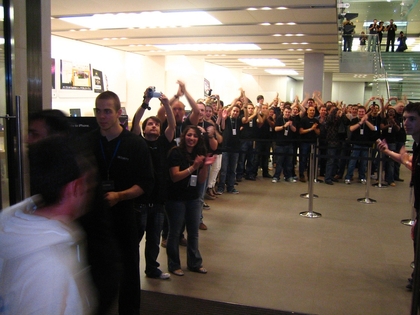
Buyers went through the back of the store, purchased their phone upstairs, and emerged at the top of the glass staircase to be captured by the waiting photographers.
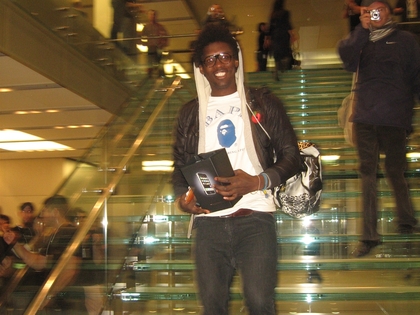
At the launch Nick Wilkins, O2's PR manager, said the turnout was "quite mad". "It's so great to see so many people here. I'm really proud of what we've done."
Since it had been announced at Macworld the previous January (to the open-mouthed amazement of everybody at the rival CES), Apple's long-rumoured handset had become the most hotly awaited gadget of the year. The anticipation was only heightened after the US launch that June with UK appetites whetted by images and walkthroughs from across the pond as well as the announcement of O2's exclusive deal in September 2007.
"The iPhone captured consumer attention in a way that other devices only aspire to," says Tony Speakman from Apple subsidiary and app developer FileMaker. "Its introduction and subsequent popularity is indicative of the consumerisation, not just of mobile phones but of the concept of truly 'mobile' technology."
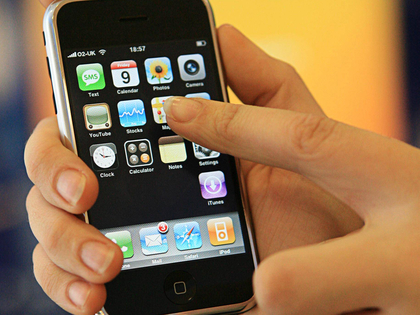
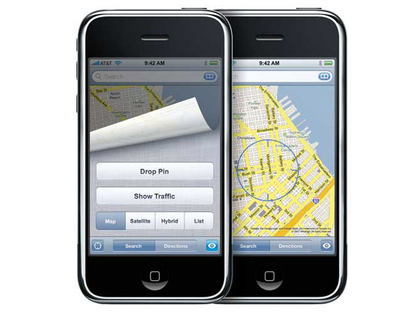
Although iPhone v1 naturally wasn't a world away from what we have today, let's not forget that the original iPhone was hobbled horribly by the lack of 3G. It had no third-party apps. No GPS. And the headphone socket was proprietary, so you had to use the original headphones.
How you bought an iPhone was also different. For the first generation, you just walked into a store, bought the phone and signed up to a contract via iTunes when you got home. However, the process didn't make it onto the next generation. It was open to abuse and Apple or O2 lost countless handsets to people who shelled out only the آ£269 and jailbroke them instead of signing up to an O2 deal.
Still, Apple sold 6.1 million original iPhone units over the next year and a quarter worldwide – it sold 7.4 million in the three months before September this year. 02 shifted 190,000 iPhones in its first two months on sale – it has since sold well over a million handsets.
The iPhone 3G (which arrived on O2 in July 2008) removed the limitation of EDGE-only data, added a standard headphone jack, GPS and saw the launch of the 2.0 firmware with Microsoft Exchange support and third-party apps. The 3GS added in a compass, 3.2-megapixel camera, video plus faster hardware.
Just before the iPhone 3GS was released this June, Matthew Key, CEO of Telefأ³nica Europe (O2) said: "The iPhone has been a phenomenal success for us. We look forward to offering an ever better iPhone 3G experience exclusively to our customers in the UK and Ireland."
As we now know, Orange will be stocking the 3G and 3GS from tomorrow, while Vodafone will have the handset from early next year.
Apps the key
Possibly the iPhone's greatest achievement has been the phenomenal success of the App Store – 100,000 apps are now available across the Globe.
"The iPhone is a fantastic piece of kit, but its real innovation is in bringing mobile apps into the mainstream," says Alex Caccia, CEO of developer Ideaworks Labs "It's turned smartphones into more than just a communications device but something customisable, useful, and fun, thanks to the range of apps produced by developers and the simple process of purchasing them on the App Store."
"The iPhone has changed the mobile landscape, and in true Apple form - redefined it," agrees Darren Lynch, Director of Gormet Pixel – the developer behind the recent Haynes manual app.
"Large brands are getting involved with the apps, realising they can now monetise the mobile market in an effective way. We believe this is a trend set to continue, increasing consumer confidence in the quality of apps that have a big brand name behind them. The sheer volume of new apps will slow, the quality will rise and in turn increase the average app prices."
An interesting future beckons for the iPhone. Its plethora of apps are already posing problems for other devices (such as the humble sat nav). The iPhone will be widely available across the major UK networks as of the new year, surely resulting in a rapidly increasing UK userbase. And then, of course, there's plenty of competition ahead, too, with Android 2.0 around the corner and Windows Mobile 7 set to debut. And a new iPhone in June? Probably.

| |
Read More ...
Review: Q Acoustics Q-TV2

A 2.1-channel speaker enhancement system for flatscreen TVs, Q Acoustics' Q-TV2 bolts to the back of the telly, and consists of a vibration-cancelled subwoofer with a downward-firing port, two side speakers which can be angled to hug the sides of the TV, and a built-in amplification system.
Once assembled the whole rig should be practically invisible. Fitting is achieved using VESA standard mounting brackets and spacers.
This model fits on sets from 30-42in, but versions for larger and smaller screens should be on the way.
Connection is via a line output, headphone output or optical digital output, so depending on the connection type, some sets will let you mute their internal speaker and control the Q-TV2 volume with the TV remote; if not you control the Q-TV2 volume with its own handset.
There's also a socket for input from an iPod or similar device; you don't have to have the TV switched on to use this.
Sound improvement is immediate and obvious, adding 50W of bass in the 50Hz-180Hz range and 25W from the four 1in 180Hz-20kHz BMR (Balanced Mode Radiator) side drivers. Once fitted the system does appear practically invisible and essentially becomes a part of your flatscreen.
The overall sound is rather brash and bright, and other than a bass curve adjustment, there's no tone control. Could be a bit of a hard sell to someone who has already spent آ£600 or more on a TV.
Related Links
| |
Read More ...
802.11n Xbox adaptor on sale in UK

Microsoft's eagerly-awaited wireless adaptor for the 802.11n standard has been photographed on sale in the UK.
The next generation of the Xbox wireless adaptor has been popping up and then disappearing for several weeks, but appears to have finally broken cover with little fanfare.
Engadget managed to get hold of a photograph of the adaptor on sale in Asda – with a retail price of آ£49.99.
Xbox Live
With much of Xbox's big message to the public now about its community and the multiplayer games that have proven to be a hit on the platform, the need for a top quality wireless adaptor is paramount.
The 802.11n standard was finally brought out of draft recently, and, if you can bring yourself to part with آ£50 for the adaptor, then you can now have an official add-on for the Xbox.

| |
Read More ...
Review: Genelec 6010A/5040A 5.1 System

Manufacturer Genelec has roots as deep as time in the pro-audio market, predominantly with huge active studio monitors of awesome perfection for diction and clarity. Yet it has been making quiet forays into home cinema/small studio-friendly areas for some years now – and this array is its smallest yet.
Our test system uses the dinkiest satellite available, the 6010A and the stumpy 5040A subwoofer. While this Genelec package can be used in a home cinema setting I suspect it will ultimately find its way into the homes of music business types familiar with the brand.
I was told that The Prodigy take a set on tour to mix with, but I reckon it's a stereo iteration – they'd need a roadie with a brain the size of a planet to set up a 5.1 system.
The woofer is the hub. First, you need to input via a 3.5mm tip-ring sleeve stereo jack if you want two-channel and then connect onwards to the sats via a pair of phono cables.
But if you want 5.1 surround, you'll need a six-way phono loom from your source to wherever you put the woofer, and then plug in each of the five surround speakers with their own phonos – and, of course, their own mains lead.
Compare that with the one phono lead for bass and five speaker wires of a passive system – this solution seems an untidy and costly madness. You could gouge out channels in your walls for wires to hide in, mount the satellites on funky wall brackets, and plug them in to custom install style sockets if you wanted – they'll look smart as hell – but I just cannot see that happening with a system of this size and price.
Active lifestyle
In the streamlined world of modern AV, the wires needed here are a major issue, but one that has always been there with active speakers.
The benefit of the active design is that cabinets can be made smaller, and efficiency and clarity is improved, but while these are indeed tiny, they lack level and depth; for all its tonal accuracy the output is just too weedy.
This Genelec system is beautiful to look out, but it's an awful lot of money for a very small slice of AV. Don't get me wrong, these boxes have nearfield monitoring accuracy, but they remain as exciting to me as a chisel. A well-made and sharp tool you use for work.
Related Links
| |
Read More ...
Nintendo categorically denies Wii HD in 2010

Nintendo has tried once again to make the statement that there will be no Wii HD coming in 2010, despite rumours to the contrary.
There has been talk that the next iteration of the console will be packing a Blu-ray player and will support up to 1080p, but Nintendo of America president Reggie Fils-Aime has stated this will not be the case.
No Wii HD
Analyst Michael Pachter told US gaming website Gametrailers TV that there will ben HD version of the console next year, something which has irked the president:
"Michael [Pachter] continues to be the only one who believes this is going to happen," Fils-Aime said. "I don't know how forcefully we can say that there is no Wii HD."
It seems likely that an updated version of the Wii, one of the best selling consoles, would be released in the near-ish future, as sales of the popular unit start to decline.
And HD would appear to be the logical choice, as there's not a lot else to update - although knowing Nintendo it's probable that a Natal-beating option is next in line.

| |
Read More ...
Review: Packard Bell IMAX Mini N3600

If you want PC entertainment power in your living-room without having a huge clunking Media Center PC, or even a laptop, rush to audition the Packard Bell IMAX Mini 'nettop', a severely cut-down desktop PC using an Nvidia ION graphics solution.
Packard Bell's Imax Mini N3600 isn't the first of its kind – in fact this is basically a rebadging of Acer's Revo.
It's designed to be used in one of two ways – either standing or sitting on your desktop, or clamped to the back of a monitor using an optional extra mounting kit.
It ships with a wired mouse and compact keyboard (wireless models are optional). Connections include HDMI, USB and LAN, plus a front eSATA port for access to high capacity hard drives, or indeed an optical drive, which is the one thing the Imax Mini significantly lacks.
The highest spec'd model uses an Intel Atom 230 processor, 2GB of memory, a 160GB hard disk drive and 802.11n Wi-Fi. Variations are available in terms of hard-drive size, RAM size, and operating system (Windows XP or Windows Vista, with presumably Windows 7 to follow).
It runs extremely quietly, and when a decent codec pack (try the K-Lite Codec Pack which comes with Media Player Classic) is installed, can handle a wide variety of formats, including HD MKVs.
It can also be used as dedicated media PC, using XBMC, or a multifunction living room PC. The integrated HDMI output makes AV hookup a dream.
There's no built-in optical drive, but when used as a networked device this shouldn't be a problem. Also, out of the box, it stutters with HD files.
Related Links
| |
Read More ...
Huge anticipation for Google's Chrome OS

Google Chrome OS may still be a year away from making its debut, but TechRadar readers are champing at the bit to get hold of the Windows competitor.
More than 2300 votes were cast in a poll to gauge interest in Google's operating system, following the arrival of the excellent Windows 7.
And, although 35 per cent were happy with the latest Windows, 16 per cent contented with OS X and 10 per cent confessed to being wary of Chrome OS – a big percentage admitted to being intrigued.
More than a fifth
A not inconsiderable 22 per cent of people suggested that they would download Chrome OS the moment they possibly could, so that they could try out Google's attempt at an operating system that fits in with cloud computing.
Another 14 per cent thought that Chrome-powered netbooks would be cool, with Google already stating that their early focus would be on lower-powered PCs.
Of course, the lack of any kind of early look at Chrome OS, and Google's time line of late 2010 underline the fact that there is still a lengthy wait until the operating system makes its debut.
But that's not to say that the technology world, and computing fans everywhere, aren't keeping one eye on what's going on.

| |
Read More ...
The week in technology
The best thing about this job is staying abreast of all the cool stuff that's going on in the tech world at the moment.
Especially when so much of the rest of the world seems to be going backwards at the moment, tech reliably keeps its eyes fixed forward.
For example, did you know...

1. The feathers in the bird in Pixar's new movie UP are far more complicated than they seem
The bird in UP has a remarkably iridescent set of feathers, and Pixar did it by taking the 'fur' technology pioneered in Monsters Inc, and assembling each feather out of thousands of individual hairs. The iridescent effect was added on top, by looking up a colour based on the relative angles of light, camera and feather.

2. You can get TVs that no longer have a frame around the picture
That's right, it's picture all the way to the edges - the anti-Ambilight effect if you like. It's got loads of other interesting TV tech features of course, to do with optimal image quality, but who cares about that - it's the thinness and the framelessness that catch the eye. Lovely. All TVs will be like this one day.
3. Kids have a totally unrealistic view of our overlord Google's beneficence.
But then, don't we all.

4. The Cell processor is finally showing its potential outside the PS3
For a long time the Cell's multi-processing, high performance benefits have been widely touted but this is the first time we've seen it outside of the PlayStation. And it looks pretty cool, enabling multiple channels to be shown on TV at the same time. That's not as useless at is sounds - yes you can do a quick scan to see what's on, all off one screen, but better, all eight channels can be recorded/time-shifted simultaneously too.

| |
Read More ...


No comments:
Post a Comment