

Antec Readies Airy LanBoy Air ATX Case
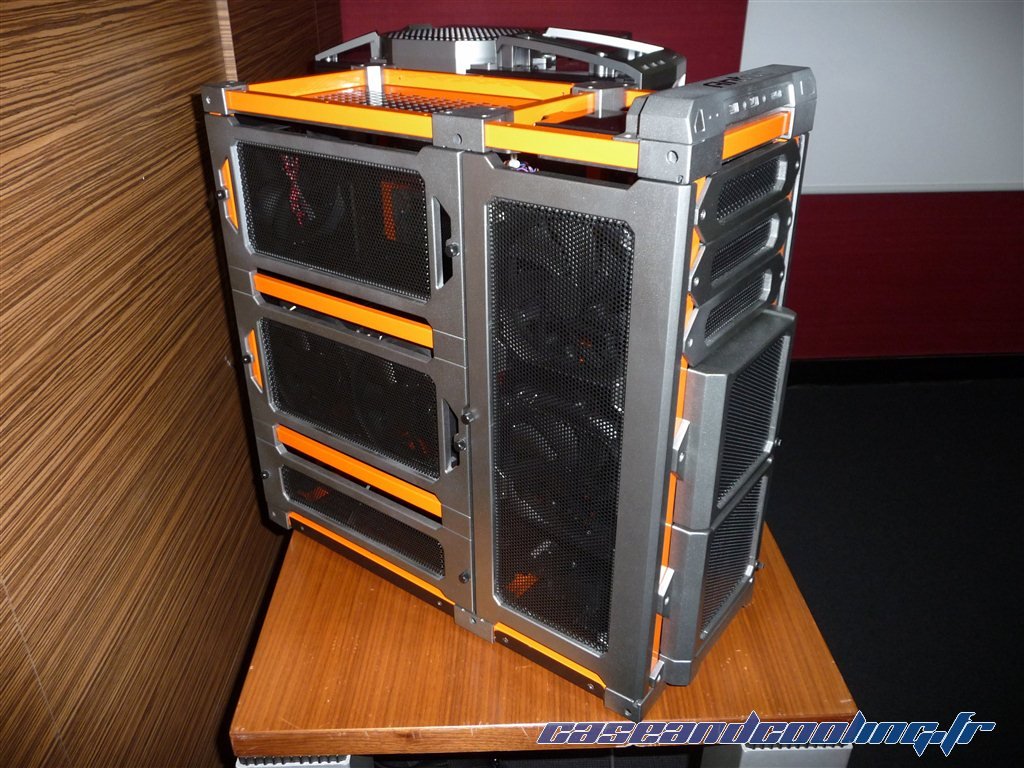
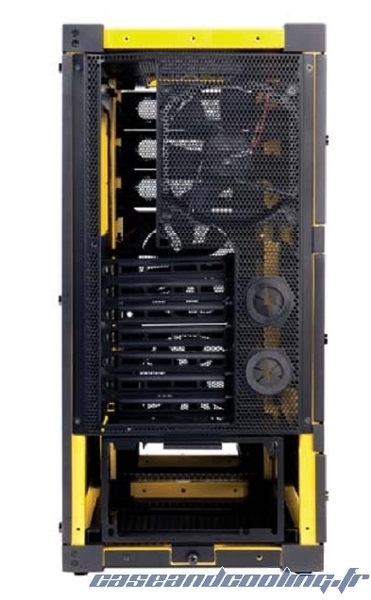
Antec is preparing the airy, new Lanboy Air ATX case. The new case will be one of Antec's star attractions at CES 2010, where it will be launched. The sporty design looks to be massively modular, from the looks of it, users could completely dismantle it. Several shards look to be connected to each other, which make for the case's various panels. Each of these has a steel mesh for high airflow. These, in combination with the black, grey and a dash of yellow, give it a subjectively industrial look.
The case sports three 5.25" drive bays, two 120 mm fans which protrude, and the the front connectors, on the front panel. The area of the side panel covering the drive bays holds another two to three 120 mm fans, two more right over the expansion slot area. The top, again, is perforated, with room for two 120 mm exhausts apart from the usual one on the rear panel. The LanBoy Air awaits launch at CES 2010, which will be held in the coming January. It is expected to be priced at around 200 EUR.


Source: Case & Cooling.fr
Read More ...
(PR) Elpida and ProMOS Signed Agreement for DRAM Foundry Services
Elpida Memory, Inc. and ProMOS Technologies announced today the signing of a DRAM foundry agreement. This agreement marks the beginning of mutually beneficial business cooperation.
According to the agreement, Elpida will provide advanced DRAM process and product technologies to ProMOS, while ProMOS will provide certain amount of manufacturing capacity at ProMOS' Taichung 300mm wafer fab to Elpida for the manufacturing of Elpida's advanced 1Gb DDR3 device. Trial runs will be completed in the first half of 2010, with mass production following in the second half of the same year.
Dr. M. L. Chen, President & Chairman of ProMOS Technologies, noted that Elpida has long been globally recognized as a leader in the development of leading edge DRAM technologies. The synergistic partnership built through this agreement will combine strengths from both companies; Elpida's 1Gb DDR3 device is among the most cost-competitive product in the industry, pairing well with ProMOS' strength in 300mm manufacturing. Dr. Chen further noted that through this agreement, ProMOS will be able to rapidly increase its capacity utilization rate at its Taichung 300mm facilities. With the recent turnaround in the DRAM market, ProMOS has embarked on the road to recovery.
Read More ...
(PR) NVIDIA Reports Financial Results for Third Quarter Fiscal Year 2010
NVIDIA Corp. today reported revenue of $903.2 million for the third quarter of fiscal 2010 ended Oct. 25, 2009, up 16 percent from the previous quarter and up slightly from $897.7 million reported in the same period a year earlier.
On a GAAP basis, the company recorded net income of $107.6 million, or $0.19 per diluted share, compared with net income of $61.7 million, or $0.11 per diluted share a year ago. Third quarter GAAP results included a benefit to operating income of $25.1 million related to insurance reimbursements received during the quarter. On a non-GAAP basis - excluding the insurance reimbursements and stock-based compensation, as well as their associated tax impact − net income was $110.3 million, or $0.19 per diluted share, compared with $111.4 million, or $0.20 per diluted share, a year earlier.

Read More ...
ECS Readies USB 3.0 and SATA 6 Gb/s Addon Cards, Too
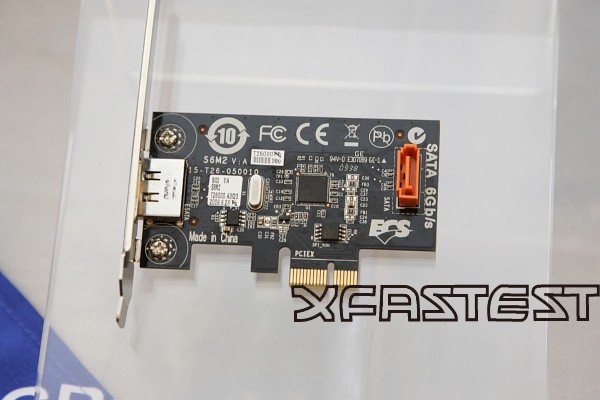
ECS is jumping the USB 3.0 and SATA 6 Gb/s bandwagon with two PCI-Express expansion cards for each kind of connectivity. The cards use popular controllers NEC آµPD720200 for USB 3.0 and Marvell 88SE9123-NAA2 for SATA 6 Gb/s. While the USB 3.0 card provides both its ports on the rear-panel, the SATA 6 Gb/s card holds one internal SATA 6 Gb/s port, and one eSATA 6 Gb/s. Currently there is no word on the availability or price of the two. These cards follow similar offerings from the likes of ASRock and ASUS.

Source: XFastest
Read More ...
(PR) Team Group Launches P2 IDE SSD
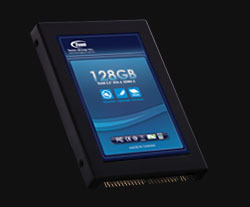
Speed plays a decisive role in computing. When the computer runs slowly, not only will the work progress be delayed, even our thoughts will be interrupted. Therefore, hard drives with higher speed will mean efficiency to professional graphic designers. The 2.5-inch P2 IDE Solid State Disk (SSD) from Team Technologies not only enhances the computer startup and data transfer speed, but also loads programs much faster than conventional mechanical hard drives. The excellent speed performance of the P2 IDE SSD is particularly felt when users open many windows at the same time. This saves designers a lot of time from searching images and drawings and allows them to enjoy speedy reading and writing, thus fully displaying computing performance and speed.
Read More ...
NVIDIA Shuns Lucid Hydra
A promising new technology from LucidLogix, the Hydra, has perhaps hit its biggest roadblock. The Hydra multi-GPU engine allows vendor-neutral and model-neutral GPU performance upscaling, without adhering to proprietary technologies such as NVIDIA SLI or ATI CrossfireX. NVIDIA, which is staring at a bleak future for its chipset division, is licensing the SLI technology to motherboard vendors who want to use it on socket LGA-1366 and LGA-1156 motherboards, since Intel is the only chipset vendor. On other sockets such as LGA-775 and AM3, however, NVIDIA continues to have chipsets that bring with them the incentive of SLI technology support. NVIDIA’s licensing deals with motherboard vendors are particularly noteworthy. For socket LGA-1366 motherboards that are based on Intel’s X58 Express chipset, NVIDIA charges a fee of US $5 per unit sold, to let it support SLI. Alternatively, motherboard vendors can opt for NVIDIA’s nForce 200 bridge chip, which allows vendors to offer full-bandwidth 3-way SLI on some high-end models. For the socket LGA-1156 platform currently driven by Intel’s P55 Express chipset, the fee is lower, at US $3 per unit sold.
The Lucid Hydra engine by design is vendor-neutral. It provides a sort of abstraction-layer between the OS and the GPUs, and uses the available graphics processing resources to upscale resulting performance. This effectively kills NVIDIA’s cut, as motherboard vendors needn’t have the SLI license, and that users of Hydra won’t be using SLI or Crossfire anymore. Perhaps fearing a loss of revenue, NVIDIA is working on its drivers to ensure that its GeForce GPUs don’t work on platforms that use Hydra. Perhaps this also ensures "quality control, and compatibility", since if the customer isn't satisfied with the quality and performance of Hydra, NVIDIA for one, could end up in the bad books. This could then also kick up warranty issues, and product returns.
Read More ...
(PR) Buffalo Launches MiniStation Lite with New Bezel Options
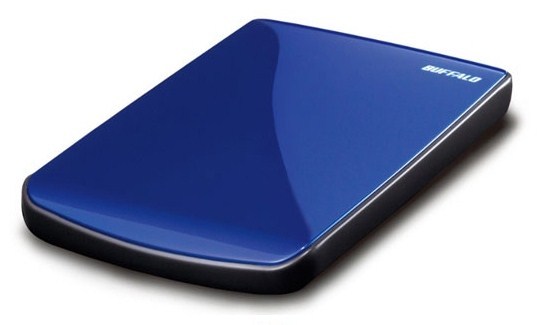
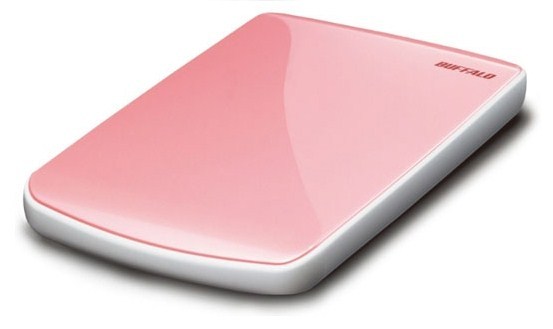
The explosion of online media and digital data means that many more people take film and music, digital images and other files with them when they are on the move. The MiniStation Lite is a low cost, external hard drive ideal for storing, backing-up and transporting digital files, giving people access to their important files from wherever they are.
With a sleek compact form factor, the MiniStation Lite in Sakura Pink and Lapis Blue are both available in capacities of 320GB or 500GB. The MiniStation Lite is also available in black, red or white with capacities of 250GB, 320GB or 500GB.
Read More ...
(PR) Buffalo Announces Nfiniti Wireless-N Essential Router & Access Point
Buffalo Technology, a global leader in the design, development and manufacturing of wired and wireless networking, network and direct attached storage solutions today announced the Nfiniti™ Wireless-N Essential Router & Access Point WHR-HP-G300N. An ideal solution for connecting PCs and laptops wirelessly to the Internet, it is perfectly suited for the home and small office environment. When streaming multimedia content, such as HD movies or music, the Nfiniti Essential Router lets you download images or send and receive e-mail from multiple PCs simultaneously. With speeds of up to 300 Mbps it is also ideal to upgrade an existing wireless network, providing greater speed and coverage than Wireless-G.
"The latest iteration of Buffalo's wireless routers and clients are engineered to exacting standards to meet and exceed the rigorous demands of our customers," said Ralph Spagnola, vice president of sales at Buffalo Technology. "Buffalo Technology continues to be committed to delivering robust wireless solutions that are designed to precise specifications to maximize performance and range."

Read More ...
DFI Prepares First P55 Mini-ITX Motherboard
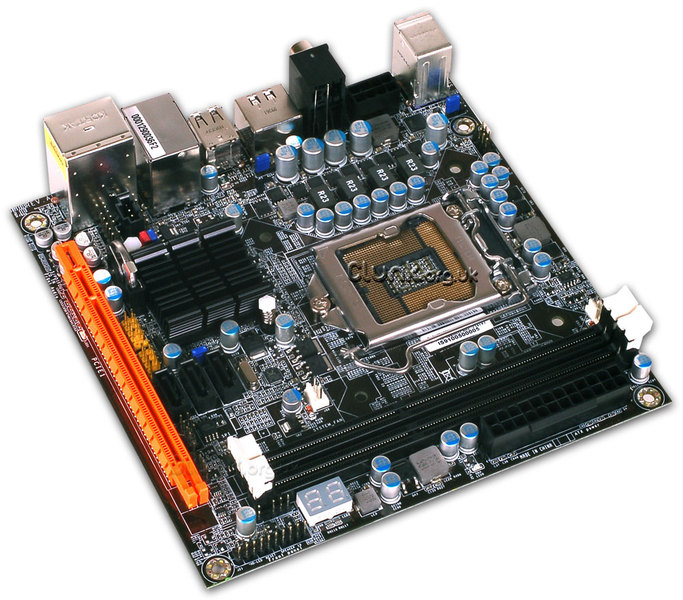
Here is one of the first socket LGA-1156 motherboards in the mini-ITX form-factor, certainly the first one based on the Intel P55 chipset. Packed in its 6.7 x 6.7 inch PCB are a 6 phase digital PWM circuit powering the CPU (socket made by LOTES), two DDR3 DIMM slots for dual-channel memory, and a decent utilization of the feature-set of the P55 PCH, which is cooled by a tiny low-profile heatsink. The PCH gives out three internal SATA 3 Gbps ports, and one powered eSATA port.
The 8-channel HD Audio also takes care of optical and co-axial SPDIF connectivity. Gigabit Ethernet, and four USB 2.0 ports make for the rest of the rear-panel. Two headers make room for four more USB 2.0 ports. The lone expansion slot is a generous PCI-Express 2.0 x16, which will accommodate any PCI-Express addon card. You will especially need it, as the P55 platform relies on discrete graphics. With its ABS II, debug LED, and rear-panel clear CMOS button, the board also tries to be as overclocker-friendly as it can afford to be, with its limited resources. Its pricing is yet to be known, though the launch isn't very far off.

Source: Clunk.org.uk
Read More ...


No comments:
Post a Comment