

AMD ''Juniper'' ASIC Pictured
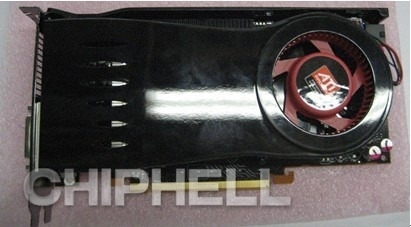
Remember this backroom photoshoot by our friends at Legit Reviews, where AMD refused to let the the DirectX 11 accelerator face the camera? A photographer in China was luckier, and grabbed three pictures of the rest of the accelerator, intact. As it turns out, the card is based on AMD's next generation successor to the 40 nm RV740, codenamed "Juniper". The pictures reveal quite a bit about the card, which inherits quite some of its design from the Radeon HD 4770.
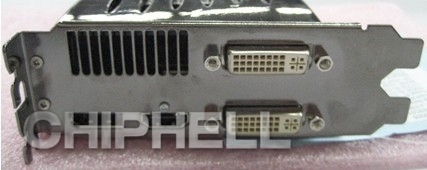
The cooler resembles the one found on Radeon HD 4770 (reference), and Radeon HD 3870, albeit opaque black. With the 40 nm GPU running presumably cool, its air vent on the rear panel is reduced in size, and makes way for an arsenal of connectivity that includes two DVI-D connectors, and one each of HDMI and DisplayPort, just as pictured earlier. The PCB is black in color, holds memory on either sides. The card draws its power from one 6-pin PCI-E power connector. Expect a lot more about this as we head toward September 10, when AMD plans to unveil its next-generation GPU technology. Juniper is part of AMD's "Evergreen" family of DirectX 11 compliant GPUs.

Source: ChipHell
Read More ...
(PR) Thermaltake Launches WingRS 301 Mid-Tower
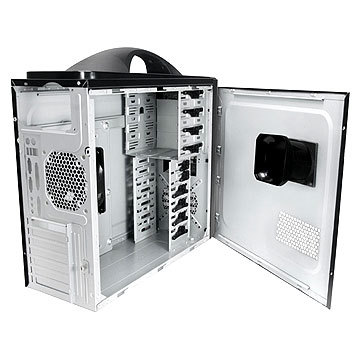
Thermaltake, leading DIY chassis brand, introduces the newest mid-tower PC case for people on the move. The WingRS 301 is portable and affordable but at the same time still sports all the essentials one expects from Thermaltake: quality, tool-free design, easy accessibility and optimized ventilation. With its reinforced top handle you can easily transport this 5.1 KG case and dimensions of 491 (D) x 170 (W) x 420 (H) mm allow for convenient storage in your car, the bus or train, and some airlines might even allow it as carry-on baggage. If you are looking for a portable PC case solution in order to carry your precious gaming machine to tournaments, or you every so often travel e.g. from home to university the Tt WingRS 301 is the ideal solution.
Built for ATX and MicroATX motherboards the WingRS 301 offers sufficient room for high-end graphics cards and provides 9 tool-free drive bays for maximum expandability with four 5 1/4" and five 3 1/2" bays. Seven I/O expansion slots give you enough freedom to upgrade your system with add-on cards. A large 120 mm rear exhaust TurboFan makes sure your machine stays cooled even under high load.


Read More ...
ASUS Maximus III Gene Teases Micro-ATX Enthusiast Crowd
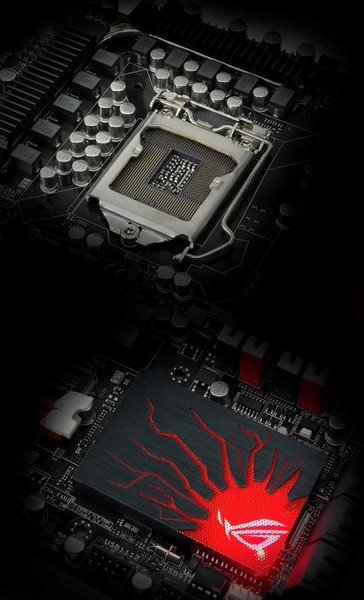
The newest entry into ASUS' already huge lineup of socket LGA-1156 motherboards based on the Intel P55 chipset, is the new Republic of Gamers Maximus III Gene. Unlike the Maximus III Formula, this one is based on the micro-ATX form-factor, with four expansion slots in all, to spare. The LGA-1156 socket is powered by a high-grade 10-phase digital PWM circuit. It is wired to four DDR3 DIMM slots for dual-channel memory. With two PCI-Express 2.0 x16 slots (electically dual x8 when both populated) wired to the CPU, the board utilizes the feature-set of the P55 PCH completely. An open-ended PCI-E x4 is located between the two x16 slots, and a legacy PCI slot below. Connectivity includes gigabit Ethernet, Firewire, USB, eSATA, and 8-channel ASUS SupremeFX X-Fi, implemented in the same way as on Rampage II Gene and Maximus II Gene. The ASUS Maximus III Gene motherboard is expected to start selling by the end of this month, its pricing is yet to be known.

Source: Expreview
Read More ...
Sapphire Preps Custom HD 4770 Accelerator, Too
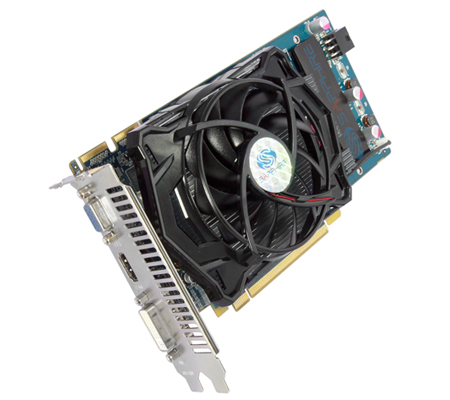
Following the likes of PowerColor and HIS, Sapphire, one of AMD's largest AIB partners, is preparing a custom-design Radeon HD 4770 accelerator. Highlights of this card are strictly confined to its design and cooling, not that it has a brighter specs sheet compared to the reference design. It uses a blue colored PCB with a heat-spreader over the card's VRM area, and the GPU is cooled by an Accelero L2 variant originally made by Arctic Cooling. Display outputs include DVI-D, D-Sub, and HDMI. Specifications-wise, the accelerator sticks to AMD reference clock speeds of 750/800 MHz (core/memory), and sports 512 MB of GDDR5 memory across a 128-bit interface. Again, expect standard pricing on this one.
Source: Hexus.net
Read More ...
HIS Prepares its HD 4770 Custom-Design Accelerator
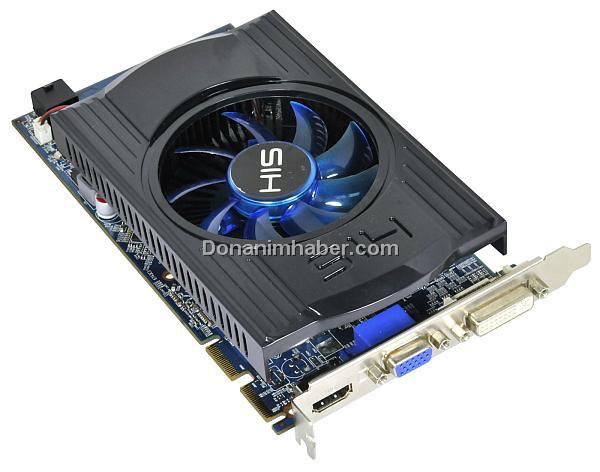
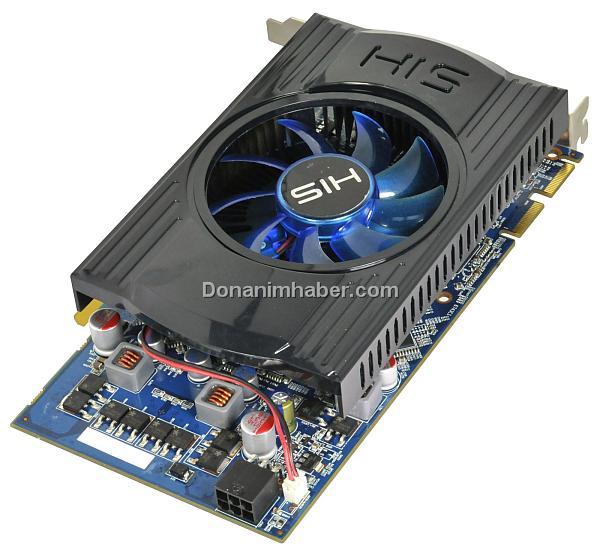
Following custom-design product launches from the likes of PowerColor, HIS decided to roll out one of its own. Named the HIS HD 4770 iCooler III, the color scheme is trademark HIS shade of blue with black. The company custom-designed both the PCB and the cooler. Under the black plastic shroud is what appears to be an aluminum heatsink with radially-projecting fins, nested into which, is the fan.
Despite all this, the clock speeds remain reference 750 MHz (core) and 800 MHz (memory). It holds 512 MB of GDDR5 memory across a 128-bit wide interface. Outputs are care of DVI-D, D-Sub, and HDMI with 7.1 channel audio. Expect a fairly standard price when this comes out.

Source: DonanimHaber
Read More ...
(PR) OCZ Technology Announces the Ultra-Affordable Zee USB 2.0 Flash Drive
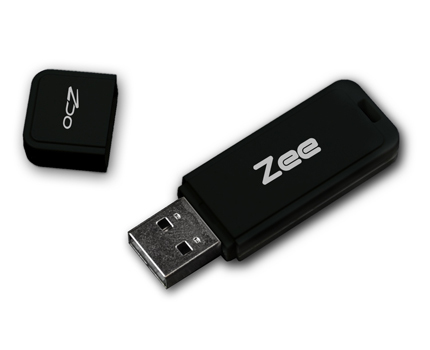
OCZ Technology Group, a worldwide leader in innovative, ultra-high performance and high reliability memory, today introduced the Zee USB 2.0 flash drive, perfect for users seeking a simple and portable way to tote their multi-media files and documents. For the on-the-go student, gamer, or professional, the OCZ Zee is the ideal companion for a busy digital lifestyle at an affordable price point.
"Designed for the consumer on the go, the compact Zee is an economical USB drive that makes it easy to transfer images, multimedia and essential data between multiple computers," commented Alex Mei, CMO of the OCZ Technology Group. "The Zee is designed to be affordable to the complete range of consumers, and is available in large capacities up to 16GB yet is both lightweight and compact so that it highly portable."

Read More ...
Clarkdale IGP Detailed, Tested
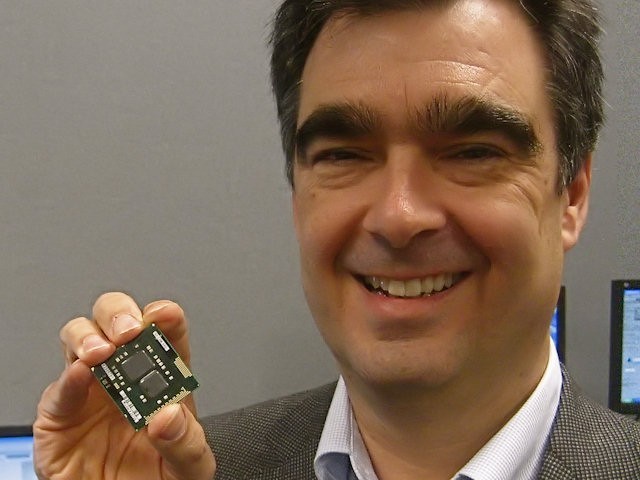
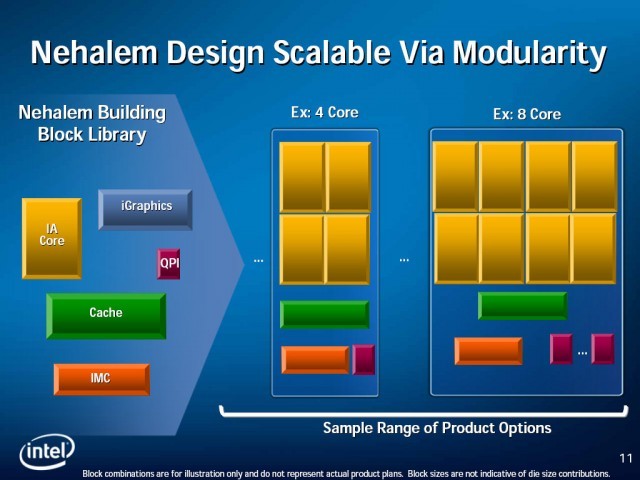
Intel's upcoming "Clarkdale" is special for two reasons: it is the first 32 nm based processor from Intel, and that it's the first processor that comes with a graphics processor built in, something AMD conceptualized a long time ago. Under the hood (read: integrated heat-spreader), Clarkdale is a busy package, that holds a CPU complex die (that houses the main processing cores, cache, a dual-channel DDR3 integrated memory controller, and a Quickpath interconnect controller, that connects the die to its neighbor, a northbridge-iGraphics die that houses most northbridge components including a PCI-Express 2.0 root complex, the star-attraction IGP and a DMI connection to the "platform controller hub (PCH)".
Read More ...
Razer Treats MMO Players with Naga Mouse and Megasome Mousepad
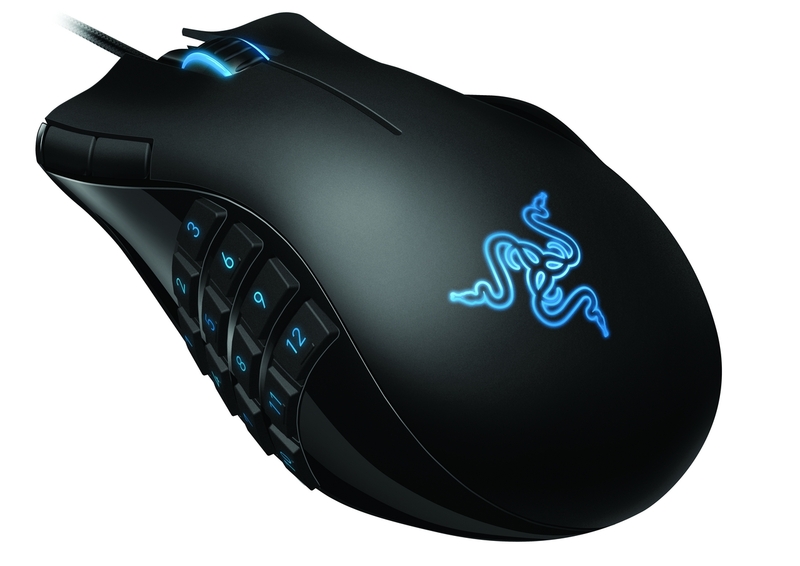
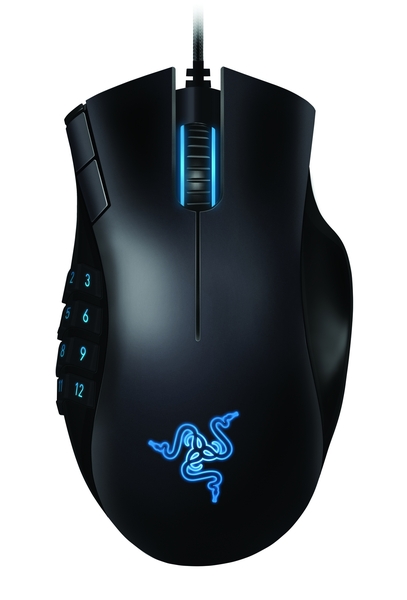
Gaming hardware specialist Razer announced two products designed for the MMORPG crowd. The Naga MMO mouse, and the extra-large Megasome mouse-pad to go with it. To begin with, Naga boards of a 12-button thumb-pad that lets you assign as many as 12 macros apart from this, the upper thumb are has two buttons next to the mouse's main buttons, and four-way scroll-wheel. Under its hood is a 5600 dpi 3.5g Laser sensor. With the Ultrapolling feature, the mouse ensures a high polling rate for its USB interface, boosting accuracy, with a response time of 1 ms. The mouse lets you use game-specific addon packs (that probably come with pre-defined button profiles that work well for most players). The software allows you to store unlimited character profiles. Measuring approximately 116L x 69W x 41.6H mm, Naga is an upper-mid-sized mouse. Razer will start selling these for around US $80 soon.
As its sidekick is the Megasome white gaming mouse-pad. It comes in an extra-large size of 350 x 230 x 2 mm, and makes use of a silicone mat for just the right traction. The surface is white fluorescent for an ambient glow. It is expected to be priced at $50. Videos related to the two products titled Razer Naga key binding and add ons in-game configuration, and Razer Naga Introduction Video can be watched on YouTube.

Read More ...
Braidwood Technology and P57 Chipset Get The Axe, Sources Claim
Intel's so codenamed "Braidwood" technology, which was touted to be a successor for Intel Turbo Memory, in which a supplementary high-speed, low-latency NVRAM module is used to speed up booting, application startup, and enhance system responsiveness in general, is shelved for now, and will not be part of Intel 5-series chipsets' feature-set, according to industry sources. As a result, Intel P57, a variant of P55 that officially supports it, will not be implemented, as Braidwood is the principal difference between it and P55. Several motherboard manufacturers already have the hardware-side of the technology ready, as several high-end LGA-1156 motherboards have been spotted with Braidwood NVRAM slots, or at least placeholders of the same. The software-side of it, however, seems to be the problem child, sources explained.


Source: DigiTimes
Read More ...


No comments:
Post a Comment