

Molyneux says Milo tech 'does work' and is still set for release

Some confusion in the Microsoft Xbox PR camp this week with conflicting reports about Peter Molyneux's impressive-looking Milo and Kate for Kinect.
Microsoft's Aaron Greenberg initially suggested that Molyneux's title was just a 'tech demo' used at E3 2009 to introduce and demonstrate the potential of Kinect (which, back then, was still referred to under its code name 'Project Natal').
However, Lionhead boss (and Creative Director of Microsoft Game Studios) Molyneux has been quick to scupper those initial reports, telling attendees at this week's GameHorizon event in Newcastle that Milo & Kate is still on the way from the studio.
"All that technology that we showed at E3 last year actually does work," said Molyneux.
Difficult to describe
"Milo has been a really hard thing to do and a really hard thing to describe," he continued. "I have real sympathy for the [Microsoft] people over in Redmond, because they understandably have some questions.
"Poor Aaron Greenberg – he's on the PR team, he hasn't seen it since last year, so he came up with this stock answer that Milo is alive and well and living in Guildford but it's still a tech demo," added Molyneux.
"I feel sorry for him, he hasn't seen the game since last year. If I had spent time with him and showed him the game recently, he'd know what was going on."
Molyneux is set to show off the latest developments in Milo and Kate at TED Global in Oxford next month.
He was also keen to show off the latest developments with Fable III at Gamehorizon this week, revealing that the game will be released as a full retail boxed version AND as an episodic download version, whereby gamers can choose to play a free one-to-two hour demo and then purchase the game chapter-by-chapter.
"Soon after the retail launch we're doing episodic," Molyneux revealed. "We break it down in chapters. We give away the first chapter entirely free, the first hour.
"When you reach a certain point in the game it says 'thank you for playing the pilot of Fable 3, do you want to spend an extra 2-5 or whatever dollars to buy the next episode, or buy the whole lot?' Press 'yes' and you will immediately continue playing."
Molyneux expects Fable III to sell 5 million units, generating a cool $150 million in revenue.
Fable III releases in October for Xbox 360 and as a download for PC.

 |  |
Read More ...
YouTube: HTML5 'doesn't meet all our needs'
 YouTube has spoken about its use of HTML5 and has revealed that it will not be getting rid of Flash for the foreseeable future.
Although the video upload site has implemented HTML5 standard, it has noted that the standard "does not address video streaming protocols, but a number of vendors and organizations are working to improve the experience of delivering video over HTTP."
In a blog it also states that Flash is still the most secure way to distribute videos, explaining: "YouTube doesn't own the videos that you watch - they're owned by their respective creators, who control how those videos are distributed through YouTube.
"For YouTube Rentals, video owners require us to use secure streaming technology, such as the Flash Platform's RTMPE protocol, to ensure their videos are not redistributed. Without content protection, we would not be able to offer [these] videos.
HTML5 doesn't meet all needs
It also notes that Flash is still the best way to stream content full screen HD content (Flash Player provides robust, secure controls for enabling hardware-accelerated fullscreen displays) and embedding video can currently only be done with the help of Flash.
"YouTube is dependent on browser enhancement in order for us to improve the video experience for our users," the blog goes on to explain.
"While HTML5's video support enables us to bring most of the content and features of YouTube to computers and other devices that don't support Flash Player, it does not yet meet all of our needs.
"Today, Adobe Flash provides the best platform for YouTube's video distribution requirements, which is why our primary video player is built with it."
YouTube's owners Google seem to be on pro-Flash slant at the moment, adding the technology to its Android phones with its upcoming 2.2 update.
This is in stark contrast to Steve Jobs and Apple who call Flash, calling it a "closed" platform.

| |
Read More ...
In Depth: A brave new world for Mac games
 Back in 2007, games developer Valve's Gabe Newell said:
 "We'd love it if (Apple) would get serious about (games). But they never have…It seems bizarre because it's like one of the biggest things holding them back in the consumer space. If you look at a Macintosh right now, it does a lot of things really well compared to a Vista PC, but there are no games." He was right, it was bizarre.
And it continued to be bizarre until the March of this year, when Valve announced it would be releasing its Steam digital download service for games on the Mac – which accounts for 70% of online games sales – as well as releasing all its past and upcoming Source-engine games.
Why the change? John Cook of Valve: "The Mac is a very attractive platform for entertainment as a service." But it's been around since 1984. Why wasn't it attractive before?
For years gaming on the Mac was possible, but undesirable; the user base relative to the PC was low, almost no-one had a graphics card that was designed for gaming, and because of compatibility issues games had to be made from scratch rather than ported.
Moreover, where Linux always shared the same IBM architecture and had a devoted network of hardcore volunteer programmers, the Mac had too many obstacles to overcome at once, and not enough people willing to meet the challenge.
The advantages it did have were standardisation and an untapped, relatively wealthy market, enough to tempt only a few intrepid developers. However, with the shift from the PowerPC architecture in 2006 to Intel architecture, every Apple's innards suddenly became functionally equivalent to those of a typical Windows PC.
Gavriel State, CTO of game-porting experts Transgaming, explains: "The biggest (remaining) hardware difference is on the desktop side, where most PCs use add-in cards for graphics, while only Mac Pros have upgradable graphics cards on the Mac side." So developing on the Mac was easy but apparently not desirable for Apple.
Newell again, pre-2010: "I just don't think they've ever taken gaming seriously. And none of the things developers ask them to do are done. And as a result, there's no gaming market there to speak of. We'd love it if they would get serious about it. But they never have, and can't even follow through on any of their commitments for game developers."
Apple was interested, but gaming was never a focus. Perhaps wisely, its longer-term plan was more concerned with securing its current market – whether that was music or mobile phone – rather than pushing the Mac into a direct competition with the next generation of consoles as they launched.
Four years on, those 'new consoles' are starting to look weary in comparison to what a specced-up Mac or PC can handle, and suddenly the Mac looks attractive.
Instead of £40 games that require systems worth hundreds of pounds, now you can get quality games for pennies. Indeed, you can get exactly the same version of Football Manager on your iPhone for £7 that costs £25 on the PSP – and that's regarded as overpriced!
Indie developer James Brown, of Ancient Workshop, makes the key point, though: "The real change that's happened here is not so much the hardware as the general resurgence in Apple's fortunes. It's no longer a niche; it's something you develop for as a matter of course."
The glorious success of the iPhone is really bleeding over onto Apple's main systems, at exactly the time its putative rivals have stumbled.
Whatever the reasons, Mac gaming has started to boom. Despite the advent of this new age, it's still hard to find publishers who are willing to talk about it – expertise seems thin on the ground and nearly all developers, even longterm Apple aficionados, have developed almost exclusively for PCs, and Windows PCs at that.
Many still employ porting-houses to transfer games across, or use Transgaming's Cider tools – EA has used this to port all of their recent triple-A games, from Spore to Red Alert 3 and The Sims 3. But just how easy is it to develop for the Mac?

THE SIMS 3: The perennially popular Sims series already has Mac status
Ex-EA and Lionhead developer James Brown continues to develop his Ancient Frog game simultaneously for iPhone, Mac and PC; "Games are probably the easiest type of application to adapt from PC to Mac. Where you run into difficulty porting an application from one platform to another is in the user interface. And a game pretty much is a user interface – it exists solely as something to be interacted with, and that interaction is something which shouldn't be shoe-horned into the platform's general look and feel. Imagine writing a puzzle game that conforms to the Mac OS human interface guidelines; it would just show you the completed puzzle."
Industry veteran Dallas Snell, who worked on Ultima 1 to 8 and now works on social games and MMOs for Portalarium, says that the hardware isn't the problem: "The real magic is keeping everyone's social graph interconnected with our back-end infrastructure that spans multiple clients, multiple devices, multiple operating systems, multiple browsers and multiple social networks."
Transgaming's States points out: "One nice advantage to developing for the Mac is that there are few system configurations that must be supported compared to PCs. Most Mac gamers are quick to adopt the latest OS updates, especially compared to what happens with PCs. On the flipside, because the Mac OS is so tightly integrated with hardware, Mac users only get new updates to video drivers as part of the OS."
Are these porting houses still necessary then? "If you're a Windows developer making Windows games, then a porting house will save you an awful lot of work." says Brown. "But you're paying someone else to do what is really your business, and for your next game you have to get them in again to do pretty much exactly the same work."
States, CTO of the biggest rival to porting houses, the conversion technology Cider, is even more scathing: "The kind of porting house that was typical of the Mac gaming world is likely to have little place in its future. As the Mac becomes a bigger percentage of the overall PC market, more game developers and publishers are looking at getting into the platform directly, rather than trust IP and profit margins to third parties."
Transgaming's Cider engine makes porting a lot easier, dodging problems involving build systems, middleware adaptation and graphics paths, and helping with the difficult UI adaptation.
One of the most annoying aspects of current releases is that the Mac seems to lag behind the PS3, PC and 360 – the Chronicles of Riddick took an extra year to come out on Mac. So are simultaneous releases possible in the future?
"Definitely!" says States. "The easiest way to handle multi-platform development is to make sure you're building on each platform right from the start."
And Brown is ahead of the game: "One of the reasons I'm constantly switching back and forth between the Mac and PC is that I catch any non-portable code immediately, while it's still fresh in my mind and it hasn't burrowed its way to the heart of the code base. When the game is finished on the Mac, it's finished on the PC." Even Valve has committed to releasing Portal 2 simultaneously on all platforms.
There's a caveat here though – while we've been talking about this being a new age for Macs, it's a more of an age for low-powered gaming. The real platform of the moment isn't the iPhone, or the Wii or even the Mac. The most played game today, with 28.8 million players every day, three times that of World of Warcraft, is… Farmville. And Facebook is the platform.
Love it or hate it
Yes, 'social gaming' is the phenomenon of the moment and hugely profitable – MobWars is estimated to earn $1,000,000 a month from micropayments alone. Developers are cutting their teeth in indie games and then racing from the saturated iPhone market and the heavily restricted console markets over to Facebook. A good, well-integrated game can set a lone developer up for life.

COMING SOON: Diablo isn't just any old game – the series has a cult following online
Even the big developers, like iD and Firaxis, are porting their games to a free-to-play model. Quake Live is out, the next Civilization game will be Facebook only, and a free-to-play massively multiplayer version of Tiger Woods is available already.
These are the games that are really eroding the difference between Mac and PC, and as these and game-streaming services like OnLive grow, players will no longer have to invest in expensive hardware on any system.
So what does the future hold for Mac gaming? As we've seen, the additional cost for developers to develop for the Mac is shrinking, especially with tools like Cider available. So it's likely we'll see the Mac taking its place alongside the other platforms, receiving simultaneous releases.
Still, the real gaming, on any platform, is going to be online and free.

| |
Read More ...
Xbox games to be ported to Windows Phone 7
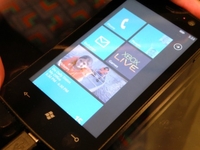 Microsoft has confirmed that it will be easy for developers to port games created for the Xbox Arcade to Windows Phone 7.
Although it's already common knowledge that the XNA framework, used for creating Xbox Arcade games, is going to be used for the Windows Phone 7 series handsets, Oded Ran, head of Consumer Marketing for Windows Phone confirmed this was Microsoft is hoping to be seen as a market leader in mobile gaming.
Working with developers
"There are four million Xboxes in the UK compared to 2.5 million iPhones; we're now working with developers who know how to make games, and they're able to port Xbox Arcade games to mobile phones easily," said Ran.
"Of course we're not talking about bringing Halo 3 to your mobile phone - users want a 42-inch LCD TV and surround sound to play games like that - but our XNA framework is a big part [of the forthcoming Windows Phone 7 launch devices]."
Ran also pointed out that the same framework is used to create games on Windows 7 PC games, so it's entirely feasible that multi-platform gaming will play an even bigger part of the launch than previously thought.

| |
Read More ...
Microsoft Kinect only supports two active players
 Tech specs for Microsoft's Kinect have been revealed, with the surprise news that the motion-controller for Xbox 360 can only support up to two active players.
Technical data revealed on Play.com suggests that Xbox 360's Kinect will only support two players in-game at any given time.
While many of us simply don't have the space in our living rooms to envisage playing four player Kinect Sports sessions, the fact that Nintendo and Sony's own motion control systems do support up to four players at once is sure to be seen as a slight limitation with Microsoft's own motion-controller for the Xbox 360.
Tracks 20 joints per player
Kinect's skeletal tracking system is able to track up to 20 joints per active player and map them instantly to your on-screen Xbox Live avatar.
The camera's 320x240 resolution has been slightly reduced from the 640x480 resolution of the original PrimeSense tech that Kinect was based upon.
Here are those Kinect Technical Specifications in full:
Sensor
Colour and depth-sensing lenses
Voice microphone array
Tilt motor for sensor adjustment
Field of View
Horizontal field of view: 57 degrees
Vertical field of view: 43 degrees
Physical tilt range: 27 degrees
Depth sensor range: 1.2m - 3.5m
Data Streams
320x240 16-bit depth @ 30 frames/sec
640x480 32-bit colour@ 30 frames/sec
16-bit audio @ 16 kHz
Skeletal Tracking System
Tracks up to 6 people, including 2 active players
Tracks 20 joints per active player
Ability to map active players to Xbox LIVE Avatars
Audio System
Xbox LIVE party chat and in-game voice chat (requires Xbox LIVE Gold Membership)
Echo cancellation system enhances voice input
Speech recognition in multiple languages
UK retailers such as Game and HMV are already planning how they are going to demonstrate Microsoft's new motion-control tech when it arrives in stores later this year.
UK online retailer ShopTo is currently listing Kinect for Xbox 360 with a recommended retail price of £129.99 and release date of November 19 – although that pricing and release date has still to be officially confirmed by Microsoft.

| |
Read More ...
Android 2.2 release date: when will you get it?
 If you're waiting impatiently for the Android 2.2 update to arrive on your mobile, then bookmark this page, because we'll be keeping it up to date with all the latest Android 2.2 release dates.
First off, the Nexus One Android 2.2 update is coming this week. "This update will be rolled out gradually to phones – and most users will receive the notification by the end of the week," Google says.
We can also confirm that the HTC Desire Android 2.2 update is coming in Q3. HTC Wildfire and HTC Legend will also will also be getting Android 2.2 in the same quarter.
Other phones have confirmed the update - Android 2.2 will arrive on the Samsung Galaxy S later in its lifetime, although Samsung has yet to provide anything resembling a firm date.

| |
Read More ...
Android 2.2 release date: when will you get it?
If you're waiting impatiently for the Android 2.2 update to arrive on your mobile, then bookmark this page, because we'll be keeping it up to date with all the latest Android 2.2 release dates.First off, the Nexus One Android 2.2 update is coming this week. "This update will be rolled out gradually to phones – and most users will receive the notification by the end of the week," Google says.
We can also confirm that the HTC Desire Android 2.2 update is coming in Q3. HTC Wildfire and HTC Legend will also will also be getting Android 2.2 in the same quarter.
Other phones have confirmed the update - Android 2.2 will arrive on the Samsung Galaxy S later in its lifetime, although Samsung has yet to provide anything resembling a firm date.

| |
Read More ...
Review: Apple Mac Mini
 The Mac Mini has long been the most neglected product in Apple's computer range. Although it's marketed as the cheapest way to own a Mac, it's often considered underpowered considering its cost.
 As well as being a useful entry-level Mac, its small form factor has won it fans among the Apple faithful as a media centre machine or even a server, prompting Apple to release a dedicated Server Edition. Yet its lack of power compared to the rest of Apple's desktop range has frustrated.
The mid-2010 update of the Mac Mini brings some much-needed improvements to Apple's smallest desktop, but it's still lacking in a few key areas.
Apple has at last recognised its potential as a media centre, but has failed to fully exploit it, and its price point and choice of processor seem aimed at finding a niche between other Apple products.
The new Mac Mini boasts a unibody casing. Using the construction process pioneered by Apple for its MacBook Pro range, the enclosure is carved from a single block of aluminium, making it light but strong.
At 19.7cm wide and long it has a slightly bigger footprint than the previous model, but it's substantially thinner and 20 per cent smaller by volume.
The transformer is now housed inside the casing, so there's no power brick. Great news for people who carry their Mac Mini around with them.
A removable plastic plate at the foot of the casing gives access to the Mac Mini's two SO-DIMM slots, allowing you to upgrade the RAM to a maximum of 8GB, but changing other components, such as the hard drive, still requires professional disassembly.
As always, the Mac Mini is sold without a keyboard or mouse.
Around the back, HDMI video output makes a long-overdue appearance, joining the Mini DisplayPort. Given how many people use Mac Minis as media machines, it's surprising it took this long.

A HDMI-to-DVI adapter is included for connection to a third-party computer monitor, and it's is dual-monitor compatible too.
We've gained an SD card reader, but being on the rear of the Mac mini makes it a little awkward to reach.
USB ports are down to four from five in the previous release, but this is hardly a problem. They're packed a little too closely too, but given the computer's form factor, this was inevitable.
FireWire 800 and Gigabit Ethernet are retained, and there are audio in and out ports for your headphones, speakers and mic.

The new Mac Mini's component upgrades are a mixed bag. Graphical power is now supplied by an Nvidia GeForce 320M, the most powerful integrated graphics chipset currently available.
It's almost twice as fast as the last generation's GeForce 9400M, and more energy-efficient too.
Previously, we had two standard Mac Mini configurations, based on 2.26GHz and 2.53GHz Intel Core 2 Duo processors. The mid-2010 refresh offers only one, which is pitched between the two at 2.4GHz.
Like the low-end configuration from the previous generation, it has 2GB of RAM out of the box, but at 320GB, its hard drive matches the capacity of the more expensive model. So, graphics aside, it's not so much an upgrade as a merger.
But why not drop the Core 2 Duo and make the switch to the newer, more powerful Core i3/5/7 series chips?
Alas, an unresolved legal dispute prevents Apple integrating an Nvidia graphics chipset into a Core i processor, and the Core i's own integrated Intel HD Graphics is less powerful than the previous Mac Mini's GeForce 9400M. A discrete GPU would have to be incorporated, which would push up costs.
In our benchmarking tests, the new Mac Mini was on a par with its 2.53GHz predecessor in our processor, hard drive and rendering tests, but the new graphics chipset gave Doom 3 a framerate increase of around 50 per cent.
The Mini runs almost silently, which is great news for those who use it as a media centre, and even with the processor running at near-maximum for half a day, the casing was barely warm.
One test the new Mac Mini struggles with is value for money. At £649 it's not ridiculously overpriced, but is definitely on the high side of what we're prepared to pay. We can't help wondering whether Apple has deliberately moved away from the near-£500 price point enjoyed by the entry-level previous-generation model so Apple enthusiasts aren't tempted to upgrade their Mac Minis instead of buying an iPad.

Conclusion
The Mac mini's new form factor is undoubtedly welcome, but we're down to one standard configuration, which is only slightly cheaper than the high-end model from the previous generation. With the near-£500 configuration gone, it's certainly less attractive as an entry-level Mac for switchers.
We liked
The Mac mini is undoubtedly a brilliant piece of engineering. It's amazing how much has been crammed into such a small case, with no compromise on quality.
It's ideal for those who need to carry their computer between workspaces, and given how many people use it as a media centre, HDMI output is long overdue.
We disliked
Despite the HDMI output, it's not the media centre Mac we were hoping for. There's still no Blu-ray (even as a custom configuration option), and Apple's Front Row software is looking very long in the tooth.
Given the new Mac mini's asking price of £649 is a mere £14 cheaper than the high-end previous-generation model and it has half the RAM, it's disappointing Apple didn't at least stick with the 2.53GHz chip.
Verdict
The Mac mini is a brilliantly-designed machine, but is struggling to find its niche.
We hope with the next generation, Apple stops worrying about its impact on other, very different products and allows the small form factor Mac to achieve its true potential, both as an entry-level Mac for switchers and a full-on media machine for enthusiasts.
Related Links

| |
Read More ...
iPhone 4 problem admitted in leaked memo
 A leaked memo which highlights what AppleCare reps have to say to customers who complain of reception problems with their iPhone 4 has turned up on the internet with an admission that there is a problem with the iPhone 4 but one that affects all phones.
In the memo, which has been posted online by BoyGenius, the following statement reads: "Gripping almost any mobile phone in certain places will reduce its reception.
"This is true of the iPhone 4, the iPhone 3GS, and many other phones we have tested. It is a fact of life in the wireless world."
Bumper to bumper
The statement also informs staff on how to deal with customers complaints, instructing them not to make a promise of "free bumpers", even though one of the methods listed to improve the phone's reception is the use of a bumper.
"If you are experiencing this on your iPhone 4, avoid covering the black strip in the lower-left corner of the metal band," the memo reads, continuing with: "The use of a case or Bumper that is made out of rubber or plastic may improve wireless performance by keeping your hand from directly covering these areas."
Interestingly, in the memo there is no mention of a software update to fix this issue, which may mean that the problem is hardware based.

| |
Read More ...
Ridley Scott: 5 reasons I'm so into 3D for Alien prequel
 Ridley Scott has discussed his plans for making a 3D prequel to Alien. In an interview with website Ain't It Cool he extols the virtues of shooting in 3D and makes light of the technical challenges faced when shooting stereoscopically. He's also quick to dismiss audience complaints about the quality of some 2D to 3D conversions.
 His main points are:
1. There are no limitations to filming in 3D
Because he's a camera operator-cum-director Scott believes the disciplines of being a lensman make it straightforward to think and work in 3D. "I always (camera) operate. I operated entirely on Alien, for instance. Because I'm an operator I think lenses. If you think lenses then the crossover to 3D honestly is nothing, " he reassures.
2. Shooting in 3D doesn't slow you down
"I was told it (shooting in 3D) was going to slow us down… it didn't slow (Michael) Bay down. Bay is moving like lightning," says Scott. The only difference is that "I'm adding dimension."
3. Editing is a cinch
Scott says he gets asked if he's worried about how shots from the 3D Alien movie will cut together. His response is that no, he's not worried because "when I'm planning I think in 3D anyway." Even when he's storyboarding a 2D film the scene is always thought of in terms of the dimensions. For example if he's got a deep two-shot, he thinks should he cover that in singles or not? "'Will I need a reversal?' You're already thinking in 3D."
4. 3D in low light? No problem - use faster stock
Light is used in 3D movies to create depth much more than 2D and means films need to be quite bright. Does Scott feel that this is at odds with Alien's atmospheric low lighting? His solution is to use faster film stock (800 ASA over the normal 500 ASA) to give him an extra stop of light.
"I think what people forget is that sometimes you want to fill a little bit more so you have the information in the blacks. So then later, when I grade it, the digital grading will have something to pick up. If there's nothing to pick up, there's nothing to pick up."
5. 2D makes great 3D
Scott thinks that cinema audiences only complain about the fact that 3D movies originated in 2D because it's fashionable to do so. He says: "I could show you 2D to 3D and you wouldn't know the difference." He believes audiences are motivated to moan about the price premium charged by cinemas to see 3D but he says: "You're still paying for the effect. Really, it's very close. 2D to 3D is awfully close."
Via Ain't It Cool

| |
Read More ...
In Depth: 15 best netbooks in the world today
 Our continually updated list of all the best netbooks available today
Netbooks are affordable. It's the reason we love them, and the reason that they took off in the first place.
The cheap netbook isn't for everyone, but choose carefully and you'll get the very best netbook for your needs.
The big idea when getting your head around netbook computers is managing your expectations. If you're looking to write a novel, play games, or do a series stint of work, then you may be better off going for a full notebook or a desktop PC.
While all these things are possible on a netbook, they're ideal for taking notes, editing work, watching movies, browsing the web and simply lasting a lengthy journey away from a plug socket. The battery life offered up by netbooks can be amazing, with the latest mini netbooks representing the perfect companion for a modern on-the-move lifestyle.
It seems like an age since Asus stirred up the ultra-portable market with the release of its first Eee PC, so where does the market stand now? Has the introduction of the Windows 7 netbook changed which you should buy?
Which is the top netbook available right now? Are tiny 7-inch screens still the best choice, or is a larger netbook screen a better bet? We dissect the latest netbooks reviews, to see where the best netbook deals are to be had.
So here they are, in price order from cheapest to most expensive...


1. Dell Inspiron Mini 10 - £249
Dell was one of the most eagerly-awaited manufacturers to enter the netbook market. Years after it's first release; it's still easy to see why, as it continues to refine it's main netbook to produce a must-considers for any prospective shortlist. At this stage it has retired many of the chassis that it has launched with, leaving the Dell Inspiron Mini 10 as it's sole offering to the market. What Dell lacks in diversity, it more than makes up for in refinement.
The latest rendition of its 10-inch ultra-portable boasts a high-quality screen with a native resolution of 1366 x 768.
This is great for watching movies, and despite the glossy screen finish you're not limited to using the machine in darken rooms, as even on bright days the screen is vibrant and vivid. Dell has made good use of the amount of space on offer as well, to produce a well-proportioned keyboard that is comfortable to use and accurate.
The core specification is solid - boasting an Intel Atom Z520 processor running at 1.33GHz and 1GB of RAM, along with a 160GB hard drive. The Dell Mini 10 is available with a 3G option as well, for that that need internet access when out of range of Wi-Fi, adding to its versatility and scope.
Read our Dell Inspiron Mini 10 review
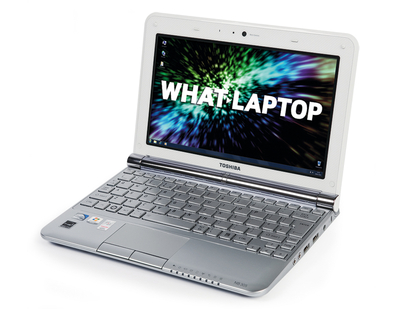
2. Toshiba NB305-105 - £269
Netbook manufacturers appear to have eased back on the original 7-inch ultra-portables that defined the netbook market, instead preferring to focus on the larger 10.1-inch models.Whether that is down to slightly better margins, or the usability of the machines themselves is difficult to tell, but if the NB305-105 is anything to go by, this is a sensible choice.
The 10.1-inch screen boasts a native resolution of 1024 x 600-pixels, and is capable of producing bright and sharp images. The Atom N450 processor is a somewhat uninspiring processor, but it does provide enough raw grunt for normal day-to-day work.
1GB of RAM comes as standard, which is just about the minimum for running Windows 7 starter, edition with the 250GB hard drive providing plenty of storage space for work and movies alike.
The build quality is generally strong, although there is a little flexing in the screen. Typing on the spaced keyboard is responsive and positive too, although the touchpad is easy to accidentally stroke when in use.
Probably the biggest sell of the Toshiba NB305-10 is the battery life, managing close to eight hours in testing; making this an easy machine to recommend for those looking for an affordable travelling companion.
Read our Toshiba NB305 review
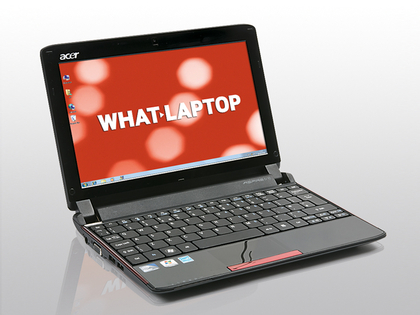
3. Acer Aspire One - £277
The original Acer Aspire One was one of the original darlings of the netbook market, scooping various awards thanks to its keen pricing, decent core specification and comfortable keyboard.This rendition of the netbook, the Aspire One 532, is the latest refinement to that original machine, updating it with a newer processor, the Intel Atom N450.
The key selling point of this relatively new Atom is that it boasts the processor and graphics core in a single package, which means it is both faster and more energy efficient than its predecessors. With a battery life of five and a half hours, it's just about got the goods to keep up with you on the move, and weighing in at 1.2kg, it's an easy addition to your luggage.
The 1024 x 600 screen has a high-reflective coating, which can make it tricky to use in brighter conditions, but on the whole it makes for a positive experience.
The gesture-based touchpad is a lot more frustrating though, and accidentally tapping it while typing can be infuritaing. Overall, this is a neat machine, but it does feel a little uninspired against the competition now.
Read our Acer Aspire One review
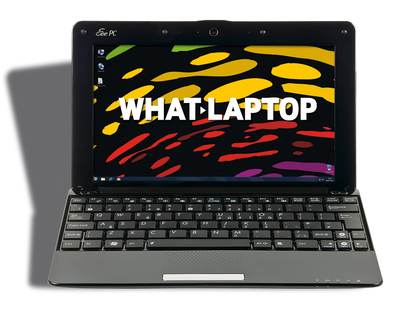
4. Asus Eee PC 1005PE - £279
Asus started the netbook revolution, with it's tiny 7-inch ultra-portable. This was before the Atom processor and most of the tweaks, nips and tucks that have since defined the platform. In the meantime it has produced this biggest array of netbooks of any manufacturer, with price points and sizes for every pocket. The Asus Eee PC 1005PE is the latest netbook to roll off the production lines, and if nothing else it shows that Asus knows more than any other manufacturer what works and what needs tuning. The chassis have proved to be durable, so no change there, and it's the same for the textured touchpad and the spaced keyboard, both of which are great for normal use.
Asus has eschewed the temptation to use a glossy coating on the 10.1-inch screen, which means that this is a netbook that you can use outdoors without searching out a tree for shade. This is another outing for Intel's Atom N450 processor, and once again you'll find it operating alongside 1GB of RAM and a healthy 250GB hard drive.
Battery life, at just under seven hours is commendable, and weighing in at just 1.27kg this is a netbook that is designed to travel.
Read our Asus Eee PC 1005PE review
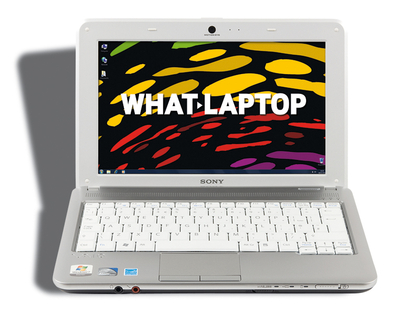
5. Sony Vaio VPCM11ME/W - £299
That Sony has a budget netbook at all is surprising. Having built a name for itself in the ultra-portable arena with an array of expensive to ultra-expensive machines, it can't have been easy to see its market smashed by these budget upstarts. But as the saying goes, if you can't beat them, join them. There's something of the you-get-what-you-pay-for ethos still visible in the VPCM11M1E/W, and it falls a little short of hitting the high-standards expected from the electronics giant. The styling won't please everyone, although it is different enough to stand out from the crowds.
We did find the machine a little heavy at 1.4kg given its proportions. The battery life meanwhile, at just five hours wouldn't be awful for most machines, but with its peers rolling in at anything up to double that, it does lag the competition somewhat.
The screen is excellent though, as can be expected from Sony, and the keyboard makes for a delightful experience, possibly the best of any machine here. The core specification is fairly fine too, with no obvious howlers beyond being limited to just 1GB of RAM with no obvious upgrade path.
Again you'll find an Intel Atom N450 at work, with a 250GB providing plenty of storage space.
Read our Sony VAIO VPCM11ME/W review
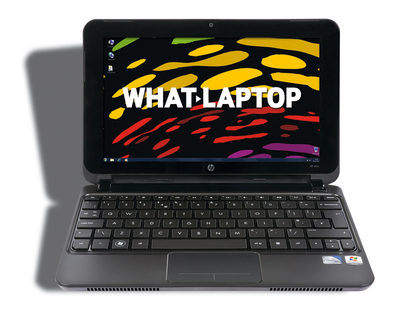
6. HP Mini 210-1002SA - £299
HP has made various attempts at capturing the netbook market, although none have quite given it the dominance that it enjoys in the affordable notebook space. Even so, there's plenty to like in this, the latest addition to its netbook range, the Mini 210-1002SA.HP's distinctive rounded-corner design is in play here once again, and this lends the machine something of a playful look, but there are plenty of features to make working with the machine that much easier. There's a touchpad diasble button conveniently placed to minimise the frustrations of brushing the touchpad while typing for long periods, for instance.
There are a few downsides to this machine though, most notably the screen can't be orientated much beyond the vertical, which can make working with the machine uncomfortable in tight spaces (we're thinking train and plain journey's in particular here).
The HP Mini 210-1002SA does have one big plus point in its favour though, and that is thanks to the inclusion of a 7,200rpm hard drive (where you'll usually find a much slower 5,400rpm drive).
This improves general responsiveness throughout, although on a downside does add to the heat generated, which can make for an uncomfortable experience after long periods of typing. Still, it's an impressive machine.
Read our HP Mini 210-1002SA review
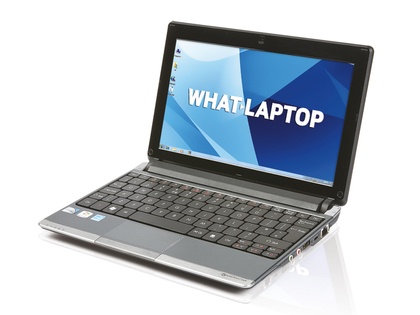
7. Packard Bell Dot S2 - £300
While most netbooks are available in any colour as long as it's white (or black depending on the manufacturer), Packard Bell is a little more style conscious, and provides the Dot S2 is available in bright red as well. Inside you're looking at one of the most stylish gunmetal interiors around, which belies the machines tiny 10.1-inch proportions. This is a portable machine with a mind to keeping you up and running on the road, boasting nearly eight hours of use and weighing in at just 1.2kg, it's a svelte system in general too, although the large battery pack does protrude below the base by a few millimetres.
The core specification, as to be expected from any modern netbook, boasts the ubiquitous Intel Atom N450 running at 1.6GHz along with 1GB of DDR2 ram backed up by a 5,400rpm 250GB hard drive. This is a capable core that powers the vast majority of 10.1-inch netbooks.
Packard Bell has packaged a copy of Photoshop Elements 7 on the machine, which it can run, although it is a little slow in practical terms. Even so, given the price, it's a nice inclusion.
Read our Packard Bell Dot S2 review
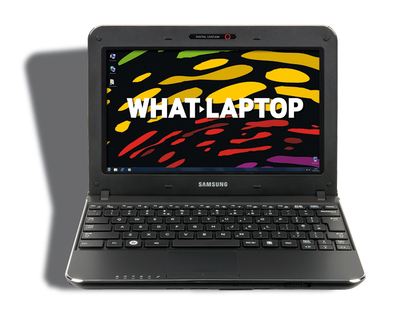
8. Samsung N220 - £303
Samsung has tinkered with its various netbook designs over the years, and the changes it has made haven't always been for the better.Battery life for instance took something of a dice a few models ago, while the styling has been a little questionable at times. With the N220 it has resolved both issues to produce a workhorse of a machine with some neat touches.
The 1024 x 600 screen for instance is particularly bright and usable in a range of lighting conditions thanks to the use of LED back-lighting. This produces vivid colours with strong contrasts and brightness. Meanwhile, the battery life at nine and a half hours puts this at the top of the class in terms of stamina.
If you're in a hurry to check something on the net, pressing F6 as it boots up will take you into a cut-down linux distro called HyperSpace instead of the standard Windows 7. You are limited to what you can do in this OS, and Windows 7 doesn't take that much longer to load, but it's still an option if you need to check something quickly.
We did find the keyboard and touchpad a little soft under touch, but overall, there are enough interesting features and touches on show here to make it worth adding to any netbook shortlist.
Read our Samsung N220 review

9. MSI Wind U160 - £329
MSI released its first Wind netbook not long after Asus had defined the market with the Eee PC, and it has produced a constant trickle of updates to the brand ever since.This latest rendition, the U160, boasts a solid core specification boosted by a strong battery life to make for a machine that you'll be happy to take on the road with you. Once you've managed to scrape off the plethora of stickers that MSI has glued onto the palm wrest at least.
Weighing in at 1.3kg, this isn't the lightest machine you'll find, but it does boast a battery life of eight and a half hours. This is thanks to a battery that is slightly larger than the chassis, although this simply provides a useful angle to the keyboard, making typing a responsive and comfortable experience.
The 1024 x 600-pixel 10-inch screen is functional, if not particularly exciting compared to much of the competition. The core specification is as expected too, with Intel providing the honours once again in the form of the Atom N450, with 1GB of DDR2 RAM (upgradeable to 2GB) and a 250GB hard drive providing plenty of space for work too.
Read our MSI Wind U160 review
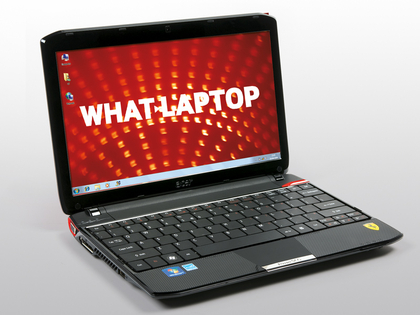
10. Acer Ferrari One - £379
If there's one thing you'll notice in the netbook space, it's that there isn't a lot of room for personalisation or anything beyond the norm. You're generally looking at the same chassis, powered by identical core specifications with the odd screen, keyboard or touchpad differentiating one machine from the next. The Acer Ferrari One is the exception that proves the rule. This bright red machine looks far more expensive than it actually is, and while it is on the pricier side of the netbook scale, style does always cost that little bit more, and if you feel the need to stand out from the crowd, then this will serve you well.
It's bigger than most netbooks, offering a 1366 x 768-pixel resolution from its 11.6-inch screen. This extra chassis space has been put to good use, with a good sized keyboard, and there's room inside for Acer to break out of the standard Intel Atom-shaped box too.
Inside this machine you'll find an AMD Athlon 64 X2 processor backed up by 2GB of RAM as standard (expandable up to 4GB). A 250GB hard drive provides plenty of space, while the ATI Radeon 3200 graphics core provides a little more power for gaming than is standard.
Read our Acer Ferrari One review
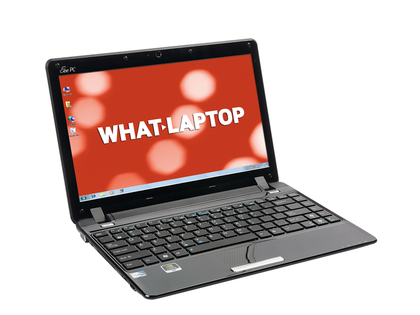
11. Asus Eee PC 1201N - £399
As inferred from the name, the 1201N is pushing the limits of netbooks, boasting a 12.1-inch screen and weighing in slightly heavier than the swathe of 10-inchers at 1.4kg. It also boasts a dual-core processor, which is still something of a rarity for netbooks, despite the fact that the chip has been available for a little while now. The processor in question is actually the Intel Atom N330 running at 1.6GH, which is essentially a dual-core spin of the Atom N450. This means that if you're running processor-heavy applications that are coded for multi-threading, you should see a doubling of the performance. Even so, it's still not enough to elevate the performance to true laptop levels of performance.
The 12.1-inch screen offers a resolution of 1366 x 768-pixels, and this is ably helped by Nvidia's ION which may fall short of true gaming, but it does boost video playback well. It's a shame that the actual screen feels a little lacking in the brightness department. Battery life is also a little underwhelming at just under five hours. Usable, but the cost of that extra processor and graphics core clearly comes at a cost, and not just to the price.
Read our Asus Eee PC 1201N review
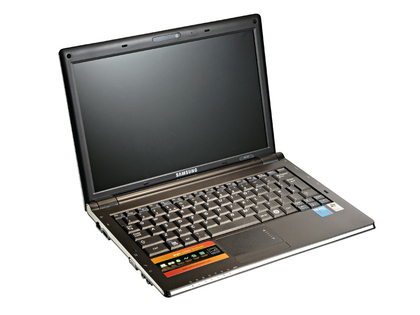
12. Samsung NC20 - £400
Samsung set something of a trend when it released the NC20. Here was a machine that boasted resolutely netbook components, but one that blurred the already hazy lines between netbooks and notebooks thank to its larger 12-inch chassis. It's a distinction that has been blurred even further by more recent releases, but at the time of its launch, many wondered where the NC20 was taking the industry has a whole.The main spin for the NC20 is that it has a 12.1-inch display boasting a resolution of 1280 x 800-pixels, a display that is still unusual today. This gives plenty of room for work and play, although as screens have progressed, this is looking a little course compared to the likes of the new Dell Mini 10.
It is a clear screen though, which is both bright and vibrant. This increased chassis size allows for a larger than normal keyboard too, which is usable for longer periods than a netbook traditionally is.
The NC20 isn't powered by an Intel or AMD processor, instead favouring VIA's Nano. This compared well against the first generation Atoms, but does struggle a little against other 12-inchers packing the dual-core rendition.
Read our Samsung NC20 review
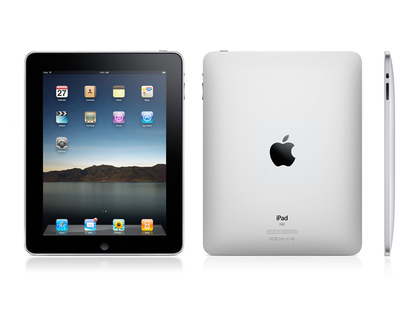
13. Apple iPad 16GB - £429
Is the iPad a netbook? Not quite, but as Steve Jobs pitched it's super-sized iPhone against the existing netbook fraternity, it only seems fair to include it here. There are certain tasks that the iPad can't compete directly with netbooks, but there are enough positives in its favour to see it roll out the other side all smiles.If, for instance, you're looking for a machine to leave in the living room, in easy grasp for solving those simple arguments, then having easy and intuitive access to the mine of easily-searched information on the internet makes this a sure fire hit. The smattering of cool apps and a penchant for looking stylish doesn't hurt either.
There a few problems with the iPad though, with flash support being a particular thorn in the side for now, and long typing marathons out of the question unless you grab a proper keyboard. The machine's other failings, such that they are, can be largely ignored in light of the user experience, strong battery life and a sharp screen.
The iPad may not entirely replace the netbook, but it stands a good chance of unsettling it enough while we search for that important device that sits somewhere between a computer and a phone.
Read our Apple iPad review
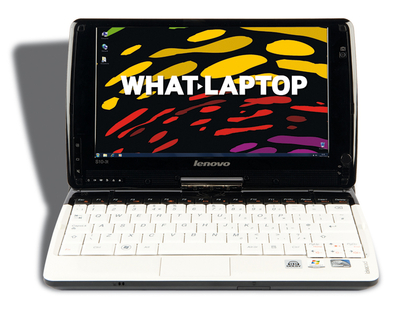
14. Lenovo IdeaPad S10-3T - £429
When you're the wrong side of the £400 mark any netbook needs to offer something really quite remarkable to have a chance of standing out from the crowd, especially when it's only offering 10.1-inch screen. There is a twist when it comes to the S10-3t though, a literal one, the screen can be unclipped and swung around on top of the keyboard to turn it into a tablet PC.Apple may be singing the delights of the iPad with its own particularly brand of sexy design, but on the PC tablets have always been something of a niche market.
This is undoubtedly down to the operating system, and Windows 7 still doesn't do enough to make for a compelling reason to use this hybrid machine in tablet mode for long periods, especially as doing so obscures the keyboard.
The IdeaPad S10-3T is a little on the heavy side too, weighing in at 1.6kg, it's a dead weight to hold in one hand while jabbing it with the other. On the upside the battery life of over ten hours is incredible, but less would have been acceptable for a lighter device.
Lenovo IdeaPad S10-3T review
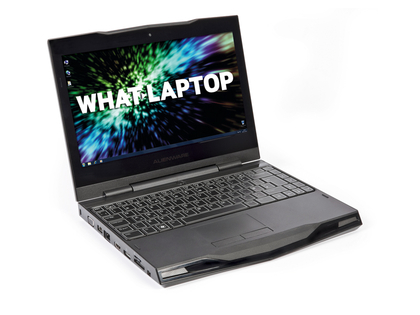
15. Alienware M11x - £748
If netbooks are defined by price, and that price is £400. In which case, the M11x isn't a netbook. However, seeing as the M11x measure a mere 11-inches, we can pretend for a second that it doesn't cost nigh-on £800, and is indeed a gaming netbook. That would mean a whole new genre occupied by this single machine.Using the same styling as the M15x, this is a system that packs serious power into it's tiny shell, and ticks enough boxes to make it an interesting option for any gamers looking for an extremely portable, if not quite affordable machine.
The key component here is the GeForce GT 335M graphics core, which boasts 1GB of its own video memory to power the 1366 x 768-pixel 11.6-inch screen. This does have enough raw grunt to play the latest games, although somewhat frustratingly given the amount of money involved, not at the highest settings. Games still look great though, if a little small.
The biggest problem with the initial release of the M11x was the low-powered CPU, but since this has been pointed out as a failing, Alienware is now offering Core i5 and Core i7 renditions for a small premium, which makes for money well spent.
Read our Alienware M11x review

| |
Read More ...
Seagate announces world's first external 3TB drive
 Seagate unveiled the world's first 3TB external drive this week – the FreeAgent GoFlex Desk.
Packing a peerless 3TB into the GoFlex's chassis, Seagate has created the capacious hard-disk device "to meet the explosive worldwide demand for digital content storage in both the home and the office".
To give 3TB a little bit of context, the GoFlex Desk will house 120 HD movies, 1,500 video games, thousands of photos or countless hours of digital music. Which is pretty impressive.
Terabyte me
As anyone knows, however, it's not the size of the thing that counts but what you can do with it.
Luckily the GoFlex Desk has some interesting functionality, including a USB 2.0 interface that can be adapted to be USB 3.0 or FireWire 800 connection and compatibility with both Windows or Mac OS X.
Speaking about the device, Dave Mosley, Seagate executive vice president of sales and marketing, said: "Seagate has a tradition of designing products that break into new storage frontiers to meet customer requirements and the 3TB GoFlex Desk external drive is no exception – delivering the highest-capacity storage solution available today."
With a black 3.5-inch design that sits either vertically or horizontally, the FreeAgent GoFlex Desk is available now from www.seagate.com.

| |
Read More ...
Rumour: Full-colour Kindle out later this year
 There are rumours that Amazon may be readying to release a full colour Kindle e-reader in time for Christmas, following a Mirasol screen tech product demo this week.
At a product demo at Qualcomm in San Diego – Mirasol's parent company – the company's Marketing Director, Cheryl Goodman, confirmed that contracts have been signed and that the new colour screen technology would be in 5.7 inch e-readers later in 2010.
Full-colour video e-reader
Mirasol's MEMs-based reflective full colour display tech is now capable of being manufactured at any size. The company promises smartphone screens for consumer devices will be arriving later in 2012.
Mirasol's screens are able to run video content, and require a miniscule 1mW of power to run. In comparison, it takes 100 milliwatts to power an equivalent AMOLED screen.
Goodman explained that Mirasol trials have delivered 30 frames per second rates for video playback and that the tech is able to support optical and resistive touchscreens.
Better battery life
"Battery power is a huge issue and all the new features in phones are adding extra pressure. But still it's the display that drains the battery the most, so we're very excited about what Mirasol can do," said Goodman.
"Activity will come from the e-reader sector first," said Cheryl Goodman, director of marketing, Qualcomm MEMS Technologies. "We are working towards the end of the year, beginning of next, and with multiple vendors."
When asked directly about future plans for the Amazon Kindle, Goodman declined to answer, telling Pocket-lint, "multiple deals are in the queue."
You can see video demos and more on Mirasol's vision for the future of the e-reader over at the company's website.

| |
Read More ...
Sony's PlayStation 3 finally turns a profit
 Sony's PlayStation 3 has finally become a profitable machine for the company, for the first time since the console launched back in 2006.
The PS3 is no longer costing Sony each time they sell a new console, due to the latest versions of the hardware costing considerably less to produce, added to the boost in sales over the past twelve months following the launch of the PS3 Slim late last year.
SCE no longer bleeding
"This year is the first time that we are able to cover the cost of the PlayStation 3", Sony Computer Entertainment Worldwide Studios boss Shuhei Yoshida told IGN. "We aren't making huge money from hardware, but we aren't bleeding like we used to."
Yoshida stressed that there were currently no plans within Sony to further cut the price of the PlayStation 3 and that consumers should get used to a $299 PS3 for now.
The company is currently looking at replenishing retail stock as opposed to slashing the price to move even more units.
"When we bring the cost of hardware down, we are looking at opportunities to adjust prices if we believe that will increase demand," Yoshida explained. "At the moment, we are trying to catch up our production."
"We have lots of great games coming out and innovations with Move and 3DTV, so we don't believe this is the time for us to think about a price drop," he added.

| |
Read More ...
Sony's PS3 finally turns a profit
Sony's PlayStation 3 has finally become a profitable machine for the company, for the first time since the console launched back in 2006.The PS3 is no longer costing Sony each time they sell a new console, due to the latest versions of the hardware costing considerably less to produce, added to the boost in sales over the past twelve months following the launch of the PS3 Slim late last year.
SCE no longer bleeding
"This year is the first time that we are able to cover the cost of the PlayStation 3", Sony Computer Entertainment Worldwide Studios boss Shuhei Yoshida told IGN. "We aren't making huge money from hardware, but we aren't bleeding like we used to."
Yoshida stressed that there were currently no plans within Sony to further cut the price of the PlayStation 3 and that consumers should get used to a $299 PS3 for now.
The company is currently looking at replenishing retail stock as opposed to slashing the price to move even more units.
"When we bring the cost of hardware down, we are looking at opportunities to adjust prices if we believe that will increase demand," Yoshida explained. "At the moment, we are trying to catch up our production."
"We have lots of great games coming out and innovations with Move and 3DTV, so we don't believe this is the time for us to think about a price drop," he added.

| |
Read More ...
Hulu Plus subscription service confirmed for TVs, consoles and mobile
 Hulu has confirmed that it is launching a paid-for subscription service called Hulu Plus, set to be made available to users on mobiles, games consoles and internet-connected televisions.
Hulu Plus is set to cost US users $9.99 a month and will let viewers to watch Hulu content on iPhone, iPad, iPod Touch, PlayStation 3 and Xbox 360, in addition to watching shows via their Mac, PC or select internet-connected TVs.
Hulu Plus is rumoured to arrive on PS3 in the US later in July. No word as yet from Hulu or Sony Computer Entertainment on plans to roll-out the service in the UK. We have contacted both companies for further updates on this situation, so stay tuned for updates.
Hulu Plus will arrive on the Xbox 360 in "Early 2011" and Microsoft promises that Hulu Plus will take advantage of "the magic of Kinect for Xbox 360."
"We are committed to delivering signature features to the Hulu Plus experience on Xbox 360, like controller-free navigation with Kinect and Xbox Live Parties so you can watch with friends no matter where they are."
iPhone app out now
Hulu Plus is already available to US iPad, iPhone and iPod touch users in the US iTunes store as a free 'limited preview' download, to give you a teaser of what's in store if you decide to shell out for the $10-a-month subscription fee.
All Hulu Plus subscribers will get all native HD content streamed to their device of choice in 720p high definition. Additionally, the Hulu Plus app on the iPhone streams over 3G and Wi-Fi. Those with US accounts can head over to check that out now on iTunes
"Hulu Plus is not a replacement for Hulu.com. Hulu Plus is a new, revolutionary ad-supported subscription product that is incremental and complementary to the existing Hulu service," writes Hulu's CEO, Jason Kilar on the Hulu blog.
"For almost all of the current broadcast shows on our service, Hulu Plus offers the full season. Every single episode of the current season will be available, not just a handful of trailing episodes. Now there's never a bad time to jump in on a hot new show like Modern Family (which I recommend highly). From Family Guy to Glee, from The Office to 30 Rock, from Grey's Anatomy to Desperate Housewives, from Parks & Recreation to Parenthood, from House to Saturday Night Live, and dozens of other hits, the best time to jump in on any series is any time, and with any episode, that's right for you.
"As a Hulu Plus subscriber, you'll now also have access to back seasons or full runs of some of TV's greatest shows. All nine seasons of The X-Files. All three seasons of Arrested Development. Ten seasons of Law and Order: SVU. All five seasons of Ally McBeal. Seven seasons of Buffy the Vampire Slayer, and three seasons of Roswell. Every episode ever of Grey's Anatomy and Desperate Housewives. Classic skits from the first five and most recent five seasons of Saturday Night Live. The list goes on. This is all on top of hundreds of shows already on Hulu.com today. It's a treasure chest in the cloud for TV lovers."
Right now, in addition to the iPad and iPhone apps, Hulu Plus subscribers with select Samsung Internet-connected TVs and Blu-ray players can download a Hulu Plus app from the Samsung app store.
Stay tuned for more updates on Hulu's plans to roll-out its TV streaming services in the UK shortly.

| |
Read More ...
Mozilla's Firefox 4 beta now available for download
 Mozilla has released the first candidate build for its Firefox 4 browser beta, with the latest version slated for an official launch in November later this year.
If you cannot wait that long, then you can check out the latest developer build of the all-new Firefox here.
We told you all about Mozilla's plans for Firefox 4 early last month, when the darlings of the open source development scene released a set of slides outlines the latest overhaul of its internet browser.
You can see those slides over on Mozilla's Mike Beltzner's blog, the director of Firefox at Mozilla. Beltzner promises that Firefox 4 will be 'super-duper' fast, support the next generation HTML5, bring touchscreen and 64-bit support, and offer a completely revamped user interface.
Tabs move up top
Indeed, the first major change in the user interface (UI) that you will notice on downloading the Firefox 4 beta is the fact that the default position of tabs is now at the top of the screen. It immediately makes the browser look a lot less cluttered. Mozilla has clearly taken a leaf out of Opera and Google Chrome's design guides.
Firefox 4 will also debut JaegerMonkey, an extension to Mozilla's JavaScript engine that works alongside TraceMonkey, which will enable a notable bump in the browser's speed.
If you need any further convincing to go and check out the new Firefox 4 beta, then you might also want to check out the demonstration video posted earlier this week by Mozilla's Alex Faaborg, Principal Designer on Firefox, explaining why tabs on top is now the default look for Firefox in Firefox 4.
And if that still doesn't convince you that tabs-on-top is the future of your Firefox browser experience, then you can always choose to revert back to the old school tabs-below-the-URL-bar look.

| |
Read More ...
Kinectimals uses Molyneux's Milo tech
 In a move to play down the fact that Peter Molyneux's much-hyped Milo and Kate is never going to be developed into a commercial game for Microsoft Kinect, the Xbox-factory has been quick to explain that the tech has inspired a number of other new Kinect titles due for release later this very year.
Phil Spencer, VP of Microsoft Game Studios, has said that the tech for Milo & Kate was made use of in new pet-sim Kinectimals.
New Kinect games from Milo
Talking to OXM, Spencer said Lionhead's motion-controlled AI technology will also be used in other new Kinect games.
"I think Lionhead has always been a great place, and the nice thing about Peter [Molyneux] as creative director in Europe is you start to see some of those ideas around Milo also showing up in other places, so Kinectimals is actually done at Frontier," Spencer told OXM.
"But Peter being so close has actually been able to take many of the learnings that Lionhead has done and help other teams, and when you see the interaction between the girl and the animal on stage you can see similarities to stuff we were working on with Milo, so we start with experiments and they may turn into games themselves.
"We may not have had anything to announce today with Milo but understand that those investments in creative research show up in many places."
Molyneux is set to talk about Kinect development and explain more about the tech behind Milo and Kate at next month's TED Global conference in Oxford.

| |
Read More ...
Kinectimals uses Molyneux's Milo tech
In a move to play down the fact that Peter Molyneux's much-hyped Milo and Kate is never going to be developed into a commercial game for Microsoft Kinect, the Xbox-factory has been quick to explain that the tech has inspired a number of other new Kinect titles due for release later this very year.Phil Spencer, VP of Microsoft Game Studios, has said that the tech for Milo & Kate was made use of in new pet-sim Kinectimals.
New Kinect games from Milo
Talking to OXM, Spencer said Lionhead's motion-controlled AI technology will also be used in other new Kinect games.
"I think Lionhead has always been a great place, and the nice thing about Peter [Molyneux] as creative director in Europe is you start to see some of those ideas around Milo also showing up in other places, so Kinectimals is actually done at Frontier," Spencer told OXM.
"But Peter being so close has actually been able to take many of the learnings that Lionhead has done and help other teams, and when you see the interaction between the girl and the animal on stage you can see similarities to stuff we were working on with Milo, so we start with experiments and they may turn into games themselves.
"We may not have had anything to announce today with Milo but understand that those investments in creative research show up in many places."
Molyneux is set to talk about Kinect development and explain more about the tech behind Milo and Kate at next month's TED Global conference in Oxford.

| |
Read More ...
Apple iPhone 4 parts cost around £125
 iSuppli has estimated that each iPhone 4 costs Apple $187.51 (around £125) in components – with the Flash memory and the screen the most expensive parts of the next generation phone.
 Given the quality of the LED screen, it is no surprise that it, along with the touchscreen glass costs an estimated $38.50 (£25.57), while the Samsung NAND Flash memory comes in at at just under £18.
A lot of focus has been put on the A4 processor – also present in the iPad – and iSuppli's teardown has put a surprisingly low price tag of $10.75 on the beating heart of the phone.
Electronics playbook
"Just as it did with the iPad, Apple has thrown away the electronics playbook with the iPhone 4, reaching new heights in terms of industrial design, electronics integration and user interface," said Kevin Keller, principal analyst, teardown services, for iSuppli.
"However, the BOM [Bill of Materials] of the fourth-generation model closely aligns with those of previous iPhones.
"With the iPhone maintaining its existing pricing, Apple will be able to maintain the prodigious margins that have allowed it to build up a colossal cash reserve - one whose size is exceeded only by Microsoft Corp."
Obviously iSuppli does not factor in all the other costs that Apple accrues, but those debits would come out of around £275 for an iPhone 4 16GB (costing £499) and £375 on an iPhone 3 32 GB.
Interestingly iSuppli's estimates suggest that this is the second most costly iPhone to produce, with only the original trailblazer costing Apple more in parts.

| |
Read More ...
ELSPA Survey: a third of Brits are gamers
 A new ELSPA-sponsored survey in association with the Interactive Software Federation of Europe (ISFE) claims that 32 per cent of the UK population now classify themselves as gamers, boosted by the growth in online and mobile gaming.
 The ISFE 2010 European Gamer Survey says 25.4 per cent of the adult UK population consider themselves to be gamers.
74 per cent of 16-19 year olds identified themselves as gamers, dropping slightly to 60 per cent for the 20-24 year old group in the survey.
Only 8 per cent of gamers in Europe play more than 16 hours a week. 76 per cent play less than five hours.
Brits less hardcore?
In comparison,7 per cent of Brits play more than 16 hours, and 77 per cent less than five hours. Does this mean that we are slightly less hardcore than our European cousins?
In other interesting survey stats 60 per cent of gamers use online game sites, and 37 per cent use social networking or other non-gaming sites, a figure which seems remarkably low.
"In the last few years the development of motion sensor technology saw gaming become more accessible to new audiences who didn't previously connect with the industry," said Mike Rawlinson, director-general of ELSPA.
"With the growth of gaming platforms such as social networking sites and the iPhone, we are witnessing once again the growth of gaming into new areas of society, truly showing that the UK is a nation of gamers."
ELSPA recently announced plans to rebrand itself as the UK Interactive Entertainment Association. Or UKIEA, for short. Catchy!

| |
Read More ...


No comments:
Post a Comment