

Intel will fight corruption claims

Intel has vowed to fight more allegations of corruption, following the New York Attorney General's decision to bring a case against the chip giant.
Intel has been accused of 'bribery and coercion' by Andrew Cuomo – who suggested that the company was using its size and power to keep a stranglehold on the market.
Fight
As you may expect, Intel has given the claim short shrift, insisting that it would fight against the assertions.
"We disagree with the New York attorney general," said the company in a statement.
"Neither consumers - who have consistently benefited from lower prices and increased innovation - nor justice are being served by filing a case now.
"Intel will defend itself."

 |  |
Read More ...
Digital switchover prompts rise in TV dumping

Apparently the digital switchover has led to a big increase in the number of televisions being dumped in the Cumbrian region.
Cumbria County Council has revealed statistics that show a 70 per cent rise in discarded televisions since the analogue TV signal was switched off.
This backs up data from Devon County Council which reported a 50 per cent rise in dumped televisions in the last quarter.
Jedward
With Granada currently going through the digital switch, the dumped sets are obviously a concern, although some manufacturers – like Sony – have come up with scrappage money-off offers.
And, lest we forget, the mass dumping of TV sets also coincides with the arrival of Jedward on our programmes.

| |
Read More ...
No Doubt kick up stink over Band Hero avatar

American rockers No Doubt have taken offence to Activision using their likeness in the company's new Band Hero game and are suing for breach of contract.
The band, fronted by Gwen Stefani, had signed on the dotted line for Activision to use its music and likeness in the game but are upset that their avatars can be used to play other songs not composed by No Doubt.
One of these tracks is the rather excellent 'Honky Tonk Woman' by the Rolling Stones, a song that (shock, horror!) not only has sexual undertones but is also sung by a bloke.
Gender bending
This has lead to a brilliantly worded lawsuit which states that Band Hero "results in an unauthorised performance by the Gwen Stefani avatar in a male voice boasting about having sex with prostitutes."
Activision is no stranger to avatar problems. Recently Courtney Love threatened the games publisher with legal action over the use of Kurt Cobain's avatar. Ultimately, according to Guitar Hero CEO Dan Rosensweig, it was found that complete consent was given for the avatar to sing songs that were not written by Nirvana.

| |
Read More ...
iPhone off to slow start in China

Apple's hopes of conquering China with its iPhone may be fading after reports of a dismal opening weekend for the phone on its debut in the country.
According to reports, the president of the firm offering the iPhone in China, Unicom Ltd, told shareholders that sales had 'passed 5,000' following its debut weekend, a far from stellar total.
Less for more
You don't have to look too far for reasons why the phone has not ignited the Chinese market; the country's law means that the handsets are not Wi-Fi enabled and the phones are not cheap.
In fact, an unlocked imported iPhone from the black market is apparently retailing for some 20 per cent less than the 4,999 yuan (cآ£440) for the most basic model.
In the UK, sales of the iPhone have been huge, and with other networks set to take the handset when its exclusivity to O2 ends, there is no sign of that changing.

| |
Read More ...
Review: Teufel System 5 THX Select2

At first sight, you could be forgiven for being slightly underwhelmed by the appearance of the Teufel THX Select2 Cinema set.
You get two whacking great cartons with full-size subwoofers inside (hooray) and five speakers no bigger than the regular bookshelves you might find in a kid's room (not hooray).
Looks-wise, they are pointy and ugly and, despite the addition of some brushed metal bits, look cheaply-made. Of course, thinking like that is to miss the point in a big way, for these wear an 'I'm dead 'ard, me!' badge – otherwise known as a THX logo.
Started, as the THX company now says, 'by a maverick director', THX was the brainchild of George Lucas, with audio whizz Tomlinson Holman being his main man. These days both George and Tom are no longer directly involved, but THX forges ahead.
Its new versions of the 'Big Room' and 'Smaller Room' THX programs (which sprang from the original) are called THX Ultra2 and THX Select2, with Select2 intended for rooms up to two thousand cubic feet and viewing distances of ten feet. The Ultra2 specification is for the sort of bigger living space you find in American houses. There's even a THX spec limits musically.
Part of the new THX Select2 spec is a range of new codecs, including one called THX Music, so it is possible that these speakers would sound better with music had I got a THX S2 front end. But I found a sibilance and softness that was definitely an artefact versus what purity I knew to be on the disc.
But the business of these boxes is film soundtracks. I slapped Dark Knight into the my Blu-ray deck and settled down for the ride...
Filmed in large chunks in the IMAX format, the soundtrack of Dark Knight has a serious level of difference between quiet parts and the most literally explosive. As the film begins, you get quiet and tinkly sounds, followed by a big smash, as the crooks set up a wire from one building to the next.
The performance capabilities of the Teufel system suddenly became clear. Like a full set of bike leathers that make their owner look silly whilst doing the weekend shop, but badass when the dude is on his Ducati, these speakers, once fed a good slice of power, came to life and absolutely stonked.
All that the THX certification implies is in there. Great directionality, superb placement of sounds around the room due to excellent off-axis performance, and a bass-end that is literally stupefying. However, the main five speakers do not seem that efficient, and I needed to crank ten per cent more than I normally would to get the satisfying reference level.
At this point, the two 12in subwoofers, which had been left at the little mark that says 'THX' on the gain knob's marking, had to be turned down a touch by way of the LFE level from the remote. With that sorted, it was back to the film and, as the villains got offed one by one in the early sequences, I was beaten into joyful jelly – metaphorically speaking.

When Batman thudded down onto the roof of an escaping van, I was almost lifted out of my seat. The system can go loud from quiet effortlessly. I also loved how well the subwoofers blended with the small speakers, without any trace of a 'hole' between the two sorts – impressive considering the size of the surrounds.
Get, set, go
The system arrived with one of the standard Teufel accessory packs; a hank of speaker cable and banana plugs, plus two phono cords to connect the twin subs up in different parts of the room.
Each of the satellites has a pair of simple plastic brackets on their rear (in the form of short stand-off bars and 'L' shaped brackets on the dipoles). They're ready for wall mounting, but you can also get stand mounts should you wish.
The L/C/R cabinets feature a pair of 4in mid-range drivers below a 1in tweeter. The rear-channel speakers are more elaborate, with a rear-firing 5in woofer and a mid-range driver and tweeter on other side.
I found the grilles fall off if you touch them. Well, they did when I touched them. In fact, the boxes are clearly designed to be used without the grilles. They're essentially plain vanilla boxes with sharp corners, cheap-but effective binding posts and grilles with no fixings (nor Neodymium magnets to hold them on – which, I suspect, would've been costly).

I get the impression that these have been made like a stripped-down dragster car – all performance and who cares how they look. Teufel makes far prettier systems, but if all you want to have is THX performance in your viewing room, these will do it for less than most. And you will either need cool neighbours or a detached home, as they do go very loud and with absolutely brain-splitting dynamics.
Performance first
So if you think speakers are just something to deliver surround sound, and you care not for veneers, curvaceous looks, or, erm, grilles that actually stay on, then the Teufel System 5 is probably the right package for you.
Related Links
| |
Read More ...
Review: Sharp LC52LE7000E LCD TV

The LC52LE700E is Sharp's first affordable mass-market LED TV and very own prospective OLED-killer.
While the company has dabbled with LED-backlighting before, with its super high-end XS1E range of screens, they cost two arms, a leg and half a lower intestine, so it's welcome to see the brand finally bringing its own form of the technology to the wider marketplace.
The cost reduction can partly be explained by the fact that the screen features a backlight consisting of so-called UltraBrilliant white LEDs, rather than the RGB array used in the XS1E.
These new LEDs, proprietary to Sharp, feature a unique 'double dome' light amplifier lens for extreme high brightness and multifluorescents for improved colour fidelity. And by adopting a full array of LEDs distributed evenly behind a diffuser, the backlight has best-in class uniformity.
Rival manufacturers, such as Sony and Samsung, have latterly adopted side-firing LED systems, allowing for even thinner screens, but risking issues with brightness uniformity.
Interestingly, the Sharp doesn't employ any local dimming. Another cost-cutting measure?
Local dimming requires the LED bulbs to be individually driven depending on screen content. When areas of the screen are dark, the bulbs in that zone switch off (or dim). When brightness is called for, they shine brighter. It's a system that allows for both deep, bold blacks and bright, brash whites on the same image.
While this particular screen does have a full set of white LED bulbs behind the LCD panel, it doesn't switch off in zones. However, Sharp argues that its UltraBrilliant LED System has other plus points – it's capable of high brightness, and offers environmental benefits including longer life expectancy and lower power consumption.
The screen also debuts the brand's latest Full HD glass. Dubbed the X-Gen LCD Panel, it utilises a new pixel design that permits more light to pass through even while minimising light leakage.
Aesthetically, there are some ramifications of adopting a Full Array backlight, but these are minimal. Yes, the 52LE700E has a rather weighty posterior, chiefly in comparison to the Samsung 7000 and 8000 screens, but as that is entirely down to the rear-mounted LED array, it's a fair trade off for white level performance.

What can't be so easily forgiven is the 52LE700E's anonymous, bland face – it's so devoid of expression and character, it could be one of Sir Alan Sugar's assistants on The Apprentice. It's hard to imagine this set standing out in a crowd of other LED TVs. And that might be a problem for sharp.
Fully-loaded however, as all parents would say of their similarly characterless, fat-bottomed offspring, 'It's what's on the inside that counts.' and they're right. Good news, then, that sharp certainly hasn't skimped on the feature count.
Apart from the backlight, there are a number of things added to this high-end model that impress, certainly in a home cinema sense. To begin with, there's a healthy array of expert picture adjustment modes, including a full set of individual colour bars to slide up and down as you wish.
Traditionally, picture calibration on sharp panels has been an awkward and mainly subjective affair, often leading to frustration with the basic controls, such as contrast, brightness and sharpness.
And the preset modes on the 52LE700E are, quite honestly, dreadful (although our Tech Labs reckons the Low preset is reasonably accurate for white balance). Thankfully, these additional sliders help, and you'll want to put aside a good afternoon to play with them.
The 52LE700E also offers a decent selection of noise reduction and picture processing options, including a 100hz mode. The latter is a major selling point for Sharp, but not for me – I'm rapidly going off frame-doubling technologies (or quadrupling, in some cases).
Granted, they provide smooth motion, but when they're enabled, I always feel they create some strange shimmering effects around moving objects and add a general sheen of artificiality to pictures. such a stylistic amendment might be fine for standard-definition DVB-T broadcasts and normal DVD – indeed, there's often a vast improvement – but anybody who considers switching on their 100hz or 200hz processing for Blu-ray and hi-def content should be locked up in a loony bin.
Movies are meant to look like movies, not handycam video diaries. 'Nuff said.
Some manufacturers allow for different grades of frame-multiplying technology. Samsung, for example, gives several options ranging from 'Off' to 'High'. Often, using the lowest mode gives the best results. however, controlling the 100hz processing of this sharp set is simply a case of choosing between 'On' and 'Off' – not exactly state-of-the-art.
Blu-ray playback doesn't suffer here, though, as the 52LE700E will automatically detect that your deck is outputting 1080p24 and alter its processing accordingly. I still advise that you turn off other processing modes (like digital noise reduction) and whack up the sharpness a tad when watching HD video, but at least you can be safe in the knowledge that the panel won't be adding any peculiar artefacts.
Bright star
So, back to the backlight – or, more specifically, the contrast level. For all of my enthusiasm, I have to be honest and say that the blacks produced on this flatscreen aren't the very best I've seen – I found them looking a bit grey in a completely darkened room – but they're impressive in higher ambient light conditions. And at least sharp seems to have stopped any bleed from its LED bulbs.
The occasional problem with local dimming of light spilling from the edges of zones is avoided here. and, as previously enforced, where better black levels may be found elsewhere, you'll struggle to find better brightness.
That's why the 52LE700E's contrast level (measured at over 80,000:1 by our Tech Labs) is so high – because of the vibrancy of its whites, which also benefit the set's colour response.
I am particularly impressed with its green fidelity – a necessity for a sports fan like me. Reds are slightly muted and orangey – it is, after all, still an LCD TV – but they look vaguely natural and make for convincing HD and SD viewing.
I do have a major gripe about the latter, though. The Freeview tuner in this set is the poor relation. Terrestrial digital broadcasts can be problematic at the best of times, but they don't usually look quite so Lego-esque. There's all manner of edge enhancement and digital noise errors going on.
Admittedly, low bitrate Freeview channels never look good when blown up to 52in, but I'm still somewhat disappointed. You can get around some of the issues by softening the picture, but I can see a phone call to Sky or Virgin Media on the horizon.
I don't think the 52LE700E's audio performance is worth getting excited about, either. The low-slung speakers seem underpowered, and the various virtual surround modes just make the sound murky.
Some form of bass response would've been welcome, too. Pah.
Stiff competition
But, for those with a home cinema set-up, neither of the problems above matter too much. And the sharp 52LE700E ticks more in the positives box than the negatives.
It is undoubtedly a good TV, and I truly believe that owners will get many years of excellent viewing from it. Does it manage to match up to its rivals, though? I'm not sure.
The LED backlight provides brighter pictures than a CCFL TV is capable of, but it doesn't really hold a candle to a local dimming alternative.
Related Links
| |
Read More ...
LG unveils the Pop – 3-inch touchscreen for under آ£100

LG has announced the new GD510 Pop will be available on PAYG for under آ£100 in the build up to Christmas.
The new phone is among the smallest produced by LG, coming in at just 97.8 x 49.5 x 11.2mm while still bringing a 3-inch touchscreen.
It's running LG's high end S-Class interface too, which gives multiple home screens and widgets to customise your day to day use.
HelioPower
It also packs a 3MP camera, and even allows you to charge the phone by the Awesome Power of the Sun, with a separately sold accessory.
Users can add up to 8GB of storage into the phone through a microSD card, allowing audio and video to be used.
It might not be in the same class as the Nokia 5530 XpressMusic, which retails for only آ£30 more but is a smartphone running Symbian S60, but it's likely the Pop will follow in the successful footsteps of the LG Cookie by being seen as a decent budget touchscreen option.
Available today from The Carphone Warehouse for آ£99.95.

| |
Read More ...
Asus unveils 3D-enabled gaming laptops

Asus has announced the arrival of two new gaming laptops with 3D capabilities.
The G51J3D and G72GX are from the company's G Series range and sport 15.6-inch and 17.3-inch screens respectively.
Although information on the lappies are thin on the ground, what is know is that they both have a 120Hz refresh rate (needed for 3D), use active shutter technology and are powered by Intel's Core i7 chip.
They will also pack 4GB memory and two 320GB hard drives. As for the 3D capabilities, the smaller machines will come with Nvidia's GeForce GTX160M graphics chip and 1GB of dedicated DDR 3memory.
Polar opposites
The launch of these 3D-Ready machines means that Asus is muscling in on its rival Acer's patch.
Acer's 3D machine, the 15.6in Acer Aspire 5738DZG 3D laptop, uses polarising filters (which come in the form of a coating on the screen) for its 3D, a technology which is inferior to active shutter.
The laptops can also convert 2D into 3D with the help of some clever software.
We will see which laptops offer the best 3D experience when the Asus G51J3D and G72GX laptops are released early 2010.

| |
Read More ...
T-Mobile to launch BlackBerry Bold 2 on 10 Nov

T-Mobile will make the BlackBerry Bold 2 (or the 9700 as it's supposed to be called) available to the public from 10 November.
The new phone is set to be released via the web on 6 November, and T-Mobile will be stocking it four days after that.
However, it won't come cheap – while the phone will be free up front, customers will have to lock themselves into a two year deal at آ£35 per month.
BlackBerries - a grand to you, sir
And if they want BlackBerry instant email and unlimited internet they'll have to shell out another آ£5 per month too, taking the overall cost to nearly آ£1,000, which is a lot of money even though it's for RIM's flagship keyboarded BlackBerry.
However, the Bold 9700 does build on the original model with a full QWERTY keyboard and 3G internet connection, as well as a fancy optical trackpad rather than the balls of old.
It also runs the latest BB 5.0 OS and packs a 3.5mm headphone jack for listening to tunes and watching videos on the high resolution screen.
It might not pack the keyboard spacing of the original Bold, but check it out if you're interested in always having the top of the range BlackBerry (and have no interest in the touchscreen Storm 2).

| |
Read More ...
Review: Sony BDP-S760

Never one to follow the herd, Sony has yet again attempted something different with the release of the BDP-S760 into a market where plagiarism is positively encouraged.
Where most Blu-ray decks today offer an abundance of special features, streaming-abilities and compatibility with a host of video codecs (popular and otherwise), the manufacturer's latest player doesn't.
Indeed, it has purposely and bravely avoided adopting the gadgetry and gimmicks of its competitors and concentrated on making a machine that just plays Blu-rays well. Very well indeed.
Naturally, the BDP-S760 also spins DVDs and CDs and has very capable upscaling talents, but that's a prerequisite and not its major USP. This player is primarily designed to eke out the best picture and sound performance from your hi-def platters, and you've got to admire such resolute dedication. Especially when it works so well.
Using the same picture processing found in Sony's top-ofthe range BDP-S5000ES helps. And, while there are a number of other reasons to invest the bigger bucks on a high-end machine (all آ£1,000-ish of them) if you can afford it, finding this processing on a sub-آ£400 player is a revelation.
It's hugely encouraging to know that the rest of us can enjoy premium-quality video without breaking the bank. That's partly down to costs being trimmed in other areas – build quality being the major one.
The S760 is neither as sturdy or as massive as the 5000ES. Also, while I may not be particularly fussy on what my equipment looks like when it's shoved into a rack or a stand under the telly, I'm not a huge fan of decks where the entire fascia has to gape open whenever a disc is inserted or ejected. It just seems flimsy.
I believe it's the one instance where this player's design, in and out, has been over-egged, and could have benefited from being more reserved. However, although rigidity is questionable, stability is not.
Indeed, Sony claims that its Precision Drive HD technology is capable of reading information on a scratched or even bent Blu-ray disc.
Now, while I believe that grubby, slightly warped and worn discs may be readable – it certainly didn't spit out any of the discs lurking in the corners of the HCC Tech Labs (some of which are distinctly war-torn and battered) – I do not, for one instance, expect a disc with a circular scratch or severe distortion to work.
I'm not about to bend any of my discs to find out though, and I wouldn't recommend you do either.
Up and running
Such bombastic claims aside, the BDP-S760 did indeed play every disc I put into the player, accurately and quietly. It also did so fairly speedily.
Thankfully, Blu-ray has rapidly become, erm, rapid, and I think we've finally reached an age where any self-respecting BD player has a decent loading time. Hopefully, we needn't harp on about it for much longer, and boot-up and Java-loading speeds will be standardised.

To be honest, I'd much rather devote my time and attention on something more worthy – the BDP-S760's in-built wireless n modem, for example. LG was first to offer this technology on a Blu-ray deck with its BD390, but it's not exclusive and it would be good to see all machines follow suit.
The tech is certainly welcome in this instance as it means that you can plonk the Sony player anywhere you like – you're not regimented by the availability of an Ethernet hub.
Admittedly, with scant few streaming abilities on offer (you can merely look at photos stored on a networked computer or NAS drive), there's little need for the enhanced bandwidth that 802.11n technology offers over 802.11g, but at least you don't have to wait an age for BD-Live content to appear.
It's also worth noting that you'll need a USB memory stick for some BD-Live content as there's no internal storage. Thankfully, the USB port is on the front panel, not squirrelled around the back.
These are, however, much like its 7.1 analogue audio outputs, not the real issues. The overriding strength of the S760 is its video and audio performance, which is exemplary. It sings like a bird (as long as the bird can also replicate gun shots with faultless accuracy), and can paint a picture as detailed and bursting with life, colour and depth as a Renaissance master.
The Sony deck ate my Transformers 2: Revenge of the Fallen BD for breakfast, making the most of the blockbuster palette and gleaming chrome visuals, and keeping pace with the frequent camera pans and fast-moving SFX.
I don't think there's any player currently available at this price point that compares for Blu-ray playback. I'm still a massive fan of LG's BD390 for its media-streaming abilities, but maybe I'll have to find a place in my rack for the BDP-S760 as well. It is a reference machine for the budget conscious.
Related Links
| |
Read More ...
Olympus E-P2 retro camera announced

Olympus has updated its retro chic digital Pen series of cameras, with the introduction of the E-P2.
Arriving hot on the heels of the E-P1, which was launched a mere five months ago, the camera once again boasts a Micro Four Thirds sensor which pelts out 12.3MP images.
Olympus is calling the E-P2 the "world's smallest interchangeable lens system" (as it uses Micro Four Thirds it can't quite brand it a DSLR) and while it's great to see another version of the digital Pen on the market-place, the tweaks that have been made are minor.
Accessorise
What is different to the E-P1 is that you can now get the camera in black – more reminiscent of the traditional Pens – and there is a new accessory port which can handle external mics and a high-res electronic viewfinder.
Under the bonnet, autofocus has been improved with the inclusion of AF tracking and picture colour can also be boosted with the i-Enhance mode.
As for special effects, there are two new art filters included in the features: Diorama and Cross Process – which help to give your snaps that 'darkroom' feel.
Unfortunately there is still no word on a flash for the Olympus EP series, which is a tad annoying.
With a release date of January 2010, the Olympus E-P2 will cost around آ£850 and come complete with an electronic viewfinder and a 14-42mm zoom.
Go to www.olympus.co.uk for more details.

| |
Read More ...
Guide: 12 common Windows 7 problems solved

We like Windows 7: it's faster than Vista, makes better use of your system resources, is packed with interesting features, and looks great, too.
But that doesn't mean it's perfect, of course. If you've moved to Windows 7 recently then you might have noticed various upgrade problems, interface issues and features that seem to have disappeared entirely, among many other complications with the new system.
Don't despair, though - while these problems can be really frustrating, answers are beginning to appear. We've uncovered some of the best and most effective solutions around, so follow our guide and your Windows 7 installation will soon be back on track.
1. Vista upgrade hangs at 62%
Windows 7 can start causing problems before it's even installed, as many people report their upgrade hangs forever at 62%. Which is annoying.
Reboot, and your PC should roll back to Windows Vista. You can then open the setup log file \$WINDOWS.~BT\Sources\Panther\setupact.log to view what happened. Microsoft say this is usually caused because the Iphlpsvc service has stopped responding, and just adding an environment variable to ignore it will fix the problem. Point your browser at http://support.microsoft.com/default.aspx/kb/975253 for the fix.
If this doesn't help (or your upgrade hangs at something other than 62%) then browse the setup log for other clues. And you might also try to boot and install from the Windows 7 disc, if possible, as that reduces the chance of any conflict with your existing Vista (or XP) setup.

INSTALL WINDOWS 7: Windows 7 upgrades are usually quick, but sometimes it doesn't install at all
2. DVD drive not found
In some cases your DVD drive may not be found by Windows 7, even if it's visible in the BIOS and using the standard driver.
The standard solution here is to run REGEDIT, browse to HKEY_LOCAL_MACHINE\SYSTEM\CurrentControlSet\Control\Class\{4D36E965-E325-11CE-BFC1-08002BE10318}, then delete both UpperFilters and LowerFilters in the right-hand pane (UpperFilters.bak and LowerFilters.bak entries can be ignored).
No change? Resetting the drive letter has worked for some. Click Start, type Disk Management and choose the "Create and format hard disk partitions" link. If your optical drive is visible here then right-click it, select Change Drive Letter and Paths, click Change and choose a new letter. If the drive is now visible in Explorer, then repeat the process to change the drive letter back; if it's still not visible, reboot and it should appear.
3. Aero isn't running
If Windows 7 isn't looking its best - transparency has been turned off, say - then the Aero theme may not have been fully enabled on your system. Click Start, type Aero, choose the "Find and fix problems with transparency and other visual effects" link, and click Next to launch the Aero troubleshooting wizard. It'll try to identify and resolve and problems. And if it doesn't, then install the latest driver for your graphics hardware. That could be all your system needs.
Some Aero features may be disabled in the Registry, though. For example, if Aero Peek (the ability to make open windows transparent to display your desktop underneath) doesn't work for you, then launch REGEDIT, browse to HKEY_CURRENT_USER\Software\Microsoft\Windows\DWM and make sure EnableAeroPeek is set to 1, rather than 0.

NO AERO: Windows 7's troubleshooting wizards will fix many display problems while you watch
4. Aero Snap irritations
Windows 7's new ability to move and resize windows, all in one movement, can be a genuine productivity boost. But if you find windows moving around when you don't expect it then Aero Snap is more of an annoyance than anything else, though at least it's one you can disable in just a few seconds.
Launch Control Panel, click Ease of Access, and select either "Change how your mouse works" or "Change how your keyboard works". Then browse down to the "Make it easier to manage windows" section, check "Prevent windows from being automatically arranged when moved to the edge of the screen", click OK, and program windows now won't go anywhere unless you specifically command it.
5. iPhone won't sync in Windows 7
Irritated iPhone users are beginning to report major difficulties in getting their iPhone to sync with Windows 7 systems. Particularly 64-bit Windows 7 systems, based around the P55 chipset. The iPhone is usually (though not always) recognised, but iTunes then complains that it can't connect to the unit because of an "unknown error", usually (though again, not always) 0xE8000065.
Disabling USB power management appears to be one solution. Click Start, type DEVMGMT.MSC and press [Enter] to launch Device Manager, then click View > Devices By Type. Expand the Universal Serial Bus controllers section of the tree, right-click each USB Root Hub entry in turn, select Properties > Power Management, and clear "Allow the computer to turn off this device to save power".
Reboot your PC after this tweak and try again. This works for some, but if you're out of luck then check the Apple Discussions thread for other ideas.

SYNCING FEELING: iTunes on Windows 7 won't always see, or sync with, your iPod
6. Windows 7 themes change your custom icons
Windows 7 has some spectacular new themes - there's a great selection at the Microsoft site - but installing them can have one annoying side-effect. If you've previously changed a system icon like Computer or the Recycle Bin then that could disappear, replaced by the equivalent icon from the theme pack.
To prevent this, right-click an empty part of the desktop, select Personalize > Change Desktop Icons, clear the "Allow themes to change desktop icons" box and click OK. Your icons will now be preserved, and the only way to change them will be manually, from the same Desktop Icons dialogue.
7. Taskbar problems
We like the new Windows 7 taskbar, but many people seem less than impressed with the new approach to taskbar buttons, finding it difficult to tell at a glance whether an icon is a running application or a pinned shortcut. If this sounds like you then there's an easy way to restore more standard taskbar buttons, though - right-click the taskbar, select Properties, and set Taskbar Buttons to "Never combine" or "Combine when taskbar is full".
You can even restore the old Quick Launch toolbar in just a few clicks. Simply right-click the taskbar, click Toolbars > New Toolbar, type %userprofile%\AppData\Roaming\Microsoft\Internet Explorer\Quick Launch in the folder box and click Select Folder. The Quick Launch toolbar should then reappear, and you can move and resize it to suit your needs.

STANDARD TASKBAR: Just a few seconds work and your taskbar has that retro look
8. Missing Explorer folders
Click Start > Computer in Windows 7 and you'll find system folders like Control Panel and the Recycle Bin are no longer displayed in the left-hand Explore pane. This seems like a backward step to us, but there's a quick solution. Click Tools > Folder Options, check "Show all folders", click OK and all your top-level system folders will reappear.
9. Missing applets
Windows 7 installs quickly and takes up less hard drive space than you might expect, but in part that's down to cheating - Mail, Movie Maker, Photo Gallery and other applets are no longer bundled with a standard Windows installation. Instead you must download the programs you need from the Windows Live Essentials site.
Installing Live Essentials will also get you potentially unnecessary extras, though, like an ActiveX control to help in uploading files to Windows Live SkyDrive. And the Windows Live Sign-In Assistant, which can be useful if you want to switch between multiple Windows Live accounts. If you have only one Windows Live account, and no plans to use Live SkyDrive, then these can safely be removed from the Control Panel Uninstall A Program applet.

TAKE YOUR PICK: You can install as many, or as few of the Live Essentials programs as you like
10. Too many minidumps
By default Windows 7 now keeps the last 50 minidump files (memory images saved when your PC crashes). If you're keen on using dump files to troubleshoot crashes then this is good news, but if you've no interest in that kind of advanced debugging then minidumps are just a waste of your valuable hard drive space. In which case you should run REGEDIT, browse to HKEY_LOCAL_MACHINE\SYSTEM\CurrentControlSet\Control\CrashControl, and set MiniDumpsCount to 1. Windows will only now keep the last dump file and you'll free up a little hard drive space.
11. HP Multifunction Printer problems
If you've an HP multifunction printer with its "Full Feature Software solution" or "Basic Driver solution" installed then, after upgrading to Windows 7, you may find the printer stops working. Press the buttons on the front of the printer and nothing will happen; launch the software manually and you'll see reports that it can't connect to your hardware.
The problem is that a few files and Registry entries have been lost in the migration to Windows Vista, and even reinstalling the original HP software won't help. Fortunately there's a new version of HP Solution Center that should get everything working again, though, and you can find out more about it at the HP support site.
12. Hidden extensions
And, of course, no list of Windows annoyances would be complete without a mention of Explorer's default settings, which even in Windows 7 remain to hide file extensions, as well as system files and folders.
To fix this, launch Explorer and click Tools > Folder Options > View.
Clear the "Hide extensions for known file types" to show file extensions, reducing the likelihood that you'll accidentally double-click on virus.txt.exe in future.
And as long as there are no novice users on your system who might go poking around in Explorer, we'd also choose to "Show hidden files and folders" as well as clear the "Hide protected operating system files" box. It's often important to see these files when you're troubleshooting, or following problem-solving instructions from someone else.

| |
Read More ...
Google Dashboard to help control of data

Google has launched the Google Dashboard, allowing for a better overview of data attached to your Google account and more control of your information.
The Google Dashboard brings together the host of popular services now offered by Google, and displays them in a simpler fashion.
"We think of this as a great step towards giving people transparency and control over their data, and we hope this helps shape the way the industry thinks about these issues," said Alma Whitten, Software Engineer on Privacy and Safety.
"It's important for people to be aware of what data they have online and to be able to manage that data- Google Dashboard should help to make this a reality."
Data fears
Fears have been raised about the sheer levels of personal data that people leave online.
Google, as one of the major internet players, is now trying to take steps to ensure that people can see the kind of trail that they are leaving.
"In Gmail, your sent and received emails and email drafts, attachments and chat messages can all be saved," adds Google's release.
"Our Web History feature saves your online search history if you choose to turn it on, and helps provide more personalized search results.
"The Dashboard brings together this data in one, easy-to-manage format, giving you an unprecedented level of visibility and control over that data."
Related Links
| |
Read More ...
Review: Panasonic TX-P46G15

Panasonic's insistence on sticking exclusively with plasma technology for its big TVs is admirably stubborn. And who needs LCD when it produces gas screens as good as the TX-P46G15?
Best of an impressive set of connections is a satellite input, flagging up that the TX-P46G15 is another of Panasonic's Freesat TVs, with HD digital satellite tuner built in. An ordinary RF input reminds us, meanwhile, that the P46G15 also has analogue and Freeview tuners.
There's also a respectable four HDMIs for digital HD sources, an SD card slot for playback of JPEGs, DivX and AVCHD files and an Ethernet port that should ultimately provide access to the BBC's iPlayer function.
This latter feature already enables you to jack into Panasonic's VieraCast online portal and provides access to specially formatted content from YouTube, Picasa and Eurosport.
The on-paper specification makes stimulating reading. There's a full HD pixel count, a truly vast claimed contrast ratio of 2,000,000:1, leaving the contrast ratios of normal LCD TVs looking puny, and a huge 600Hz refresh rate claim.
This high refresh rate figure isn't quite what it seems, however. Rather than the TX-P46G15's screen refreshing 600 times per second, the 600 frame rate is in fact derived from the number of frames generated by Panasonic's frame interpolation technology. While this might make the 600Hz name a little dubious, it should still result in less picture judder.
Split personality
The TX-P46G15 has a distinctly split personality: high-definition looks mostly sensational, but standard-definition looks merely OK.
Starting with the HD heroics, the first thing that hits you like a bolt from home cinema heaven is the awesome profundity of the black levels. In fact, thanks to the way they manage to combine grey-free darkness with perfectly natural shadow detail portrayal, they're the all-round best black levels apart from screens such as Pioneer's awesome Kuro sets.
The TX-P46G15 also reproduces the spectacular sharpness and detail on good Blu-ray discs extremely well – especially as the 600Hz engine reins in judder nicely. Panasonic's V10 plasma series do even better with Blu-ray judder, but they cost more, of course.
Colour response is also likeably natural with high-definition material. It's not as impressive as the V10 series, which boasts Panasonic's Digital Cinema Colour system, but certainly good enough to make films look mouthwateringly cinematic.
It's odd, then, that the TX-P46G15's colour palette slides off key with standard-definition. Reds and skin tones can look rather orange, rich green colours look a bit forced and dominant and some dark scenes adopt a slightly green undertone.
We also felt that standard-definition pictures weren't as sharp as we'd have liked. This helps keep noise out of them perhaps, but the difference in clarity between high- and standard-def is sharper than we would normally expect it to be.
With some solid audio to accompany its spectacular HD pictures, the TX-P46G15 is an ideal screen for dedicated Blu-ray enthusiasts. But, its standard-def issues make it a more considered purchase for everyone else.
Related Links
| |
Read More ...
Moto Milestone gets UK snub from T-Mobile
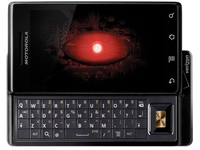
T-Mobile has confirmed it won't be ranging the Motorola Milestone, also known as the Droid, in the UK after early tests.
Nicola Shenton, head of handset and device marketing for T-Mobile UK, said the network tested the device six months ago but decided that it wasn't right for the UK market.
She said that the device was a "great phone, and had a lot to offer" and the software, which has been widely praised in early reviews, was even back then decent.
However, other sources close to T-Mobile tell us that the reason was the phone doesn't pack the aesthetics necessary for the UK, believing that the phone was more suited for the US market.
Surprise
The same source also expressed surprise that the phone was picked up in Italy and Germany, due again to the 'unconventional' look of the device for the European market, and the lower market acceptance Motorola has in Europe compared to its 'trusted brand' status in the US.
O2 has also confirmed to TechRadar it won't be ranging the device in the UK, after the same network plans to do so in the aforementioned European regions.
So that pretty much leaves Orange and Vodafone to take a cheeky punt on the seemingly unloved handset - given 3's penchant for phones at the lower end of the scale.
We'll keep a watch on this one, but we'd be disappointed that the UK wasn't deemed worthy of a phone that actually caused Motorola's stock to rise eight per cent based on rumours of its performance.

| |
Read More ...
Microsoft sacks staff ahead of schedule

Microsoft has cut another 800 people from its workforce, taking the total tally to nearly 6,000 made redundant.
The original plan was to only sack 5,000 staff before June 2010, but this number has been increased with the recent layoffs.
However, a Microsoft spokesperson told Reuters that the re-structuring was now complete, and has been finished well ahead of schedule.
Culled
Around a quarter of those let go in the recent culls were from the head office in Redmond, showing that the company is cuttings costs throughout the business.
However, don't worry that Microsoft only has Steve Ballmer and a couple of work experience kids showing up to the office every day – at last count the firm had over 90,000 employees on its book.
The number is far less than the anticipated 15,000 some thought would be let go earlier in the year.
The fact that it has shed nearly five per cent of its workforce has proven that despite the PC market proving fairly robust through the economic downturn, no firm can afford to not take measures to protect its bottom line.

| |
Read More ...
Review: Toshiba 46XV635

Even though it only costs آ£825, the Toshiba 46XV635 sits in the middle of Toshiba's TV range.
This proves just how aggressive the manufacturer is now getting with its pricing – especially as this set has the performance credentials of many 46in TVs costing hundreds of pounds more.
The good signs start right away, with a svelte design that combines glossiness and extravagance (in the shape of a luminous Toshiba logo) in elegant fashion.
Spinning the TV round uncovers a well-stocked connections roster. Among the highlights are a very healthy four HDMIs, a USB port able to play JPEG, MP3 and DivX video files, a PC port and a JPEG-capable SD card slot.
There are also far more features than the price tag would lead you to expect. Meta Brain – the catchy sci-fi name Toshiba gives to its suite of picture processing technologies – comprises Active Vision M100 Pro HD and Resolution+.
The former refers to Toshiba's proprietary 'catch all' processing engine, with the M100 suffix showing that this TV is distinguished from its cheaper siblings by carrying 100Hz processing for making movement in an LCD image look crisper and more fluid.
Resolution+ is Toshiba's proprietary engine – built around technology developed for Toshiba's Cell PC processors – for remapping standard-definition pictures to the 46XV635's full HD screen.
There are many tweaks available within the 46XV635's onscreen menus. These include an expansive and sophisticated colour management routine, lots of gamma fine-tuning, two different noise reduction systems and the facility to tweak the effect of the Resolution+ engine on the picture.
With minimal effort, you should be able to arrive at a setting you like. Once you do, you should be left with a picture that's one of the cleanest, crispest standard-definition pictures of any 46in set at this price.
A love supreme
Unlike some smaller, cheaper Toshiba TVs, this model also loves hi-def, doing a fine job of realising all the picture minutiae contained within any half-decent HD picture.
Another plus is that the sharpness doesn't diminish much when there's a lot of motion to contend with.
The set's sheer size helps it avoid the accusations of a lack of brightness levelled at some of Toshiba's smaller sets, meanwhile, and its colours are decently intense and mostly very natural in tone.
Black levels seem a cut above too, as dark scenes appear with unexpectedly little sign of LCD's tell-tale grey clouding problem.
With the 46XV635 also serving up a respectable audio system to accompany its big, bold pictures, this LCD TV easily outperforms its price.
There are two little flaws to report, however: a slightly inconsistent backlight and a minor stutter when watching Blu-ray discs using our preferred 1080p/24 output. The backlight issue is so minor that it doesn't affect bright scenes and isn't visible in bright rooms, though, and the twitch only manifests itself during camera pans.
But, if you do notice them, they can be distracting. For us, though, neither issue seems remotely a deal breaker when you consider how little this 46-incher costs. Another day, another Toshiba bargain.
Related Links
| |
Read More ...
Orange offers cash for your old gadget junk
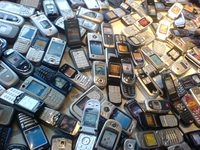
Orange has announced its new Recycle and Reward scheme to help consumers unlock the hidden cash in their ageing, useless gadgets.
Orange is claiming that the UK has approximately آ£450 million worth of unused and decaying mobile phones just sitting around, and wants to help those users make a little money.
Similar in style to the likes of Envirofone, with Recycle and Reward consumers can take their old laptops, mobiles and MP3 players to any UK Orange Store, and will receive the money in the form of a cheque in the next week.
No more lost photos
Those that are part of the Orange's Care program can also get a free Copy and Keep service, where all important media on the device is stored for them before the device is sent for recycling. For those not on the Care program, and unwilling to do it themselves, the service costs آ£6.
Orange is claiming this is an important service as 38 per cent don't back up content simply because they don't know how to, while 25 per cent just forget.
"At Orange, we've made some significant strides recently in reducing the environmental impact of our business," said Paul French, head of care products for Orange.
"For instance, 80 percent of our electricity now comes from renewable sources while in July we introduced the mini-SIM to reduce the amount of waste associated with new SIM cards. Recycle & Reward is just another small step, for us as a business and for the public, in our journey towards greener, more sustainable practices."

| |
Read More ...
Vodafone 360 line-up swelled by M1 arrival

The Linux Mobile Foundation has launched the second phone in the Vodafone 360 range, the Samsung M1, to boost the number of handsets supporting the network's new service.
It offers the same 3D whizzy Ui as found on its bigger brother, the H1, giving instant access to social networking and messaging options and updates.
However, being a more pocket-friendly version (both from a literal and financial perspective) the M1 is a little lighter on specs too.
Wider than life
It has a 3.2-inch wide QVGA screen, a 3MP camera with digital zoom and 1GB of storage on board, and also comes with GPS packed in too.
As a media player it's not too shabby, with all manner of video codecs supported, and DVD-resolution recording available (although it may be a little choppier than your favourite movie, as it only records in 15 frames per second).
It also has a whopping battery to power its touchscreen / 3G connection combo, with an industry leading 1500mAh effort.
This is the second phone built on the LiMo Platform Release 2, offering an improved user experience. The M1's release swells the amount of launched LiMo phones to 44, which easily outstrips Google's Android – but the platform is still struggling to get similar worldwide attention.

| |
Read More ...
Sony Ericsson's Kurara to offer HD recording

The rumoured Sony Ericsson Kurara looks set to debut in 2010 after new photos of the phone leaked onto the internet.
Reported two weeks ago, the Kurara will apparently have a similar spec list to that rumoured: 8MP camera and running the Symbian S60 interface.
This would position the phone nicely between the Satio and the Aino in the current product list, bringing smartphone capabilities to a more budget handset.
Heady HD days
Well, perhaps cheaper, as the photos from PhonesDB show the Kurara packing a full HD camera, like that used on the Samsung i8910HD, meaning recording video that won't look totally shocking on a TV screen.
Of course, it could just be a fairly decent Photoshop effort, but the 3.5-inch OLED screen looks pretty tasty, and we're enjoying that curved design too.
If it does turn out to be real, then it will likely be later in 2010 and will be called something less interesting like the Xperia Wellness XUX 901. Or Jeff.

| |
Read More ...


No comments:
Post a Comment