

Nokia N97 Mini UK release date pushed back
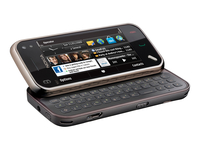
Nokia's forthcoming N97 Mini, which was tipped to launch on 23 October, now seems likely to be pushed back to November.
The official site is stating that the device has a 'tentative release date' in November, meaning that those that have pre-ordered it will be waiting up to a month longer.
However, Vodafone's N97 Mini landing page has removed the 'coming soon' tag, so perhaps November is as close as Monday morning.
Delays
Either way, it's another mobile delay for Nokia, with the N900 recently also being pushed back for release beyond the expected launch at some point in October.
The Nokia N97 Mini is a confusing device as well, given that it sheds a lot of functionality of the larger model, but doesn't come with a much lower price tag, making it hard to see whether customers would be willing to buy a phone simply because it's smaller.
It will be using the updated version of the N97 software, which will also be coming to larger version, which brings a faster UI and elements like dynamic scrolling.

 |  |
Read More ...
Fallout 3 picks up top Golden Joysticks gong

Fallout 3 picked up the 'ultimate game of the year' at the 27th Golden Joysticks, with the Call of Duty series also picking up multiple gongs from the video games awards.
The Golden Joysticks, from the same publisher as TechRadar, celebrates a gaming industry on the up, despite the difficult financial climate.
آ£2.7 billion was spent in the UK on gaming last year, and this was reflected by a 47 per cent surge in Golden Joysticks votes this year.

CoDsticks
Call of Duty picked up three awards, with CoD: World at War claiming the MSN Multiplayer Game of the Year and Nintendo Game of the Year and CoD: Modern Warfare 2 grabbing the ShortList One to Watch.
Killzone 2 was the PlayStation Game of the Year, Gears of War 2 won the Xbox Game of the Year and Metal Gear Solid Touch was mobile game of the year.
But the ultimate accolade deservedly went to Bethesda's post-apocalyptic Fallout 3, which also picked up the PC Game of the Year.
Winners:
Family Game of the Year: LittleBigPlanet
Bliss Handheld Game of the Year: Grand Theft Auto: Chinatown Wars
Retailer of the Year: GAME
Mobile Game of the Year: Metal Gear Solid Touch
Nintendo Game of the Year: Call of Duty: World at War
MSN Multiplayer Game of the Year: Call Of Duty: World At War
The Rampage Soundtrack of the Year: Guitar Hero World Tour
Xbox Game of the Year: Gears of War 2
PC Game of the Year: Fallout 3
Amiqus Games UK Developer of the Year: Jagex
PlayStation Game of the Year: Killzone 2
Publisher of the Year: Activision Blizzard
Online Game of the Year: Left4Dead
ShortList One to Watch: Call of Duty: Modern Warfare 2
Ultimate Game of the Year, together with Zavvi.co.uk: Fallout 3

| |
Read More ...
In Depth: How fans are keeping great old games alive

The PC's got a phenomenal, unparalled history as a gaming platform – a good two decades of wonder and weirdness.
The trouble is half it a) looks like ass on high-res displays b) plays like ass due to ancient interfaces c) flat-out won't work on our fancy modern operating systems. Crazy fans to the rescue!
Pretty much any game with even a trace element of cult status retains a fiercely dedicated community striving to keep it alive into infinity.
From the silent devotion of artists making sharp new textures to the modern world-sucks, hyper-defensiveness of oldschool Fallout fans, there's a vast world of tech-curates keeping their cause celebre in perfect working order.
Here's just a few of the most fascinating and/or accomplished attempts to do the Lazarus thing on your favourite games…
Bold/insane attempts to rebuild classic games from scratch
UFO 2000
UFO: Enemy Unknown (aka X-COM: UFO Defense) is basically the greatest game ever made, and if you don't agree you're a big dumb poohead. Many others do agree, and are working on a bunch of projects to bring the old strategy/roleplaying/management/alien-shooter kicking and screaming into the 21st century.
UFO 2000 is the current leading light, though unlike its noble forebear, it's solely a multiplayer game. There's also no Geoscape/base mode at present, but the team are actively looking for help creating one – fancy a crack yourself?
On the other hand – online multiplayer in X-COM! This is dream come true territory. It's also worth keeping an eye on another (but as yet unreleased) remake project, Cydonia's Fall.
Freeciv/Freecol
Sid Meier's turn-based strategy babies Civilization and Colonization have both enjoyed official sequels, but a certain degree of feature creep for the former and compromise for the latter have understandably irked the purists.
Freeciv and Freecol intend to recreate the original games to a tee, only augmented by modern interface values and online multiplayer. While the community-made graphics might lack the cartoony charm of their DOSian predecessors, the remakes are impressively slick and otherwise complete, and both enjoy regular updates. Also: free. It's hard to overstate the importance of that.
Freesynd
Rumours of an official Syndicate remake by Starbreeze, the Chronicles of Riddick chaps, continue to swirl, but let's be honest – given their FPS tendencies, it's highly unlikely it'll be a top-down squad-strategy game like its parent.

Step forward Freesynd, an early but hugely promising attempt to recreate the original satirical, sadistic, dystopic squad game. It's only a couple of levels for now, but it does include almost all the sound effects of the original game, as well as the intro and nostalgia-inducing Bullfrog logos.
Thief: The Dark Mod
Half remake and half sequel, this aims to bring the values of the original two Thief stealth games into the e'erimpressive spooks 'n' shadows of the still robust Doom 3 engine. The team are very careful to avoid copyright infringement, so don't expect to see master tea-leaf Garrett namechecked as such, or any borrowed assets, but it's definitely Thief.
A whole new Thief game, which is probably more exciting than a mere remake. It's very early days for it, but a beta release is due soon (there's a small alpha one already available) and it's already impressively unrecognisable as being Doom 3-based. (Thief: The Dark Mod homepage)
Dune II
The firm-chinned granddaddy of real-time strategy has never been bested in terms of out and out thematic appeal (three intergalactic houses warring over spice, on a planet infested with giant worms and crazy nomads who drink their own wee. Come on!) but its interface has aged horribly. No group select, no hotkeys, no building rotation…
It's genuinely, tragically a chore to play now. In a strange piece of ironic resonance, three fan remakes are vying for the right to be its heir.

Choose from Dune Legacy, which uses some of the original game's art and sound assets, Dune II: The Sleeper Has Awakened, a ground-up attempt to incorporate modern RTS interface/UI values, and Dune II: The Maker, eight years in the making but still in demo stage.
FreeOrion
If you prefer your strategy a little more galactic, then you'll doubtless dig this free open-source space trading/colonisation and combat game 'inspired' (yeah, right) by the venerated Master of Orion series.
Its current v.03 release is deemed "essentially complete", but there are a ton of fixes, polishes and incidental features yet to come. Keep an eye on its progress at freeorion.org.
Freerails
Railroad management games are thin on the ground in these days of hi-def manshoots, but this java-based remake of Railroad Tycoon might just scratch that itch of yours. It's even got online multiplayer built-in. Give it a whirl.
Original code playing nice with Windows XP and beyond
The Doomsday Engine
The original Doom's a curious game. At the time it was released, it was scary and pacey, but at some point in the last 15 years, as graphics have improved, it has became a high-speed, cartoon action game that feels endlessly fresh.

There's good reason why its community aren't prepared to let it fade away. Doomsday is huge, ambitious project that a) ensures it runs just dandy on modern operating systems and with modern controls b) optionally sparkles up the graphics into hardware accelerated, sharp edged 3D, dynamic lighting and, optionally, replacement character models and c) makes online multiplayer easy-peasy.
That said, the current king of deathmatch Doom is Skulltag. Doomsday has the added benefit of supporting Heretic, Hexen and Doom 2.
ScummVM
A virtual machine that's probably a little worried about itself now that Lucasarts has gradually begun remaking and re-releasing its classic early 90s adventure games, but until the likes of Sam & Max, Day of The Tentacle and the later Monkey Islands get an official spit 'n' polish, this is hands-down the best way to revisit them.

It's the beloved comedypuzzlers as they originally were, but with zero-compatibility problems and a raft of upscaling options for our gigantic contemporary monitors. ScummVM has lately expanded to support non-Lucasarts games of the era too – the likes of Beneath A Steel Sky, Gobliiins and Simon The Sorcerer are very much at home in it.
There are also ports for PDA, iPhone, DS et al, get it here.
Exult: Ultima VII
1992's seventh in Richard Garriot's high-fantasy Ultima series is still considered one of the role playing genre's highest watermarks, so its fans are resolute that it not be lost to history.
Exult doesn't do anything flashy, it simply gets this olden DOS game running as well as possible on today's PCs. It also fixes up a few bugs and back-ports new features from Ultima VII Part 2 to the first part, as well as introducing support for mods. You'll need the original Ultima VII date files to use it, but it's well worth an eBay-scour to discover quite how phenomenal a game it was. Get it here.
DOSbox
This is essentially a catch-all generalist project for any and every old DOS game that grumbles at modern Windows operating systems.
Unlike the new engines above, it doesn't do anything to the games bar run them well (most of 'em, anyway. it has a few blind spots, which are gradually being fixed), but that's enough to keep PC gaming's vast archive alive and playable to this day.
It does require a spot of command line action, but worry not - graphical frontends are available if you're an idiothole. Anyone with a genuine interest in PC gaming absolutely has to have this installed.
Doom 3
Slightly underwhelming sequel to beloved first-person-shooter series? No problem! Modders have addressed almost every annoyance of Doom 3, from the ridiculous inability to use a light at the same time as a weapon, to sorting out textures that have aged pretty terribly to adding the co-op mode that was so mysteriously absent from here and here.
Half-Life 2
Fake factory's Cinematic Mod performs wonders on the old Source engine. It manages to improve the lighting, bump up the visual detail and, a little controversially, replaces the Alyx character model with a more a realistic version, based on a choice of real-life models.
Rather tragically though, one of these does appear to have a see-through top. Simply leave that option off and enjoy a far more believable City 17.
Diablo II
Oh how we've waited for this one. Just a few weeks ago, our prayers came true: a mod that allows the definitive hack 'n' slash RPG to be played at resolutions above blocky, blurry 800 x 600. It looks crisp and lovely at high resolutions, but if the expanded world (and the limited light your character's sight radius casts over it) feels a bit too at odds with Diablo II's nature for you, what you will enjoy is being able to play the game in a window at last.
The bad news is that Blizzard's Battle.net system currently sees it as tampering with the game code and forbids online play while it's running. For single player fun though, it's perfect. Grab it from here.
Nips, tucks and retextures for gaming's recent past
Morrowind
A far more expansive, imaginative and, frankly, batshit-crazy RPG than its sequel Oblivion, but its spindly puppet-men and myopic draw distance have not aged well.

The modding community has done incredible things for it; replacing almost every texture in the game, new character models, the option to run it any resolution, add HDR and draw essentially the entire world at once. With a bit of legwork, Morrowind can be made to look as good as Oblivion in most ways, and even better in others.
Essential: the Morrowind Graphics Extender.
Optional: any of the hundreds of minimods.
Oblivion
It may not be quite as mad as its prequel, but Oblivion is still one of those games that can draw people back in time and again. The big problem for most people though was the levelling system.
Possibly designed to appeal to everyone, the system of levelling everything in the game to match your level meant that at the same time as being able to complete any quest or dungeon at any point in your character development it also meant that if you reached a high level, then so did all the little bandits, goblins and guardsmen.
Oscuro's Oblivion Overhaul though takes care of this by going through every NPC in the game and giving them a specific level cap. At the beginning this makes things double-hard, and you'll find yourself having to run away a lot, but it makes you pay more attention to the minutae of your avatar.
There's a whole host of other third-party mods built into the latest version of OOO, including a full worldwide economics system as well as a raft of cosmetic enhancements. Check it out here.
System Shock 2
Two complementary mods have kept the spiritual precursor to Bioshock alive and well. System Shock 2 Rebirth replaces the blocky character models with smooth modern version – including, controversially, a monster with oversized ladylumps – while the Shock Texture Upgrade Project repaints walls and items with pin-sharp new textures.
Shock 2 remains an astonishing game, and these mods mean its peerlessly creepy atmosphere is relatively undiminished by the march of technological progress.
Also worth a look is System Shock Portable, which gets the first Shock to play nice with XP et al, and can even run from a flash drive – ideal for netbooks.
Planescape Torment
One of the finest single player role playing games ever made, at least in terms of narrative and emotional clout. What can change the nature of a man, it asks? Well, staring at pixels the size of baby's heads will probably drive any man to violence.
Fortunately the curiously understated Widescreen Mod changes all that. When this 2D game's hand-painted backdrops are stitched into hi-def versions, what its artists created becomes jawdropping.
The interface suffers a little at monster resolutions, but it scarcely matters when the landscapes are quite this imaginative and beautifully created. This mod also supports Baldur's Gate 1 and 2 and as well as both Icewind Dales.
Similar projects also exist for the original Fallout and Arcanum: of Steamworks and Magic Obscura.
Deus Ex: Invisible War/Thief 3
Some might claim that Deus Ex 2's graphics are the least of the immersive sim/FPS' problems. They might have a point. However, there's no denying that freeing the troubled sequel's visual technology from the constraints that were imposed on it by the original Xbox (the system it was primarily made for) helps make its world a whole lot more palatable.
John-P's vast collection of new textures comes to around 790 in total, and the effect upon the game is startling.
Thief: Deadly Shadows was perhaps in less need of a visual overhaul than most of these games (you spend most of the time in the dark, after all), but it definitely makes for a better-looking game overall, and will keep you busy until the Dark Mod is finished.
Protagonist Garrett in particular looks much more realistic, and the scarring around his false eye is impressively horrific. Grab both upgrade packs from here.

| |
Read More ...
Samsung's Android 'lite' phone closer to UK release

Samsung's follow up to the moderately well-received Galaxy Android phone, the i5700 Spica, has now popped up in Scandinavia.
First available in Russia last week, users in Finland and Denmark are now able to buy the new device later in November.
Prices vary between the two countries, but the phone is still expected to cost around آ£400 when converted.
Teach the world to speak
The phone itself is the same one released for launch in Russia (although with a different language pack obviously, unless Samsung is trying to force every customer to learn a new language).
This means an 800MHz processor (fast), a 1500mAh battery (long lasting) and a 3.5mm headphone jack (audio-y).
It also has diminutive dimensions of 115أ—57x13.2mm, so although it has a pretty high price tag it still qualifies as 'lite'.
We're interested to see if / when the phone gets a UK release date, but just working it out based on the speed its traversing the globe, it should make its way here at some point in December.

| |
Read More ...
New app turns your PC into Wi-Fi hotspot

A group of developers has exploited a hidden element of Windows 7 to turn any PC running the OS into a Wi-Fi hotspot with an application called Connectify.
Nomadio, consultants for military networks, used some software (known as Virtual Wi-Fi) buried within the OS, left over from a MS research group project, but apparently discontinued in 2006, according to TechWorld.
"A year ago, Microsoft talked a lot about this as a big feature in Windows 7. But driver support didn't get finished. The low-level code is in there, but the driver-level stuff isn't," said Alex Gizis, CEO of Nomadio.
Filling in the blanks
Nomadio used its software from its work into networking to complete the necessary functions, creating the new Connectify software.
The possibilities of this free (but beta) download are pretty interesting - it means you can pay for one connection but stream it out to multiple devices (or friends if you're feeling like helping out freeloaders).
However, Gizis has stated that he expects the software to eventually carry a cost when released as a full version in a few weeks, with a free, ad-funded option possibly available as well.
Either way - if you're one of those that has multiple Wi-Fi devices but can't afford to pay time and again every time you're in Starbucks, perhaps this is something you should check out.

| |
Read More ...
Motorola planning 20 new smartphones for 2010

Motorola appears to be ready to capitalise on the demi-success of its Dext and forthcoming Droid phone by releasing another 20 handsets in 2010.
After what seems like years in the mobile wilderness, Motorola is now claiming that 2010 will be a big year for its smartphone push, with CEO Sanjay Jha quoting 'multiple tens' when asked on how many phones Moto is planning next year, and firming that to at least 20 when pushed.
Interestingly, the company is well documented in having said it will be focusing only on Android and Windows Mobile in the future, so how the split will be made will give us an idea on which customer segment the firm is after.
With Google already stating that it expects 18 Android phones to be released by the end of 2009, a target that seems like it will be hard to hit with only eight or so released thus far.
Android effort
Which means a bigger push is likely to happen in 2010, and Motorola could be a main component of that Android effort.
And on the Windows Mobile front - is the brand developing WinMo 6.5 phones or will it wait until the next version (Windows Mobile 7) comes out in 2010?
Speaking to other manufacturers this year, we've heard that some would have preferred to wait until WinMo 7, but the delays forced them to jump in a little earlier.
However, given Motorola's baby steps after its re-birth, could it wait until the next version (which is supposedly pretty awesome)?
Either way - 20 new phones means lots more choice for the consumer, and we can only applaud that (unless they're rubbish, of course).

| |
Read More ...
Motorola planning 20 new smartphones for 2010
Motorola appears to be ready to capitalise on the demi-success of its Dext and forthcoming Droid phone by releasing another 20 handsets in 2010.
After what seems like years in the mobile wilderness, Motorola is now claiming that 2010 will be a big year for its smartphone push, with CEO Sanjay Jha quoting 'multiple tens' when asked on how many phones Moto is planning next year, and firming that to at least 20 when pushed.
Interestingly, the company is well documented in having said it will be focusing only on Android and Windows Mobile in the future, so how the split will be made will give us an idea on which customer segment the firm is after.
With Google already stating that it expects 18 Android phones to be released by the end of 2009, a target that seems like it will be hard to hit with only eight or so released thus far.
Android effort
Which means a bigger push is likely to happen in 2010, and Motorola could be a main component of that Android effort.
And on the Windows Mobile front - is the brand developing WinMo 6.5 phones or will it wait until the next version (Windows Mobile 7) comes out in 2010?
Speaking to other manufacturers this year, we've heard that some would have preferred to wait until WinMo 7, but the delays forced them to jump in a little earlier.
However, given Motorola's baby steps after its re-birth, could it wait until the next version (which is supposedly pretty awesome)?
Either way - 20 new phones means lots more choice for the consumer, and we can only applaud that (unless they're rubbish, of course).

| |
Read More ...
Halloween? The perfect time to kill some zombies

This weekend it's Halloween. A time for those of us without children to turn all the lights off and hide under the bed, in case surly teenagers come knocking on our door demanding "treats" with menaces.
Yes, it's all very cute when it's six-year-old kids ringing your doorbell, covered in bedsheets wearing fake vampire fangs, but when it's happy-slappy ringtone-downloading hoodie wearers, Halloween can lose some of its sparkle.
So here's something you can do this weekend to cheer you up while you're avoiding the trick-or-treaters: see if there's a zombie lurking in your house.
I'm not talking about the zombies of 28 Days Later or Shaun of the Dead, but zombie computers - the infected PCs that hackers hijack in order to silently send out spam, steal identities and distribute malware.
It's estimated that over 99% of all spam is sent from innocent compromised computers which, unknown to their owners, have been commandeered by cybercriminals to send out adverts for Viagra and fake FedEx delivery notices.
Hackers control networks of hundreds of thousands of zombie computers, known as a botnet, from a single point - enabling them with one click of a mouse to start a new spam campaign or spread a new computer worm. So you can see that it's essential that computer security starts at home - and everyone does their bit to make sure that they are not adding to the problems on the internet.
So, here is my advice if you want to turn Halloween into International Kill-A-Zombie Day.
1. Scan your computers, and those of your friends (remember to ask permission!), with an up-to-date anti-virus which can detect the latest malware and rootkits. Remember that if your PC is a zombie it won't be announcing the fact by displaying images of skulls dripping gore - announcing that they have infected your computer is not going to help them make money after all.
2. Ensure that your computer is up-to-date with the latest security patches. I don't just mean for Microsoft Windows and Mac OS X (although those are, of course, essential if you want to run a tight ship). What I mean is that you also need to update the security of your web browsers, your PDF reader, your internet plug-ins, and other software that could be exploited by hackers.
3. Always be suspicious of unsolicited email attachments and web links. You shouldn't blindly install any program on your computer without being confident of its nature. You wouldn't pick up a sweet in the street and pop it in your mouth - so why would you trust a website you've never heard of before when it suggests you install a codec to watch the latest nude video of Vanessa Hudgens?
4. Keep abreast of the latest security threats. Follow security blogs and sign-up for notifications of new threats that are emerging. Keeping one step ahead can stop your computer becoming one of the zombies.
You can find out more about International Kill-A-Zombie Day at http://www.sophos.com/killazombie or join the Facebook group.
Have a happy, and safe, Halloween.
-------------------------------------------------------------------------------------------------------
Graham Cluley is senior technology consultant at Sophos, and has been working in the computer security field since the early 1990s. When he's not updating his blog on the Sophos website you can find him on Twitter at @gcluley.

| |
Read More ...
In Depth: Windows Mobile 7: all you need to know

The one thing everyone knows about the next version of Windows Mobile is that it's late.
Back in September, Steve Ballmer told the Venture Capital Summit that he wished Windows Mobile 7 had already launched but that the team had been "completely revamped"; "we've pumped in some new talent" and "this will not happen again" two VCs tweeted him as saying.
Originally, the big feature in Windows Mobile 7 was going to be better web browsing, along with zooming; both of those were pulled forward into Windows Mobile 6.5. So what will Windows Mobile 7 bring and when?
Motorola CEO Sanjay Jhawas the first to let slip that Windows Mobile 7 wouldn't be around until 2010 and Microsoft confirmed that. A Windows Mobile presentation on the Microsoft site (in Danish) talks about Microsoft finishing the Windows Mobile 7 OS in November 2009 and devices appearing in April 2010; the same slide gets the 6.5 software date right as April 2009 but predicts 6.5 devices arriving in September, not October, so even if April is the planned date it could slip.
The April date was confirmed on an Office 2010 presentation to partners found by Microsoft Kitchen; if that's the date it goes to phone makers, you can expect the actual launch a few months later when phones are finished (an interval Microsoft is trying to shorten). Expect Microsoft to announce a public date at Mobile World Congress next February.
Fewer partners, not fewer phones
The problem for Microsoft is that when it finishes a version of Windows Mobile, that doesn't mean it's done. Windows Mobile 6.5 was finished on 22 April this year but instead of handing it over to phone manufacturers to tweak and customise for their devices (which ends up with multiple incompatible changes that can't be supported in the next version because they aren't in Microsoft's version of the code) the team stayed involved and delayed the launch until phones and upgrade versions were ready.
To make that stage shorter and easier, Microsoft has said it wants fewer high-value partners for Windows Mobile in the future: Director of the EMEA Mobile Communications Business Alfredo Patron told TechRadar "any new phone means a new development cycle" and "we're really focussing on the top brands".
One rumour says that in an effort to reduce the amount of incompatible customisation that goes on with Windows Mobile 7, Microsoft plans to only have it run on the Qualcomm Snapdragon platform (currently there are multiple phone platforms based on the Arm chip, from TI, Nvidia and others).
If Windows Mobile 7 switches entirely to Qualcomm, where would that leave phone builders who have bet on TI (like Motorola) or the Nvidia Tegra chips in the Zune HD?
The matching rumour is for a Tegra-based Zune Phone platform for the consumer market, built on Windows Mobile 7 but marketed separately. This might be the same as some of the Pink consumer phone rumours, but none of them would be Microsoft-manufactured phones; at most, Microsoft would work on a hardware reference platform for partners to build on.
Microsoft has gone back and forth on the plan according to our sources, and as with all rumours nothing is certain.

ZUNE PHONE: There may or may not be a Zune phone, but Windows Mobile 7 will have Zune features
Steve Ballmer has said repeatedly that the next version of Windows Mobile will have Zune services, one Nvidia engineer's Linked In profile (again, according to Microsoft Kitchen) mentions Tegrafor platforms including Windows Mobile 7 and the chassis spec tracked down by ZDNet specifies any Open GL ES 2 hardware, including TI and Nvidia as well as Qualcomm.
The same spec has a minimum screen size of 3.5" and WVGA (800 by 480) or FWVGA (854 by 480), and multi-touch, so there must be a different specification for non-touch Windows Mobile Smartphone. The 'chassis' terminology could also be behind rumours that Microsoft would make its own phone.
Multi-touch in Windows Mobile
When we asked Greg Sullivan about capacitive touch screens and multi-touch gestures for Windows Mobile and in particular the HTC HD2, he picked his words carefully when discussing how much of the gesture support came from HTC and how much from Microsoft and settled on saying "We did a bunch of work in our platform to enable the improvements in the user interface and we'll continue to iterate on that".
That means the HD2 multi-touch support probably builds on what Microsoft has been working on for Windows Mobile 7, but that we might see it in other Windows Mobile 6.5 devices, like the Toshiba K01.
The Windows Auto Gesture Interface introduced in 6.5 makes programming touch gestures for apps, like swiping your finger to scroll, easier but the app still has to redraw and update the scrollbar when you use the pan gesture.
"The WAGI API was originally designed to go the extra step and take control of content drawing and scrollbars as well," says Marcus Perryman of the Microsoft UK Developer and Platform team; "but there wasn't time in the schedule to implement this for 6.5." That sounds like Windows Mobile 7 will do more of the work for apps.
As well as touch gestures, there have been rumours of 3D gestures (where you move the phone) and camera gestures (where you move your hand, or use the camera to do 3D gestures without an accelerometer). We've seen these in research projects at Microsoft and Telefonica, but it's not certain they're robust enough for general use.

MULTI-TOUCH NOW: You won't have to wait for Windows Mobile 7 for multi-touch – the HTC HD2 gets it first – but it will have multi-touch throughout the OS
The 'chassis' spec also talks about sensors: a light sensor, an accelerometer and a Hall-effect compass. These are common in high-end smartphones (including HTC Windows Mobile models) but they've been hard for developers to use because there hasn't been a single API.
Microsoft might copy the sensor framework it's put into Windows 7, making it easy for apps to work with whatever sensors the phone has without having to control them directly.
Blogger Peter Mohr spotted a job advert for someone to work on 'firmware over the air' updates for Windows Mobile 7 and the Danish presentation also refers to this.
That would be a big change to the architecture, allowing operators to send updates to the phone setup to add features and fix problems, as well as possibly enabling OS upgrades over the air rather than by plugging the phone into a PC.
Windows Mobile 7 user interface
What's under the hood won't matter if Microsoft doesn't make the user interface compelling.
There have been plenty of mockups and leaked shots (some of the earliest featuring the red couches of the Windows Mobile studio office, which argues for their authenticity) but they could be out of date.
Brian Goldfarb of the Silverlight team has been telling us that Silverlight would come to Windows Mobile at some point, and last month he confirmed to the Seattle PI that Windows Mobile 7 will have Silverlight 3, in the browser, for apps and for the UI as well.
That makes sense now that Silverlight is in Windows CE 6 R3, the latest version of the operating system Windows Mobile is built on.
We're also expecting changes to My Phone. MobiletechWorld predicts that MyPhone storage will go up to 5GB instead of the current paltry 200MB.
That would take a lot of negotiation with mobile networks uncomfortable with the idea of users sending that much data around, but MyPhone will migrate onto the Live Mesh platform (soon to be renamed something like Windows Live Devices) and that would make it more efficient.
Microsoft has already filled the position (spotted by Mobiletech World) for a program manager to design a mobile social platform: the ad claims that "the Windows Mobile 7 Communications group is building experiences on the phone that present your content – friends, pictures, messages, events – to you in immersive and engaging ways". It also notes that "there are several WM7 teams developing social experiences".
Part of the problem with Windows Mobile is how many different teams are already working on different mobile devices and experiences at Microsoft (Zune, Danger and Pink as well as Windows Mobile). Another is that the Windows Mobile team goes through a regular cycle of believing it can tell mobile networks and manufacturers what to do the way it can PC manufacturers. For Windows Mobile 7 to really succeed, Microsoft has to make sense of both those tensions.

| |
Read More ...
LG launches mini-site for new Android phone

LG has put together a mini site for the forthcoming GW620 mobile - its first Android mobile offering.
Bringing a full QWERTY keyboard and access to all manner of social networking integration, it's clearly aimed right at the Motorola Dext.
Also codenamed the Etna, LG has taken its time to compete with the likes of HTC, Samsung and Motorola in releasing an Android device.
The GW620 has a three inch touchscreen, 5MP camera and a 3.5mm headphone jack for media listenings.
Mount Etna - not literally
It's set to launch at some point this year, but it seems that date will be sooner rather than later if this new site is anything to go by.
LG has taken the unsurprising step of creating a load of crazy CGI characters to show off the phone's capabilities (we enjoy the QWERTY monster) and has published a video of all of them having fun in the magical Android world.
UPDATE: LG has clearly jumped the gun on this one, as it's pulled the site already. But thankfully the video is still working, so you can still see the Social Butterfly in action.

| |
Read More ...
TechRadar Choice: 15 best LCD TV reviews of 2009
A lot of the talk in the HDTV market revolves around a so-called battle between LCD and PDP plasma technology. But there really isn't much of a fight in terms of volume - LCD TVs sell in far bigger quantities than Plasma ones - and the market share is only going to get bigger for LCD over the next few years.


Likewise, LCD manufacturers often quote wide viewing angles but don't mention that although the picture is still visible at a wider angle, the quality of picture often decreases dramatically off axis. Plasma viewing angles are comparable yet maintain the full picture quality at all times.
And ironically, most existing LCDs can actually only hold a 1080p resolution with a static image. When the image moves fast, the perceived resolution your eye resolves from a 1080p LCD picture is actually less than standard definition because of the motion blur.
So what's the best LCD TV?
Despite this, technological improvements in image processing, higher resolution and contrast ratio - partly through the use of LEDs as backlighting - have helped LCD to increasingly become the preferred technology for flat panel displays.
And the high-end ones coming out this year have made great strides in overcoming the traditional drawbacks of LCD tech. So today, the only area in which plasma can truly claim to be the stand-out choice is in very large screen sizes.
So which HDTV is right for you? Luckily, despite all this credit crunch business, 2009 has been a massive year for TVs. We've seen some truly breathtaking LCD and plasma TVs being released, and this summer alone we've seen fit to award no less than 15 new TVs five-star awards.
And here they all are...

Sony Bravia KDL-46X4500 46-inch LED LCD TV
The first true LED Bravia is a remarkable, though pricey, full HD performer
So far Sony hasn't delivered the same sort of consistency with its flat TV picture quality that it achieved - to world-conquering effect - with its CRTs.
But with the KDL-46X4500 LED LCD TV, the firm finally gives its Bravia TV name some mouthwatering quality to go with the dazzling ad campaigns and marketing spin.
As you'd expect of a 46in TV costing آ£3,500, the 46X4500 is packed with technology and tweaks. The fun starts with the set's design, which niftily has an expanse of clear glass to each side, into which have been inset some very swish silver 'pole' speakers.
The set is extremely well connected, too, with highlights of four HDMIs, two component video inputs, a port for playing various multimedia file formats from USB devices, and even a DLNA-enabled ethernet port for streaming files from a connected PC.
Read: full Sony Bravia KDL-46X4500 review

Samsung UE46B8000 46-inch LED LCD TV
The Samsung 8 series LED TV offers good looks and decent performance
The Samsung 8 series UE46B8000 LED TV is currently being backed by a huge TV advertising campaign in the UK. Viewers are instructed to simply search for "Samsung LED".
Clearly, Samsung is trying to create some buzz around its new LED TVs, and it's working.
Just like many other strong eco TVs, Samsung's green efforts extend right back to the UE4646B8000's core construction.
This deeply gorgeous 46in TV uses an edge-mounted LED lighting array that's claimed to consume 30 percent less energy than a typical direct, rear-mounted LED model (mostly because it doesn't have to work so hard to produce a uniform light level) and 40 percent less than a conventional LCD TV with a CCFL backlight.
To reinforce this point, press in the Info button on the 46B8000's extravagantly sculpted remote calls up a dial showing how little energy you're currently using compared with a normal TV. Although this feels more like an in-store marketing tool than anything mathematically accurate.
Read: full Samsung UE46B8000 review

Panasonic TX-P46G10 PDP plasma TV
Proof that plasma loves the planet as much as LCD
Conventional wisdom - of the pro-LCD persuasion, at any rate - holds that plasma requires far more power than liquid crystal. Panasonic is out to contradict this theory with its latest generation of NeoPDP gas flatscreens with the introduction of theX-P46G6G10.
The manufacturer has taken a 'year zero' approach with its new panels, developing new structural techniques and control systems, new phosphors, new drive systems, and new cell designs with enhanced discharge efficiency.
All these factors result in a huge claimed power saving of 50 per cent versus the company's conventional sets.
With the P46G10, Panasonic provides two ways of benefiting from its NeoPDP design, enabling you to either enjoy twice the brightness of Panasonic's normal plasma TVs while using the same amount of energy, or else get 'normal' Panasonic plasma brightness levels from half the 'normal' energy use.
Read: full Panasonic TX-P46G10 review

Sony Bravia KDL-40E5 40-inch LCD TV
Sony's first dedicated EcV breaks the 100W barrier
Generally speaking, the various large numbers bandied about on TV spec sheets should be taken with a handful of salt. But there is one quoted by Sony's eye-catchingly white KDL-40WE5 that we just can't ignore - a power consumption of just 97W while it's in use.
This figure is lower than those claimed by most 32in - and even some 26in - TVs and more than 50 per cent lower than the manufacturer's own 40W4500 40-incher.
The main reason for this power saving is newly developed backlight technology, which uses Hot Cathode Fluorescent lamps (HCFLs), rather than the usual CCFLs.
Another key green innovation is the Presence Sensor. It uses body heat and motion to assess if anyone is in the room, turning the TV's picture off and leaving just the sound running if it detects the room is empty. When it detects you have re-entered the room, the picture comes back on.
Read: full Sony Bravia KDL-40WE5 review

Philips 32PFL9613 32-inch LCD TV
A lovely 32-inch LCD with Ambilight and tons of connections
A well-specified contender, Philips' 32PFL9613 has got the price tag to match, but unlike some premium wannabes, this one is worth every penny.
The love affair begins as soon as you look at the set: that slender, gloss black screen surround, offset by a transparent fin that curves forward around its outer edge, it really is gorgeous.
Its aesthetic appeal is further enhanced by Philips' Ambilight technology, where pools of coloured light spill from the TV's sides in a display that's been proven to make viewing easier on the eyes.
The positive impression grows as we set about cataloguing its enormous set of connections, of which the USB can play multiple file formats, including MP3s, JPEGs, slideshows and MPEG video, while the ethernet port can import files from your PC. Note, though, this port is not internet-enabled.
Read: full Philips 32PFL9613 review

Panasonic TX-L37V10B 37-inch plasma TV
Panasonic's TX-L37V10B is a feature-rich, full HD panel with limited internet ability
The TX-37V10B may not be the first TV we've seen with internet connectivity, but few of its peers can match the well-rounded nature of its spec sheet.
Leaving the Viera Cast web access aside for a moment, we note the 1080p panel and four HDMIs, one of which is located on the bottom of the chassis away from the main cluster, presumably for wall-mounting purposes.
The panel is driven by the fourth generation of the company's much-envied V-real Pro processing suite.
Panasonic has dispensed with the increasingly obsolescent S-video input and criminally cruddy composite inputs, neither of which could be gainfully employed on a set of this calibre.
An optical video jack channels digital audio to external amplification if required, while an SD Card slot accommodates photos and other mixed media.
Read: full Panasonic TX-L37V10B review

Philips Cinema 21:9 56PFL9954H LCD TV
A super-wide, ultra chic and devastatingly effective 1080p LCD TV
Widescreen is dead; long live Cinema 21:9. The Philips 56PFL9954H is a daring experiment in screen dimensions, designed to maximise the cinematic potential of hi-def discs while rewriting the rules on home entertainment.
There's a gunwale-bursting array of features at your disposal, the most obvious of which is that extra-wide screen. It is 21:9 (or 2.39:1, if you prefer), enabling it to display movies in the true-cinema aspect ratio in which most will have been shot, as opposed to the 16:9 compromise that has been the norm on standard widescreen televisions.
And, being wider than widescreen, the 56PFL9945H has an unprecedented horizontal resolution of 2,560 dots, which combines with a full HD vertical count of 1,080.
All those dots are marshalled into line by the Dutch firm's Perfect Pixel HD processing Engine (with 200Hz scanning) and fed by no fewer than five HDMI inputs.
Read: full Philips Cinema 21:9 56PFL9954H review

Samsung UE40B7000 40-inch LED LCD TV
This LED TV takes slim TV design to new extremes
At just over an inch in depth, the UE40B7000 is one of the thinnest HDTVs I've ever clapped eyes on.
Most flat panel televisions are fairly skinny to start with, but Samsung has succeeded in making this 40in LED eye-poppingly, supermodel thin.
But don't for a second think that the company has stripped out the features and compromised on performance in order to achieve this pancake-like profile; the UE40B7000 comes with all the gubbins you'd expect from a top of the range LCD.
Behind the 1,920 x 1,080 resolution glass is a range of image enhancement technologies, including 100Hz scanning for smoother motion, and a full suite of digital media and networking features, including web-connected Yahoo! Widgets and DLNA compatibility for photo, music and video streaming.
Which doesn't sound like a bad little lot for آ£1,250.
Read: full Samsung UE40B7000 review

Philips 32PFL9604 32-inch LCD TV
A superb HD LCD with Ambilight and web widgets
Having produced some of the best TVs at this size in the past year, Philips is making the most of its glowing reputation with this feature-packed, aluminium-clad 32in TV.
While the inclusion of Ambilight and wireless web browsing are the headline acts, the 32PFL9604 has got much more up its sleeve.
It's exceptionally well connected, with Net TV being Philips' first foray into internet features. Unlike most sets that offer a ring-fenced platform on a wired ethernet connection, the 32PFL9604 can access the Net TV portal using Wi-Fi and even browse the internet at large.
Further digital niceties come in the form of DLNA networking (wired or wirelessly) from a PC, a USB port that plays video files and a stunning five HDMI inputs.
It all helps create a unique TV, but the engine room is elsewhere. On board is Philips' Perfect Pixel HD processing, which includes separate circuitry to improve contrast (Perfect Contrast), get rid of blur (100Hz Clear LCD) and lose judder (HD Natural Motion).
Read: full Philips 32PFL9604 review

Samsung LE32B650 LCD TV
Samsung brings great pictures and network connections to your living rooms
Samsung is usually pretty good at pushing the boundaries of value, so the LE32B650 32-inch LCD TV's price tag initially looks surprisingly high. But once you see what the set can do, it's really not bad at all.
For starters, this screen can provide an instant exotic design highlight to any room, thanks to its glorious 'crystal' glass-like finish, delightful curves and elegant lines.
Then there are its prodigious connections that include four HDMIs, along with two USBs and even an Ethernet port, with which you can access files stored on a networked, DLNA-certified PC.
Widgets
The latter port also enables you to access Samsung's specially designed and rather good 'Media 2.0' internet portal, with its YouTube, Flickr, news and Yahoo Widgets service options (among others). You can even access Media 2.0 wirelessly via an optional (آ£50) Wi-Fi USB dongle.
Read: full Samsung LE32B650 review

LG 42SL8000 borderless 42-inch LED LCD TV
This ultra ultra thin TV is packed with features, and all in all it's really rather good
If there's one word that immediately sums up LG's 42SL8000, it's slim. For as well as being 45mm deep, its bezel extends barely an inch beyond three sides of the TV. Even the slightly wider bottom edge is still much smaller than we see with most LG sets.
This all-round svelteness, together with an ultra-glossy finish, angled top edge and subtle blue tinge infused into the bottom extremity ensures that the TV really does look stunning. But is its beauty more than skin deep?
Features
There are certainly more features than you might expect to find inside such a slender body. For a start, all the TV's connections and tuners are built in, rather than being housed in an external media box.
Those connections are pretty prodigious, too, including as they do four HDMIs, a D-Sub PC port, and a USB slot, through which the TV can play a variety of multimedia file formats – including DiVX 1080p HD, HD .mkv, and WMV.
Read: LG 42SL8000 borderless TV

Panasonic TX-P42G15 42-inch PDP plasma TV
A feature-packed 42-inch HDTV that delivers top class pictures
Those looking for a 42" plasma with a full HD resolution aren't exactly spoilt for choice at the moment.
However, the TX-P42G15 from Panasonic shows that there's plenty of life in gas yet, as alongside that all important full HD support, it also manages to pack in plenty of useful extras including a Freesat HD tuner, Viera Cast internet connectivity and an SD card for viewing photo and video files.
Features
Panasonic has thrown everything at this TV, with the result that its one of the most feature-packed sets in its current lineup.
For starters, the panel is one of the new NeoPDP types and is driven by Panasonic's highly regarded V-Real Pro 4 processing engine so it promises deeper blacks, smoother motion control, more light output and faster response times (there's even a Game preset that's tweaked for fast refresh rates when used with the Xbox 360 and PS3).
Read: full Panasonic TX-P42G15 review

Sony KDL-22E5300 LCD TV
Is Sony's frame a picture-perfect small HDTV?
Most small TVs are either really basic, or really rubbish, but not so this Sony 22E5300 that's so packed with features and, yes, quality that it humbles many TVs twice the size.
You can tell at once that the KDL-22E5300 is something special, because in place of the usual shiny black or plasticky grey rectangle is a gloss white main bezel, offset to eye-catching effect by a slim outer black frame.
The design resembles some kind of high-tech digital picture frame. This is undoubtedly deliberate, and reflects the TV's really quite remarkable multimedia affinities.
For instance, there's an Ethernet port you can use to access multimedia fodder on a connected DLNA-certified PC.
Read on: Sony KDL-22E5300 review

JVC LT-42WX70 42-inch LCD TV
JVC has unveiled its flagship flatscreen with 'mix and match' media box options
With the credit crunch still biting hard it seems a bit crazy for JVC to be launching a 42in LCD TV costing آ£2,000. But the company is confident that its LT-42WX70 has got enough going for it to justify such a lavish price tag, and we're inclined to agree.
The most immediately obvious feature is its slender design. Its leathery covered frame is just a few centimetres wide, and the whole set doesn't protrude much at the rear.
Intriguingly, though, the optional desktop stand holds the TV quite a long way forward from a rear pole mount, seemingly running counter to the slender chassis concept.
The reason for this becomes clear when you realise that the set doesn't carry a tuner inside. Instead, JVC is making optional, ultra-slim external tuner/media boxes to accompany the screen, and these are designed to slot neatly between the screen and the recessed mount and stand.
Read: full JVC LT-42WX70 review

Samsung LE40B550 40-inch LCD TV
This 40 incher is packed with plenty of picture tweaking goodness
Despite not having the same ultra-slim looks of Samsung's iconic B7000 and B8000 LED models, the LE40B550 LCD TV is still very easy on the eye with its subtle curves, 'crystal' finish and transparent outer border.
Its array of connections is gratifying too, as it joins the Toshiba contender in offering four HDMIs, as well as a USB port for playback of MP3s and JPEGs.
There's no sign of the Ethernet port found on Samsung's higher spec flat TVs, though, so you can't jack into a DLNA-certified PC or Samsung's online service. But this is fair enough for آ£580. Slightly more concerning is the lack of any 100Hz processing.
But the TV does sport the maker's multifaceted Digital Natural Image engine, an edge enhancement mode, and various tricks for boosting black levels and colour gamut while reducing noise.
While not achieving the giddy picture quality heights of Samsung's LED and B650 LCDs, the 40B550 certainly delivers way better pictures than you'd expect for the modest price tag.
Read: full Samsung LE40B550 review

| |
Read More ...
Exclusive: Interview: Peter Molyneux on Natal

TechRadar: You have been promoted to Creative Director of Microsoft Game Studios Europe this year. What does that involve? What extra responsibilities do you have in addition to your Lionhead duties?
Peter Molyneux: I'm still head of design at Lionhead and I'm still very much helping with Fable and Milo. In addition to that, Microsoft wanted me to act as a guide (more than a designer) for some of the other creative endeavours that are going on in Europe.
Which means that I get to go out and meet a lot more developers and superb designers that teach me how I still need to go back to school , very often! Basically, it is to make sure that everybody within Microsoft knows what is, creatively, going on in Europe, because it is so easy – because it is such a massive company - to focus on what is happening in Redmond.
And it is also to put a stake in the ground way, way out there and to say "come on, we can DO these creative things" and we cannot just sit on our hands and wait for other people to do them. Microsoft must be the innovational leaders. Innovation, surprising people and creating a sense of wonder is what consumers want.
TR: With Project Natal, it seems that Microsoft is making big moves into the casual market. Yet there is still this reticence on behalf of many hardcore gamers to embrace the move. Why?
PM: Well here's the thing. To start off with, its great to see this industry pushing itself into new areas. And forget that I'm employed by Microsoft for the minute, but for me it is not just about casual gaming, but it is about keeping on inventing and keeping things fresh.

Sure enough, we can go out there and carry on making consoles more and more powerful, giving them more and more memory and, you know, put more and more things into them. And that's somewhat exciting. But really the thing that excites us all the most is, to put it very bluntly, how we control the game.
I think Nintendo started that. It put the first foot forward. And it is great to see Microsoft now put another great big stride forward.
Now, in terms of what all of this means for hardcore gaming and console gaming and controller gaming – it doesn't replace it in any way. Especially for console games, with controllers designed to play a certain specific types of game.
And the controllers have been refined and re-refined, with buttons moved until we've reached the most ergonomic way to control the games we have on the 360 (and, indeed the PlayStation 3). Those games are not going to go anywhere. We are going to see more of them and they are going to be more exciting and more dramatic.
What Natal does for those games is just purely augment them and make them better, offering just another way of controlling them in addition to the controller. So that's one side of the argument.

The other side of the argument is what does it do to those people who don't like controllers and who feel threatened or intimidated or put off by them?
So if I say to someone – and this is the VAST majority of people – "do you like computer games?" Most people who don't play computer games will reply "I'm not good enough at them" or "they just make me feel stupid" or "I wasn't brought up with them"... or whatever their remark is.
And actually then saying to them that they don't actually have to hold anything in their hands and that they only have to use their body and their arms and their hands and their voice... suddenly one of those huge barriers that really has been in the way disappears.

I mean, going back to Sir Clive Sinclair, his dream was that computer gaming would be the most significant form of entertainment in the world. And that every home would have a console and would use it as regularly as they do the television. And we haven't quite succeeded in that. Yet. And in that sense I think Natal takes us a big step forward.
It is going to take a while to get our teeth into Natal-controlled games. But for me, as a designer, what I can do with Natal is just simply impossible with a controller.
TR: How long have you been working with it? And what was it like to demo it to people at E3 for the first time?
PM: We've been working with it since very late last year. About nine or ten months now. And as with any new piece of hardware there have been lots of iterations. Lots of changes along the way. As soon as you get it and as soon as you start using it and realise... well, I had to stop myself thinking as a designer "okay, how am I going to get the player to navigate, what is the equivalent of the thumb-stick? How am I going to get the player to put some things into the game, what is the equivalent of the button presses..."
And I had to stop myself thinking like that, because this is completely new and different. It is like when I went from mouse-based games to controller-based games. When I first did that I was always constantly thinking "god, how am I going to get the player to look round?"
And the same with Natal. But when I stopped thinking in the old-school way and started thinking "right, this is a completely new device that we are designing for," then life got an awful lot easier.
So we were lucky enough to show it off at E3. It was great to show it off on stage. But it was ten thousand times better to show it off behind closed doors. Just to say to people, when you are given a new controller like this, you can go out and create what you would immediately think of – all those obvious experiences, 'Body Tetris' and whatever else – but for me it was all about creating an experience that really engaged you far, far more.
And that's when we developed Project Milo. Which is based on this real feeling that people can walk up and meet a virtual character.

TR: Milo is quite interesting. It was clearly the 'talk' of E3. And it was almost sci-fi in terms of what it promised. Yet there were a few people who still said that they found it slightly creepy.
PM: When you present this to people then some people have that reaction. There was a high correlation between people whose favourite film was Terminator and the people who were creeped out by it!
It is so different. This is might whole point that I make. You don't meet computer game characters when you use a controller. You control computer game characters. And that is fundamental.
And yeah, I can sit back and watch someone playing and controlling a character and I think that's very entertaining and I've got completely used to it. But when I am actually sitting or standing or interacting with something who can obviously see me and obviously react to me, then that is meeting something – and it doesn't matter if it is a robot or a boy or a senior citizen or whatever – it is so totally new and different that you cannot help but make people feel slightly self-conscious.
And to a certain extent this proves that we are getting closer to this completely new territory.
What we found while making Milo, is that part of the skill of designing this whole new experience is in making people comfortable with the fact that they can be seen.
That things can recognise them and see them and have a relationship with them. And we've been talking about that for years and years, you know, emotional engagement in gaming... "are games art?"... "how can we make people cry and laugh?"
And then you begin to realise that this is a whole new area of interaction. Which really and truly has hardly even been dreamt of by science fiction writers. So I wasn't at all surprised by some of those reactions at E3. But it is down to our skill as designers to make sure that people don't feel creeped out by it.
TR: It reminded me of Arthur C Clarke's comment that "any sufficiently advanced technology is indistinguishable from magic."
PM: A lot of what we do is like magic. And I think of it like that. It is an experience, in which you sit back and you kind of know that this Milo character isn't really real. Just like you know that a magician's trick is a trick and not really magic. Derren Brown doesn't really predict the lottery numbers. But there is an enormous amount of entertainment in there.
Saying that, I do worry about 'over-promising' and firing people's imaginations up so much that their expectations are so unbelievably high that they think it is going to be like nothing they have ever experienced before or will ever experience again. So there is a careful play to be had here.
TR: Touching on a few other new gaming technologies that have generated a lot of interest in 2009 – what do you think about cloud gaming and about some of the latest 3D gaming technologies that are becoming available? And we have new touch-screen interfaces coming through now, what with the recent launch of Windows 7 on PC...
PM: When you think about it, 2009 has been a hell of a good year. If you take any one of the things that you have just mentioned now, it is actually hard to think about what is the most exciting thing out of all of them. They are all massively exciting.
The cloud is really important. When you actually start thinking about what we can do in the cloud, especially with artificial intelligence – which people really haven't talked a lot about.
Let me give you an example. It is something that we are kind of working on at the moment. One of the biggest problems in the world of computing is something called 'object recognition'. It is an incredibly hard problem.
Our human brains have evolved through millions of years to be able to recognise objects with no effort at all. And we would obviously love to be able to recognise objects with something like Natal. But it is such a tough problem to crack.
What with the cloud, what we can do is that when we release something that has object recognition in it - that is just the start of how that thing is able to recognise different objects – because the database of things that are being recognised being held in the cloud can continue to grow and improve. By the millions of people actually interacting with objects locally down here and sending the information back 'up' to the cloud, behind the scenes.
And from that some amazing and wonderful things will happen. The same with speech. The idea that the whole experience you have with the cloud doesn't need to be locked to the content on your DVD or content that you download. It is very much a living world that we can create now.
So there are huge differences with the cloud that complement the idea of creating and making games that go on an awful lot further. And then, in addition to all of that, as you mentioned, you have the latest developments in 3D and touchscreen tech which is really interesting. You can see the potential by just looking at the thousands of new things you can already do on the iPhone.
I think 2009 is a fantastically exciting year!
TR: What about storytelling? You made some interesting comment recently about how you were inspired by Dickens' "Penny Dreadfuls" when thinking about story in games.
PM: Yes. It is why I don't like demos. The first part of our game [Fable 3] is going to be free. And at the end of that first part you can choose to continue playing as normal, by buying the full game. Or, if you are still not quite sure, just buy the next episode.
And because it is constructed like that, by pure coincidence, the really big inspiration for Fable 3 was the world that Charles Dickens' had painted – the idea that there was a very two-faced rich versus the poor society... and the very visual ways in which he wrote about London, everything from Highgate Cemetery through to the workhouses.
It was fantastic inspiration and you can see how that will fit well with the Fable ethos. The moment you start to realise that all of Dickens' books were written to promote the sales of these 'Penny Dreadfuls' – where the idea was that he wrote a chapter, there was a cliff-hanger and people were literally raiding the ships where the magazines were printed on in their desperation to find out what happened next!
TR: Finally, why do you think the Golden Joystick awards are important for gaming? And what does it mean to you personally to be nominated?
PM: Well the obvious importance is that they are voted on by the public. This is not some elite panel of industry peers with a strange voting mechanic. It is actually gamers. So in that sense, it means a lot, particularly these days when user ratings are so, so critical. You buy iPhone games or Xbox Live Arcade games purely based on these types of ratings. So to be nominated for an award because people have bothered to vote for your title just makes you feel great.
To a great extent for a team like the Fable team – who have a real vision for what Fable is going to become and what its going to turn into – it is even more important. Just to keep them going through the quite hard and lengthy task of making a game. That coupled with the fact that the Golden Joysticks must surely have been one of the earliest awards ceremonies in gaming. I certainly remember going to one of the earliest cermonies at the Kensington Roof Gardens with Jonathan Ross – who was the first celebrity to put his name against the Joysticks. Or was it Bob Monkhouse? (Probably both of them!).
But that heritage is there. Which makes you even more proud to be nominated.
TR: Talking about heritage and the UK games industry – did you see BBC's Micro Men comedy recently? [About the history of the Sinclair Spectrum vs the BBC Micro]
PM: I haven't seen it yet, but I heard it was pretty good. And that Sir Clive Sinclair didn't come across too well. It's amazing that we are in an industry that can produce that amount of drama. I can assure you that it didn't feel like that amount of drama, back in those days! But now the dust has settled...

| |
Read More ...
RealNetworks looking for tie in with Google

RealNetworks has pulled itself back into profitability, with the company behind RealPlayer back in the black, and it looking for a new tie-in with Google.
Although the $1.5 million profit will not be setting the stock exchange ablaze, it represents a significant improvement on the $4.5 million loss at the same stage last year.
Excited
Aside from the widely derided RealPlayer, RealNetworks is looking to continue its positive movement into new markets – such as an iPhone app and a partnership with Google to be part of its forthcoming music search service.
"We're very excited about the strategic impact of the new initiatives and the consumer uptake, but we think the monetization of these new initiatives will take a while to ramp up," said Chief Executive Rob Glaser.
But it's not all good news, with the company expecting a fall in the final quarter of the year because of flat software sales.

| |
Read More ...
TechRadar Choice: Top 10 mobile phones in the world today

Believe it or not, the Nokia 3210 is now over 10 years old. Selling over 150 million units, the 3210 was the first mobile to truly hit the big time and it was many people's first time phone.
Who doesn't remember playing Snake and composing a personal ringtone on the 3210? Back then, phones were used for making phone calls, texting was a new phenomenon and WAP was so hi-tech it was scary.
Equally scary is the notion that actually if you were born in the '90s, you're probably too young to have any knowledge of such exciting times.
Still, the phone industry is now so humungous it's worth over $24bn in India alone. Some stats suggest that the global mobile industry will be worth $200bn by 2012 – that's $33 for every human being on the planet.
And what's driving this recession-beating performance? It's the technology, stupid!
So here we have our 10 favourite mobile phones of the current crop, in reverse order...

10. INQ1 Facebook phone
Yes, the INQ1. We're almost as surprised to see it here as you are. But the INQ1 really is a fantastic budget option, which serves a specific purpose and does it well.
And since we're trying to include a fair range of good handsets instead of just turning this into an Apple/HTC blowout, the INQ1 rightly deserves its place.
The INQ1 is more commonly referred to as the Facebook phone, and is built around the concept of keeping you up to date with your social networking needs.
More specifically, the INQ1 comes loaded with Facebook, Last.fm, Skype and Windows Live integration. And for under آ£100, it's one of the best budget phonese and a veritable bargain.
Read: 3 INQ1 Facebook phone review
See also: INQ Mini 3G, INQ Chat 3G, Nokia 6700 Classic
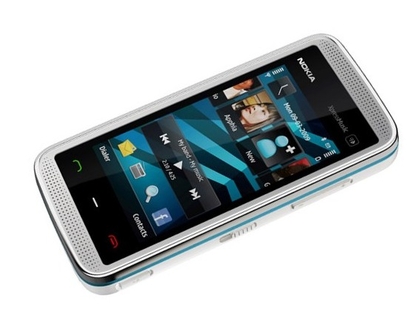
9. Nokia 5530 XpressMusic
While the Nokia N97 and 5800 XpressMusic phones are clambering over each other to gain attention at the more expensive range of the market, the 5530 offers something refreshingly different.
It offers a 2.9-inch touchscreen with a music-orientated interface and all for just آ£130. Probably the best budget touchscreen phone available today.
Read: Nokia 5530 XpressMusic review
Browse the best Nokia 5530 XpressMusic deals in the UK
See also: Nokia X6, Nokia 5800 XpressMusic

8. Motorola DEXT
Once a giant in the world of mobile phones, Motorola went quiet for quite a while. It made almost 10,000 people redundant in 2008 and the end looked in sight. However, the end has not arrived, and Moto has come back with a vengeance in 2009 with the much-mooted Motorola DEXT phone.
Free on contracts from around آ£30 a month, the DEXT is a Google Android-powered handset with a slide-out QWERTY keyboard.
What's more, Motorola has supercharged Android with its own customised overlay, called MotoBlur. It's similar in function to HTC's Sense UI although maybe not quite as likeable.
The trump card is that the DEXT is one of the best media phone available at the moment – which says a lot.
Read: Motorola DEXT review
Browse the best Motorola DEXT deals in the UK
See also: Nokia N97, HTC Touch Pro 2, Sony Ericsson Xperia X2
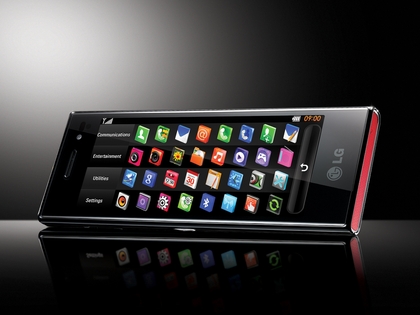
7. LG BL40 Chocolate
Probably the most striking of all the phones on display here, the latest LG Chocolate is the world's first full-widescreen 21:9 phone.
The chassis is a combination of metal and glass, with vibrant red plastic at either end, with the top housing the 3.5mm headphone port and the power/lock key.
It's designed from the ground up to be a media phone, and indeed, watching movies is a pleasure, as is navigating large music collections.
Read: LG Chocolate BL40 review
Browse the best LG BL40 Chocolate deals in the UK
See also: LG Chocolate BL20, Samsung i8910 HD

6. Samsung i8910 HD
If size matters to you, the i8910 HD is probably the largest handset in this group.
It's got a 3.7-inch AMOLED touchscreen, and it's as buff as they come, too, with the solid metal and plastic chassis contributing to the 148g weight (the iPhone 3GS weighs 135g).
The range of applications and features on the phone is staggering, and the touchscreen interface and response is Samsung's best yet.
You just have to work out if you want to be carrying such a large phone around with you everywhere you go...
Read: Samsung i8910 HD review
Browse the best Samsung i8910 HD deals in the UK
See also: LG Chocolate BL40

5. Palm Pre
The Palm Pre was probably the most hyped phone of 2009. Hailed as the saviour of Palm, it initially promised to at least threaten the iPhone at the top of the touchscreen pile.
One thing's for sure, it's more suited for business users because of its slide-out QWERTY keyboard.
In fact, if you peek under the hood, you'll find a quick Texas Instruments OMAP 3430 processor, 8GB of internal memory, 802.11g Wi-Fi and Bluetooth with A2DP stereo.
This is a capable mobile computer that supports multi-tasking, contact sync across multiple web services, and push email that could lead to swift adoption at companies both large and small, filling the void left by the popular Palm Treo from years ago.
In truth though, it's no iPhone-beater. But that's not in any way a criticism, more of a back-handed compliment to Apple in fact, because the Pre is still a seriously nice piece of kit.
Read: Palm Pre review
Browse the best Palm Pre deals in the UK
See also: BlackBerry Bold 2, Nokia E72
4. HTC HD2
It's not out in the shops for another couple of weeks, but that's not going to stop the brand-spanking new HTC HD2 - codenamed Leo - from making our top 10.
It's enormous 4.3-inch touchscreen is hugely impressive. And the HD2 is the first Windows Phone to come packing the HTC Sense overlay interface, as well as a capacitive multi-touch screen.
It's lightning fast, and designed by HTC to compete directly with the Apple iPhone 3GS and Palm Pre for those big-spending business power users. It should be available for purchase on or around 11 November.
Read: HTC HD2 review
Browse the best HTC HD2 deals in the UK
See also: Toshiba TG01, HTC Touch Diamond 2

3. BlackBerry Storm 2
The much-maligned original BlackBerry Storm was a bit of a disaster for RIM. So the launch of the Storm 2 is a vital moment for RIM as a company and a brand.
Luckily, the Storm 2 doesn't disappoint. The sleek and weighty feel of the Storm 2 is that of a quality piece - the SurePress screen needs that around it. It's also busting to the seams with applications pre-installed, and a 2GB card isn't too shabby either.
We have big issues with the SurePress technology which drives the Storm 2's interface, but even so, this is a great handset for the usual BlackBerry target audience.
Read: BlackBerry Storm 2 review
Browse the best BlackBerry Storm 2 deals in the UK
See also: BlackBerry Bold 2

2. Apple iPhone 3GS
What? What's this? The Apple iPhone in at number 2? That's right, folks – the iPhone has been beaten into second place.
There's no denying the quality of the iPhone, and really it could just as easily have come out on top. Still though, we'll get to that on the next page.
The iPhone 3GS is a stunning handset. It's faster than the iPhone 3G and also has a better camera, so if you're thinking of getting an iPhone for the first time, we reckon opting for the 3GS is a no-brainer, even if the 3G is slightly cheaper.
Read: Apple iPhone 3GS review
Browse the best Apple iPhone 3GS 16GB deals in the UK
See also: HTC Hero

1. HTC Hero
There's a reason why the HTC Hero has received so much praise this year – it's brilliant. End-of-year award ceremonies aplenty are naming the Hero as best gadget, best phone and so on, and rightly so.
It's the most complete Android handset to date, and as such it's the only phone out there that can really claim to compete with the iPhone.
In truth, it's probably not better than the iPhone. But it's certainly no worse either, so we thought it only fair to give it the top spot – not least because of the huge potential that Android is bringing to the table.
The iPhone is no longer the out-and-out best touchscreen consumer phone on the market, and for that we can be grateful because competition brings with it innovation, which for us can only be a good thing.
Read: HTC Hero review
Browse the best HTC Hero deals in the UK
See also: HTC Magic, HTC Tattoo
Related Links
| |
Read More ...
Weird Tech: Jacko gets top billing in Celebrity Twitter seance

Kurt Cobain, William Shakespeare, River Phoenix and Michael Jackson have all been booked to appear at what is being billed as the world's first live Twitter seance. The chances of anyone else having such a rubbish idea, even in the vast rubbish black hole of Twitter, are quite remote, so we'll believe that claim.
The event is being promoted as a genuine seance with proper dead people that will be conducted by psychic medium Jayne Wallace. A campaign was organised on Twitter to get idiots to submit the names of dead people they'd like to see someone pretending to speak to and saying what they think their answers might have been.

GRATEFUL DEAD: "Kurt is saying can you tell Courtney to wear smarter clothes"
So what would we ask William Shakespeare via a Twitter seance? We'd ask him if he was offended that charlatans are using his name to whore out shops 400 years after his death. The shameful event kicks off today at 10.30am UK time, should you want to see someone pretending to do ridiculous things on Twitter, for a change.
"It's your blinking time, Mr Wilson"
No offence, but if you need telling when to blink by a machine we'd suggest that technology has started to invade our lives a little too deeply. But that is indeed the purpose of the Wink Glasses, a device aimed at people for whom even automatic brain functions are too demanding.
There's a bit of boring-but-factual medical science behind the spec enhancement - each lens cover mists up after five seconds to encourage blinking among people who stare at screens for hours and hours.

LOAD OF WINK: Stop squirming in your chair and go to the toilet [Image credit: Metro]
You know how uncomfortable it is when you blink after not having blinked for ages? That's the extremely mild disability maker Masunaga Optical Manufacturing is targeting with the lens mister, for around آ£263. What next? A sponge on a stick to ram saliva down your throat so you don't have to remember to swallow?
Portable TV in air traffic drama
A child was asked to do his "sad face" by a newspaper photographer this week, after being told the bedroom TV he had successfully lobbied his parents for was a possible threat to local air traffic. An Ofcom engineer, acting on complaints of broken transmissions between planes and the control tower at nearby Luton Airport, discovered the problem - 12-year-old Nickie's booster aerial was broken and occasionally transmitting noise on the same frequency used by aircraft.

OH THE HUMANITY: Just don't book a flight that leaves when TV Burp is on. We're not missing that [Image credit: MASONS via The Telegraph]
"When I found out what happened I was upset because I couldn't watch cartoons or the television for a while - but it's better than causing a plane crash," the boy said, illustrating that his parents have done a good job of teaching him the importance of human life over Spongebob.
Romanian space balloon nears launch
This is going to sound like a joke nicked from Borat, but it's not. The Aeronautics and Cosmonautics Romanian Association (which they shorten to ARCA not ACRA for some reason) is the other space team that planned a new rocket launch this week, with the privately-funded, non-profit Romanians hoping to float a balloon into space - then fire a rocket off once it hits orbit.
The ARCA HAAS launcher was due to have floated/blasted off this week, but has been delayed due to poor weather conditions. And the man in charge of blowing up the massive balloon said his ears were starting to hurt.
Borne out of the old X PRIZE challenge to launch a private craft into space - now known as the Lunar X PRIZE due to shifting its goalposts to the surface of the Moon - test rocket "Helen" and its balloon will launch from a ship, for safety reasons, next week.

HARDWOOD EXTERIOR: It's blown up... but that's a good thing

| |
Read More ...
Apple blocks Palm Pre on iTunes... again
Apple has updated iTunes to version 9.0.2 - and guess what, it no longer allows you to synchronise the Palm Pre with the application any more.
Yes, we like you are almost crying in frustration over this latest 'news' - as has been reported over on precentral.net.
This means that we're back to square one again, with all the 'hard work' of the 1.2.1 update to the Pre firmware being undone by one little Apple fix.
Is there a problem here?
It's almost as if Apple doesn't want Palm to synchronise its devices in the same way as the iPhone. And it's like Palm wants to keep irritating Apple into giving up. Almost.
So instead of 'reporting' the latest instalment of this 'to me, to you' style of media management, we'll just be issuing this phrase as an update: "The Palm Pre will now sync with iTunes after a firmware update / Apple's latest firmware update has blocked the Pre from iTunes once more.'

| |
Read More ...
Twitter officially rolls out Lists

Twitter has finally rolled out List functionality to its homepage, meaning you can finally let the world know who it should be following.
Although announced earlier this month, Lists were kept locked down to a select few testers. Not any more - Twitter has brought it out for anyone that wants to get involved.
So now if you're one of those who'd stuck their head out and created a 'most influential people in X industry' list (and been lambasted for said list, mostly by those that weren't included), there's a safe haven to do so.
Following me, following you... ahaaa
The functionality works two ways - lists of people that you think are worth following in a certain group (be it actors, lacrosse stars or those people that you reckon might be useful in a fight with an unspecified number of cats), and lists that contain your Twitter ID.
The list can be made public or private, so only you can see who is on the list and can then focus your attention on what your favourite Twitter subsection is up to.
And of course being able to follow everyone on the list at once will make life so much easier - though it does mean those trolling through the TwitWeb looking for unsuspecting folk to follow and spam with product links have just had their lives made that little bit easier.

| |
Read More ...
Exclusive: Guitar Hero CEO looks to Natal

The CEO for Activision's Guitar Hero brand has told TechRadar that the company is excited about the possibilities for future guitar, pop and DJ games using Microsoft's Project Natal motion control, revealing that Activision is already working with the new body sensing tech
Activision's Dan Rosensweig also talked about the opportunities opening up in new 3D tech and explained more about the thinking behind [Activision CEO] Bobby Kotick's recent comments on direct-to-TV guitars.
"The more ubiquitous gaming becomes, the more places that people want to play it, the more places we want to be," said the Guitar Hero CEO.
"As technology gets cheaper and more interesting – take, for example, something like Project Natal, you can imagine a series of different ways that it might be fun to add that kind of capability to music genre games," he added.
"So yeah, we are working with Microsoft on that. We think that's exciting. And we are working with all the first-party vendors on all the new technologies, because each first party offers something unique.
"Every time there is new technology and new capability, we really do try to be among the first to innovate and leverage it. Natal is something that we find particularly intriguing."
Guitar Hero in 3D?
As for 3D gaming tech, Rosensweig was equally positive, claiming they were trialling the tech: "Our studios see everything first... we see all new technologies.
"Wherever we think the technology is additive, then we try to add it to the game. Wherever we think it is 'technology for technology's sake' then we stay away from it. We evaluate all the time in terms of what new technologies are available."
Rosenweig insisted that potentially controversial plan to introduce a direct-to-TV version of Guitar Hero should not alienate console manufacturers
"Well, we're not in the fighting business, we're in the game playing business," Rosensweig told us. "What we need to do is to be where our fans want to play.
"So we intend to be really positive and great partners of the console players and we have terrific relationships with them now. The experience of the games are great and each console has the ability to create unique experiences within the game.
"But if the capability allows for the expansion of Guitar Hero beyond the console, then of course we will go there, if that is where our fans want to play the game.
"Whether that be direct to the television or on mobile devices, we of course are always looking for ways to create experiences that our fans would really like to take advantage of. "
You can read the full, unexpurgated interview with Guitar Hero CEO Dan Rosensweig right here on TechRadar.

| |
Read More ...
Phonesnoop: spying on you via your BlackBerry

A new application called PhoneSnoop has been released for the BlackBerry range that lets users dial in to the phone and start listening in to what's going on.
The app basically responds to a pre-configured number and uses BlackBerry APIs to intercept the call and auto-answer.
The new application has been given an 'advisory' warning ahead of its launch - but don't worry if you're a BB user, as there are a number of safeguards in place to stop it being used.
Physical contact
For instance, the application needs to be physically installed on the phone and know your PIN, which means it would have to be someone quite close to you intent on spying.
The quality of the recording is such that audio can only be heard if the phone is out in the open, meaning it's pretty likely you'll notice an incoming call or see the suspicious device hanging around.
Admittedly it doesn't bode well for refined versions of the application - it's possible a more evil-minded hacker could put something together that makes it harder to detect when you're being listened to.
And of course there's always the possibility of super spies seducing you and tampering with your BlackBerry while you're in the bathroom - but there are some sacrifices we'd be willing to make.

| |
Read More ...
In Depth: Interview: Guitar Hero CEO, Dan Rosensweig

Can you give us a potted history of the Guitar Hero franchise? And tell us why you decided to take the job of CEO of Guitar Hero?
Well the history of Guitar Hero is pretty spectacular. Really, I don't know of another franchise that has captured the imagination of the world so quickly and so powerfully and so positively in such a short period of time. I think Guitar Hero started back in 1996 when Kai and Charles [Huang, GH founders], who have always been entrepreneurs, were selling dance mats for Dance Dance Revolution and they stumbled upon the concept of the guitar controller. They then licensed the software and created Guitar Hero. 
By the time Guitar Hero 3 rolled along, the game had just become massive. It was acquired by Activision three years ago. And when you combine the creativity, the innovation and the excitement of the game with Activision's marketing and distribution prowess, the game quickly became one of the biggest franchises in the world.
In fact, to date, Guitar Hero has sold something approximating 40 million units around the world since its inception. This makes it the sixth largest gaming franchise in history. It is the number one selling music franchise game. And music franchise games right now – because of Guitar Hero – are the second biggest selling game franchise of any kind.

The reason it became so popular – obviously, I'm not sure anybody would have anticipated this level of success early on – and the reason it captured the public's imagination is because it has some of the elements that, when you put them together, really become something special. So, first of all, music. People love music. Second of all, people really do have an inner rock-star that they want to unleash. They want to perform. They want to have fun. They love playing games.
So what Guitar Hero has done is to turn music inside out. Whereas the iPod made music very personal, very singular – you put your ear-buds in and you listen to it – Guitar Hero turned it around and made it very social. So it is fun to play. It's fun to play against people. It's fun to watch people play.

And now, because of connectivity, it's actually a blast to play people you've never met all across the world. So I guess that the social elements to the game, the music elements to the game, the fun elements to the game, the competition elements to the game... had all rarely been captured before. And all of this has expanded the growth of the franchise, dramatically!
So what about the new and improved features in Guitar Hero 5 – things like 'Party play', the option to be able to play any instrument you like and some of the changes to the career mode in the game – what to these bring to the game?
Yeah, well Guitar Hero has been so successful that a lot of people were questioning how it was possible to innovate on the most successful franchise of its kind. First of all, Guitar Hero 5 is the best-reviewed game that we have ever had. Second of all, the reviews really focused on these great innovations that you just listed.
Mostly what the developers have done is to make the game easier to play at the first levels and therefore more inviting for people that have not played it before. And then we've made it more complicated and more fun and more competitive at the higher levels. So it has expanded both the number and the combination of instruments that you can play. So you can play four guitars or four drums or four basses, or two basses and two guitars... whatever you want. So it really allows the game to be personalised in the ways that people want to play it.

Additionally, there are new features such as the ability to 'jump in and jump out'. Where one of the features of the earlier games was that, if you weren't doing well – either playing by yourself or playing with other people – then you would get booed off the stage. That made it difficult for people that were just getting into the game. Now, at the earlier levels, you don't get booed off.
And at the higher levels, if you are playing with a bunch of people and if your instrument isn't performing well and you get booted off the game your friends can still continue to play. And actually, if they play well, they can earn your ability to come back into the game. So it is the flexibility, the personalisation, the fun. These are all the things that fans wanted in the game that we are thrilled to be able to add.
And what about your own personal history? What is your own experience and background? What to you bring to the Guitar Hero table?
I spent the majority of my career in special-interest magazine publishing. I worked my way up through the ranks [at Ziff-Davis] to ultimately becoming the publisher of the largest franchise (which was PC Magazine). Then around 1996 or '97 I got really enamoured with this new thing called the internet. And then moved out of publishing PC Magazine to launching a series of internet magazines about and around the internet, including one called Yahoo Internet Life - which gave me the opportunity to meet with the founders and the people that were building Yahoo at the time. And I got very excited about that.

And within Ziff-Davis, as we were a technology magazine company, we were among the first to see the potential of the internet and we pulled out a separate division of the company called ZDNet. Which was the largest technology website in the world, competing with a site called CNet. I had the chance to become CEO of ZDNet and take it public in 2000. And as the crash began to come, we merged with CNet, then got very familiar and comfortable with gaming – because I had also acquired Gamespot, which is one of the largest gaming sites in the world. And I've always been enamoured by people's passions and gamers are very passionate.
After that I joined Yahoo as Chief Operating Officer from 2002 to 2006 and at the end of that five-year run I'd obviously become very deeply immersed in the internet, and very excited about interactive content, personalised experiences and how connectivity really does change the world and create new opportunities for businesses and consumers. After I'd retired from that job, I went into private investing in Telco, media and gaming companies.

Along came Bobby Kotick, the CEO of Activision, who was also a good friend of mine from when he was on the board at Yahoo – who had been repeatedly calling me about the internet and the connectivity of consoles and where the gaming industry would go in the future. He then started talking to me about Guitar Hero, as Bobby knows that I am also a huge music fan. I have a great passion for music. It is my personal passion.
And then, over a period of time, we got into really exciting conversations about the power of the franchise, where the franchise was going to go and how interactive content was really going to dominate consumer entertainment for the next five or ten years, how the merger of interactive content and videogames and connectivity can create whole new experiences for consumers on a global basis... and whole new business models. So Bobby asked me to take over and join and run Guitar Hero – and I checked in with my daughters, who both love the game! – and I came on board back in April this year. And I've been having a blast ever since!
There have been a few reports recently claiming that the music gaming market is becoming saturated. What is your response to that?
Well, firstly, I hope not! And secondly, I don't think so.
Clearly the recession has affected all consumer products, all business products. There have been headwinds for quite some time in a lot of industries, but it is only recently that the gaming industry has begun to feel it. Really, this year. So it interrupted later and smaller in the gaming industry. And the reason for this is that interactive content, gaming and video-gaming creates such value for the dollar. Consumers really do love gaming and it was one of the last things that they really wanted to cut back on during these difficult times. Ultimately it has affected the overall industry. We will see whether or not it is temporary around the economy.
But in terms of the music gaming category, we should really separate it. In Europe, the music gaming category has grown 25 per cent this year. And Guitar Hero has grown 59 per cent this year, in the first nine months. Also, the music gaming category is the second largest selling game franchise of any category. And Guitar Hero is number one in that category. So, despite the headwinds, it is a really enviable position to be in.
In the US there have been reports that gaming was down 26 per cent and the music gaming category was down something like 45 per cent. And although there is truth to the slowing right now, a lot of that has to do with the economy. Also, a lot of it has to do with the fact that what that measurement is based on is net revenue. And as the Guitar Hero franchise – which is the leading player in the space – begins to move from selling mostly hardware and software together... as we get a larger installed base of our hardware, most of our sales have shifted from hardware to software. Which has a lower price tag to the consumer.
So if the guitar and software costs $99, the software alone costs $59. So that alone affects the net revenue number that you see. But unit volume has actually been quite substantial this year. So the user interest in the games has not really wavered. At all. The percentage of consumers that are buying these games has gone up. The number of units we sold this year – in the first six or seven months of this year, at least – has been something like six million units of something that has the Guitar Hero name on it. So we remain very passionate and very excited about growth. And consumers remain very passionate about the game. And the success of Guitar Hero 5 this holiday season, I think, really reflects that.
So how does it feel to have 'beaten the Beatles (Rock Band)'? That's quite a big deal. Particularly in Britain!
Well, as we were saying internally, we were very confident that the 'Fab Five' [Guitar Hero 5] would beat the Fab Four!
The reason we felt that level of confidence is not because the Beatles aren't great, because they are great. I'm a huge Beatles fan and, in fact, I recently went out and bought the entire re-mastered albums on CD. But what we really focused on was giving the consumer what they wanted – which is a variety of music, 82 artists and 85 songs, instead of one band. Music that was really focused around the guitar. Whereas the Beatles' music is focused around all of the instruments and harmonies. We focused on what people play the game for, which is the guitar.

And then on top of that, our studio, Neversoft, is the best in the world at creating the most fun games. And the reviews really reflect that – the innovation, the 'new-ness', the incredible set-list put together by our music department run by Tim Reilly and a team of nine people who really focused on blending the science and the art of what should be in the set-list, what would work best and what would be really popular with the consumers. And then Neversoft determines one thing: "Is it fun as hell to play?"
So when you put together all of those things, we were sure that we had a winning combination from the beginning. And we are thrilled that our fans have rewarded us with such a great success, following the Guitar Hero 5 launch.
So this Christmas you have three games – Guitar Hero 5, Band Hero and DJ Hero – can you tell us more about the artists' involvement in the games?
Yeah, in addition to Guitar Hero 5, we have Band Hero – which is all of the instruments, based much more around current music and popular big hits of today. And it is focused much more on full band play and singing, which we think makes it much more popular with families and with women.
And then we have DJ Hero - which you've just been playing and earned three stars on (congratulations!), which is really dance and tech and pop and rock all put together. And we've been able to mix 93 mixes of really popular songs that have never been mixed together, with professional and very popular DJs that people know about. Including, very sadly, DJ AM [who recently died of an accidental overdose on 28 August this year].

So we now have a series of games that appeal to different audiences. And there are a series of artists in each of those games. Guitar Hero 5 is 82 artists and 85 songs. We have 60-odd artists in Band Hero and 65 songs. DJ Hero has 100 songs. So we have a lot of artists working with us.

In the case of DJ Hero, the big names are of course Eminem and Jay-Z. And in Europe we have David Guetta, who is an ambassador for the game. And his new music that he is recording will be available for download in the game, shortly after launch, which is really exciting for his fans. You know, we're working with lots of artists – Adam Levine, Maroon 5, Taylor Swift [in Band Hero] who's sold over ten million records in the US. We're just really excited about all of our artist relationships.
One thing that is new about Guitar Hero 5 - and also with DJ Hero - is this option to leave the game running in the background. So you can just dip in and play when you like, or just enjoy the music. Which made me think about something that Charlie Brooker said recently about Guitar Hero, which was something along the lines of "this isn't even 'a game' it is just entertainment".
Games are entertainment! [laughs] Like television shows are entertainment. Our game taps into competitiveness, the social nature of playing the game and watching your friends playing the game. It's fun to watch somebody play these games. It's fun to play these games. It's fun to play these games with a group of people and compete. It's fun to sing along with the games... And now you also have the opportunity to just listen to the music.
In DJ Hero we have 100 songs and 93 new mixes that haven't been heard before. Where you have Queen mixed with Daft Punk, for example! You can host a party, just playing the music. Or people can play along with the music. We just want to tap into all the social aspects of the games.
What about the future of the technology? Where is that heading? There's been talk recently [from Activision CEO, Bobby Kotick] of direct-to-TV games. And how might new motion control tech like Microsoft's Project Natal be incorporated into future games?
The more ubiquitous gaming becomes, the more places that people want to play it, the more places we want to be. As technology gets cheaper and more interesting – take, for example, something like Project Natal, you can imagine a series of different ways that it might be fun to add that kind of capability to music genre games. So yeah, we are working with Microsoft on that. We think that's exciting. And we are working with all the first-party vendors on all the new technologies, because each first party offers something unique.

If you take the Nintendo Wii, for example, the Wii review of Guitar Hero 5 was the best review we have ever got, which was a 93 – which makes us the highest rated third-party game ever for the Wii. And this is because we built in a game called Roadie Battle – a whole new game inside a game. Which allows those that have the Wii and the DS to connect to each other and have a battle of your roadies as somebody else is trying to play the game. So you can knock down the amps, set fire to your opponents guitar and so on. So every time there is new technology and new capability, we really do try to be amongst the first to innovate and leverage it. So Natal is something that we find particularly intriguing.
And the direct-to-TV stuff? Surely the first-party console manufacturers are going to fight that and say 'we would rather you didn't cut out our console from Guitar Hero'?
Well, we're not in the fighting business. We're in the game playing business. I think what we need to do is to be where our fans want to play. So we intend to be really positive and great partners of the console players and we have terrific relationships with them now. The experience of the games are great and each console has the ability to create unique experiences within the game. But if the capability allows for the expansion of Guitar Hero beyond the console, then of course we will go there, if that is where our fans want to play the game. Whether that be direct to the television or on mobile devices, we of course are always looking for ways to create experiences that our fans would really like to take advantage of.
What about 3D gaming technology? That's another tech that is getting a lot of attention right now. Have you done any testing with that?
Yes. Our studios see everything first, because obviously we have some of the best studios in the world. In our case, Freestyle, right here in London, who built DJ Hero and Neversoft, the king of building Guitar Hero and Band Hero and Vicarious Visions who build our games for mobile devices and for the Wii platform. So we see all new technologies.
And I think one thing that we don't want to do is to add any complexity to a game that is just so brilliant in its simplicity. So wherever we think the technology is additive, then we try to add it to the game. Wherever we think it is 'technology for technology's sake' then we stay away from it. We evaluate all the time in terms of what new technologies are available.
It just strikes me that, with DJ Hero, for example, dance music culture is maybe much more visual than rock music – going to clubs and raves has always been about lighting and lots of other things, other than just playing a guitar.
Yes. And I think the entire cultural experience is something that we have brought brilliantly to DJ Hero. And if there are ways to enhance it, then we, of course, will.
Bill Wyman had a pop at Guitar Hero and music games in general recently, suggesting it was perhaps not for 'proper music fans'.
You know, I think we should let music fans decide for themselves how they want to spend their time. Most of the comments that have been raised by a very small group of very prominent musicians – who we have the greatest admiration and respect for (I mean, I am a huge Rolling Stones fan) – I think the majority of artists find this to be a really fun way to connect to their fan-base, and to expand their fan-base and to introduce their music to newer fans.
The observation that some make is that they would really prefer it if people were taking up real instruments and taking real music lessons. And we totally understand and appreciate and support that. And it turns out that – fortunately – the more people who played Guitar Hero, the more people who actually went out and bought guitars. Or signed up for music lessons.
So although we don't teach them how to play, we allow them to have an experience about what it feels like to play. And that has led a substantial number of our fans to actually want to go and learn to play a real instrument. So we are very proud about being able to get people to get excited about music and to then take that passion in a lot of different directions, including taking guitar lessons and buying guitars.

| |
Read More ...
Gary Marshall: Is there anything on the planet Google doesn't want for dinner?

In the last few days, Google has announced yet more pies that it's jabbing its giant fingers into: music, turn-by-turn navigation and smart electricity meters.
So if you're involved in the music discovery business or the sat-nav business, it's probably a good time to be polishing up your CV.
Then again, if you work in any industry whatsoever it's probably a good idea to brush up on your CV. Is there any industry Google doesn't want to be in? In software Google does not just search tools but browsers, mapping programs, 3D modelling, photo editing, voice chat, email and instant messaging.
Online it does word processing, calendars, RSS reading, comparison shopping, location-based searching, location-aware social networking, blog publishing and website analytics.
It's had a go at social networking and a Wikipedia rival, it's digitising books, it's got the world's most popular video service, it's got a phone product that could seriously ruin mobile operators' profit margins. It has maps not just of Earth, but of Mars.
Anything else? Oh yes. Newspaper aggregation. Advertising systems for giant publishers and individual blogs. Feed publishing. A PayPal rival. A finance news service. Usenet and discussion groups. Film showtimes. Patent trawling. In the US, directory enquiries. A health database system the Tories are rather keen on putting your records into. Magic hats that record your every thought and notify the CIA and MI5 of any thought crimes.
Okay, maybe not that last one, but you get the idea.
Is anybody else a little bit scared by that list? Google isn't doing anything sinister - its mission is "to organise the world's information and make it universally accessible and useful", which is a very noble goal - but most people think that by "organise" Google really means "index".
What if it doesn't? What if organise means organise? The most efficient way for Google to organise the world's information is for Google to possess all the world's information - and that means anyone working in the information business should be watching over their shoulder.
If it can be digitised, analysed and held down long enough for Google to slap an advert on it, the chances are Google will come for it sooner or later.

| |
Read More ...
Vodafone: Facebook before Twitter for 360 launch
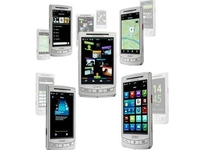
Vodafone has told TechRadar that it decided to bring the likes of Facebook and Google Talk integration of its new 360 service over Twitter.
Ian Shepherd, Vodafone's commercial director, told us: "There are 10 times more Facebook users than Twitter in the marketplace, so we decided that was the order in which we will do things, and we feel that's the right order.
"However, we remain very committed to [providing Twitter on Vodafone 360] and we're looking to do that in the very near future."
This means that while users can connect to Facebook right from a contact in their phonebook, they'll be unable to do so on popular social network Twitter for the time being.
Vodafone's new 360 platform - which will launch first on the H1 phone released tomorrow - is designed to connect people together through social networking and instant messaging, along with more conventional texting and emailing.
Beyond the H1
But the network wants to push the service beyond 360-branded handsets, and intends to offer downloadable clients to the likes of Symbian handsets.
Currently Nokia phones, like the N85, use Vodafone's My Web service, but this will soon be upgraded to 360, giving access to the social network updates from your contact list.
This upgrade will apparently be delivered before Christmas as Vodafone looks to ramp up the availability of 360 to more people.
Whether 360 will be a success beyond Vodafone customers remains to be seen, but it will be interesting to find out whether customers get on board with this 'unified life' idea the network is touting.

| |
Read More ...


No comments:
Post a Comment